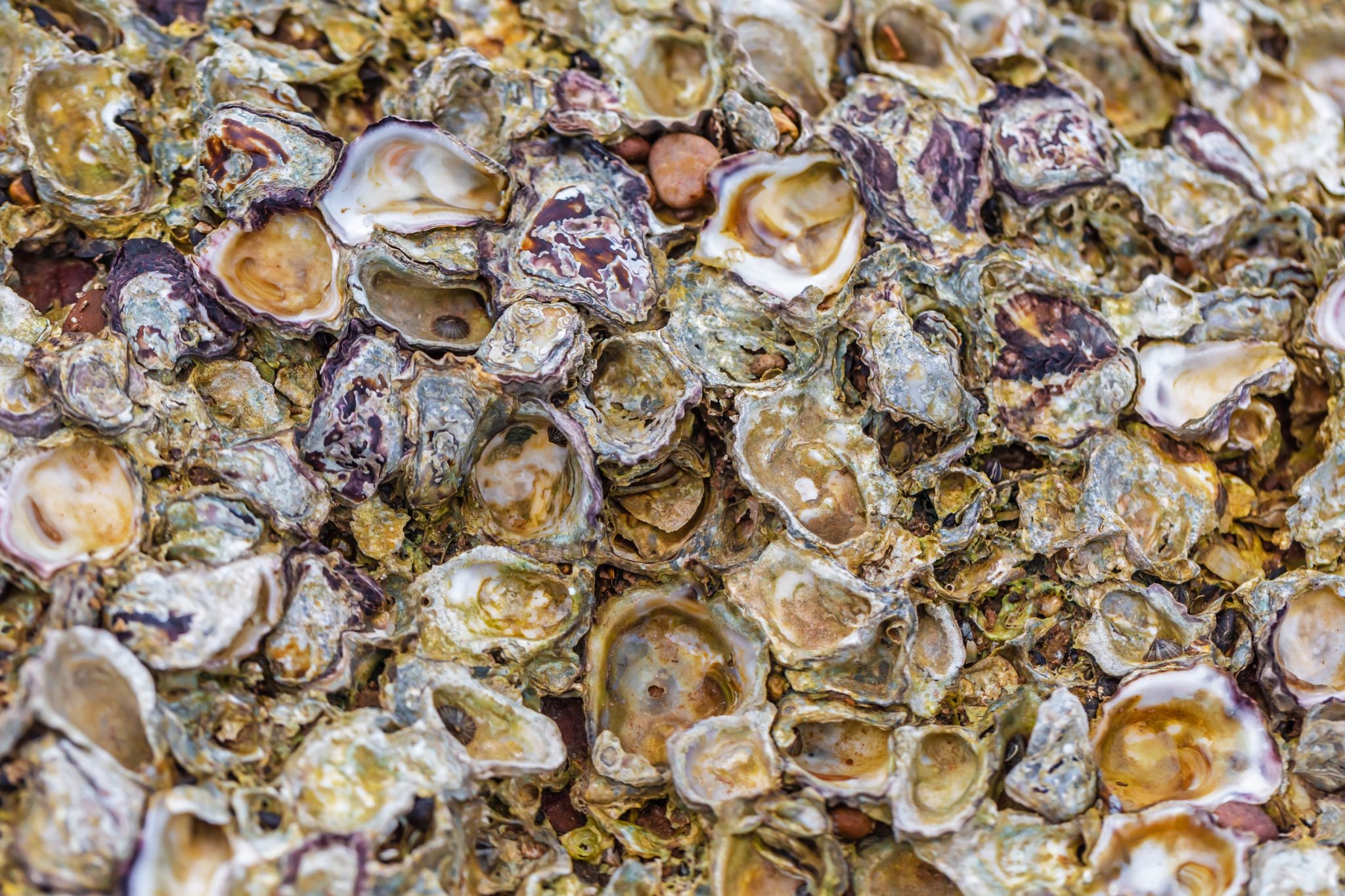
Kaysha Kenney's team has hauled more than 24,000 pounds of discarded oyster shells from restaurants and seafood markets across Orange County and Long Beach—roughly 12 tons of kitchen scraps destined for something far greater than a landfill. These shells, sun-cured in vast fields for at least six months to remove harmful pathogens, are being methodically returned to the ocean as the foundation for a coastal ecosystem that nearly vanished.
To grasp why this matters, consider what was lost: a global analysis of 144 bays found that oyster reefs exist at less than 10 percent of their former abundance in 70 percent of those bays, with researchers estimating that 85 percent of Earth's oyster reefs have been destroyed by overharvesting, habitat loss, disease, and water quality decline. California's native Olympia oyster—the state's only native oyster species—nearly disappeared entirely, erased from the very estuaries and bays where they once shaped the coastal character.
What made these reefs worth mourning goes beyond what most people realize. A single oyster can filter up to 50 gallons of water per day, and when thriving, oyster reefs function as bustling habitat for fish, crabs, and smaller forage species. The cleaner water they create supports the growth of underwater grasses, which shelter juvenile crabs, scallops, and fish. Along exposed coastlines, intact reef structures reduce wave energy and slow erosion in ways that engineered solutions struggle to replicate.
The Shells for Shorelines program—the brainchild of 31-year-old marine restoration director Kenney—assembles this recovery from unlikely participants. Restaurant staff set shells aside instead of discarding them. Volunteers show up for pickups. Local dock owners contribute to planting projects. Scientists track what grows. Orange County Coastkeeper argues that this participation is just as important as the shells themselves. Restoration programs hold up better when the people around them understand what they're for, and Kenney, who has called Olympia oysters "powerhouses for our coast," has made that understanding contagious—her TikTok videos documenting the bins, the curing fields, and the less romantic logistics of restoration work have generated real public interest.
The program is showing early signs of success. In October 2025, Orange County Coastkeeper reported that local dock owners had helped recruit 1,600 native Olympia oysters through a restoration project, a number that will grow as oysters continue to settle onto the reef beds. Yet the timeline for ecological impact is deliberately humble. The improvements in water quality, shoreline resilience, and marine biodiversity unfold slowly, accumulating in data long before they become visible to the eye. That gap between what the program is doing now and when its effects will be felt reflects the central reality of restoration work: the shells sitting in the sun are a commitment to a coastline that doesn't exist yet.
What makes Shells for Shorelines remarkable is not the absence of challenges but the clarity that they are worth facing. Every shell collected is a choice—by restaurants, by volunteers, by dock owners, and by a marine biologist who believes, simply, that oysters are cool. That belief, backed by 24,000 pounds of evidence, is rebuilding California's coast one dinner scrap at a time.