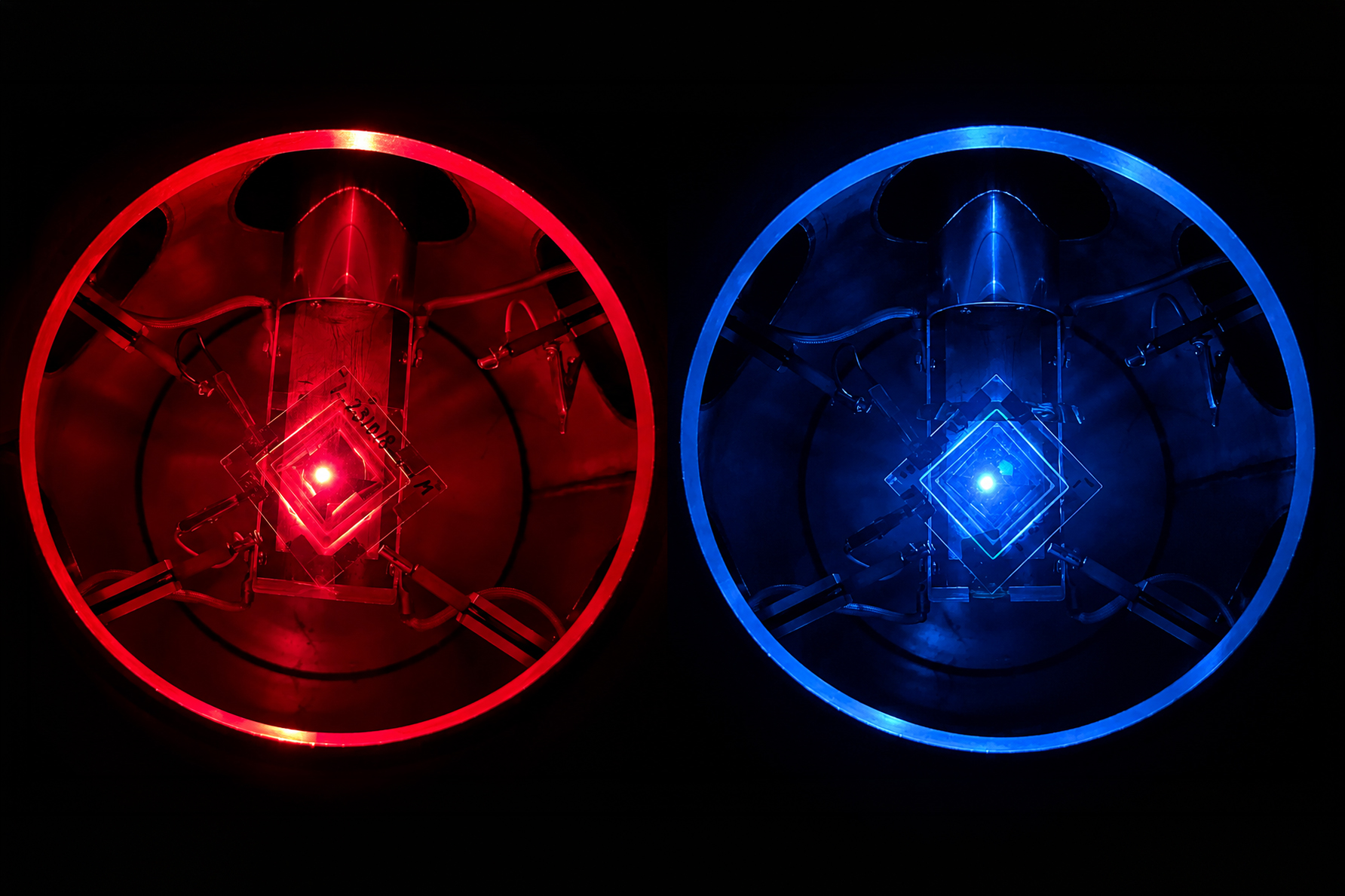
Imagine a TV screen so thin it could roll up like a poster, with colors so pure they make today's displays look washed out. That's the promise of a new discovery by MIT scientists, and they just cleared one of the biggest hurdles standing in the way. Led by graduate student Ruiqi Zhang and Professor Vladimir Bulović, the team found that coating tiny light particles called quantum dots with a special resin can make them last 5,000 times longer than before. The research appeared in the journal Science Advances.
Quantum dots are microscopic particles that glow in exactly the right shade of red, green, or blue when electricity runs through them. They're already used in some high-end TV screens, but those displays still rely on older LED technology underneath. The goal has been to power quantum dots directly with electricity, the way newer OLED screens work. That would mean brighter, more accurate colors while using less energy. The problem? Those electrically powered quantum dot LEDs, called QD-LEDs, tend to break down too quickly for everyday use.
The blue version was especially fragile. "The blue quantum dot LEDs are 50 to 100 times less stable than their red and green counterparts," Zhang explains. "If you use them in an LED display, your TV might last for just a few months before it stops working." To figure out why, the researchers sliced tiny QD-LEDs into nanometer-thin slivers and examined them under powerful microscopes at MIT's research facility. They discovered that during operation, the stacked layers inside the device were physically degrading.
The fix turned out to be surprisingly simple: encasing the device in an acrylate-based resin, the kind of material already used to protect other electronics. This coating blocks the damage that builds up during use. In some devices, the lifespan stretched by a factor of 5,000. "The insights into how and why quantum dot LEDs get modified during their operation open the possibility of fixing everything that holds back commercialization," says Bulović, who has been working on this technology since 2000 alongside chemist Mounki Bawendi, who won the Nobel Prize in Chemistry in 2023 for discovering quantum dots.
The implications go far beyond better TVs. The researchers envision paper-thin screens for phones, vivid displays for medical imaging, immersive headsets for virtual and augmented reality, and even large lighting panels that could replace ceiling fixtures with glowing, color-perfect surfaces. Because quantum dot LEDs use less energy than current displays, they could also help cut electricity consumption. Samsung, which acquired a previous MIT quantum dot startup in 2016 and collaborated on this research, could be among the first to bring the technology to market. The team is now sharing their findings openly, hoping manufacturers everywhere can build on their work.