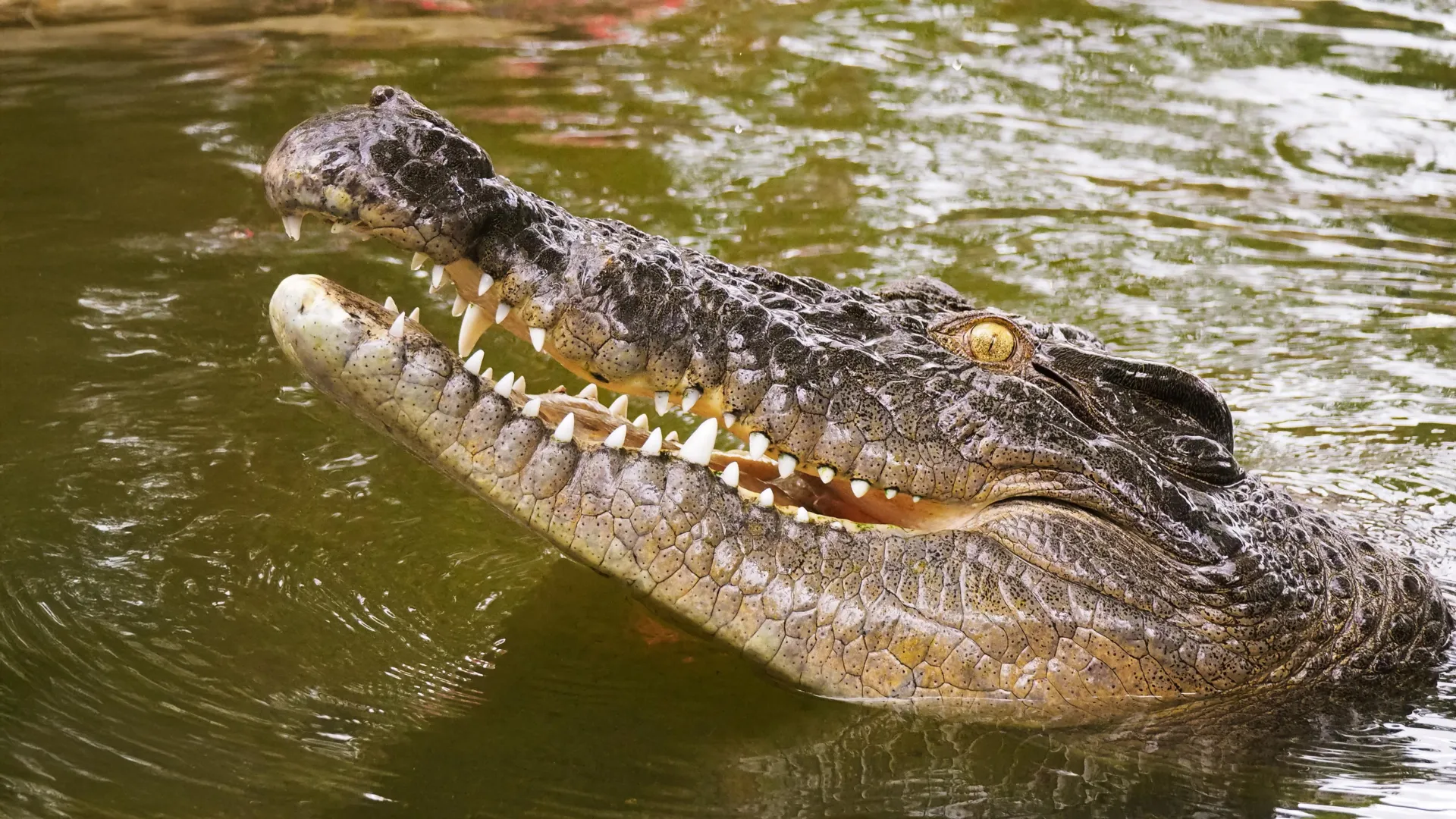
When early explorers charted the shores of the Seychelles in the 17th and 18th centuries, they encountered crocodiles so regularly that the reptiles barely warranted a mention—just another fixture of island life. Then, after permanent settlers arrived in 1770, the creatures vanished almost entirely, erased from the archipelago within about 50 years and fading into historical mystery. For more than two centuries, scientists puzzled over what these lost reptiles actually were. Now, researchers using DNA analysis have finally solved the question: they were not a unique species clinging to isolation, but rather the westernmost known population of the saltwater crocodile, a creature so mobile and adaptable that it journeyed at least 3,000 kilometers across open ocean to reach these remote islands.
The breakthrough came from an international team of researchers from Germany and the Seychelles who compared genetic material extracted from preserved crocodile specimens in museums with DNA from living saltwater crocodile populations today. By analyzing mitochondrial genomes from rare historical samples of the vanished Seychelles population, the scientists confirmed what earlier researchers had only theorized based on physical features: the island crocodiles were closely connected to saltwater crocodiles living thousands of kilometers away in Southeast Asia and the Pacific.
Frank Glaw, a reptile expert at the Bavarian State Collections of Natural History and senior author of the study, explains the implications of this discovery. "The founders of the Seychelles population must have drifted at least 3,000 kilometers across the Indian Ocean to reach the remote archipelago, perhaps even much further," he says. The image this conjures is striking: crocodiles, whether riding ocean currents over generations or through rarer dispersal events, gradually establishing themselves on islands that would become their isolated home.
What makes this feat possible is the saltwater crocodile's extraordinary physiology. Unlike most reptiles, these creatures possess specialized salt glands that allow them to remove excess salt from their bodies, enabling them to survive for extended periods in seawater. This adaptation transformed the saltwater crocodile into one of the world's most capable ocean travelers and, before the Seychelles population was exterminated, gave the species a range stretching more than 12,000 kilometers—from Vanuatu in the Pacific Ocean to the Seychelles in the Indian Ocean. It remains today one of the most widely distributed reptiles on Earth.
The genetic patterns revealed in this study tell a broader story about connectivity. "The genetic patterns suggest that saltwater crocodile populations remained connected over long periods and across great distances, pointing to the high mobility of this species," notes Stefanie Agne of the University of Potsdam, the study's first author. What the DNA evidence shows, in other words, is not a string of isolated island populations, but a living web of movement and exchange across vast oceanic distances.
The discovery carries a bittersweet resonance. The mystery of the Seychelles crocodiles is solved, their origins now clear—yet the animals themselves are gone, hunted to extinction by early settlers who saw them as nuisances or resources rather than as remarkable survivors of an improbable ocean crossing. Their genetic legacy, preserved in museum specimens, offers future generations both knowledge and a quiet reminder of what was lost.