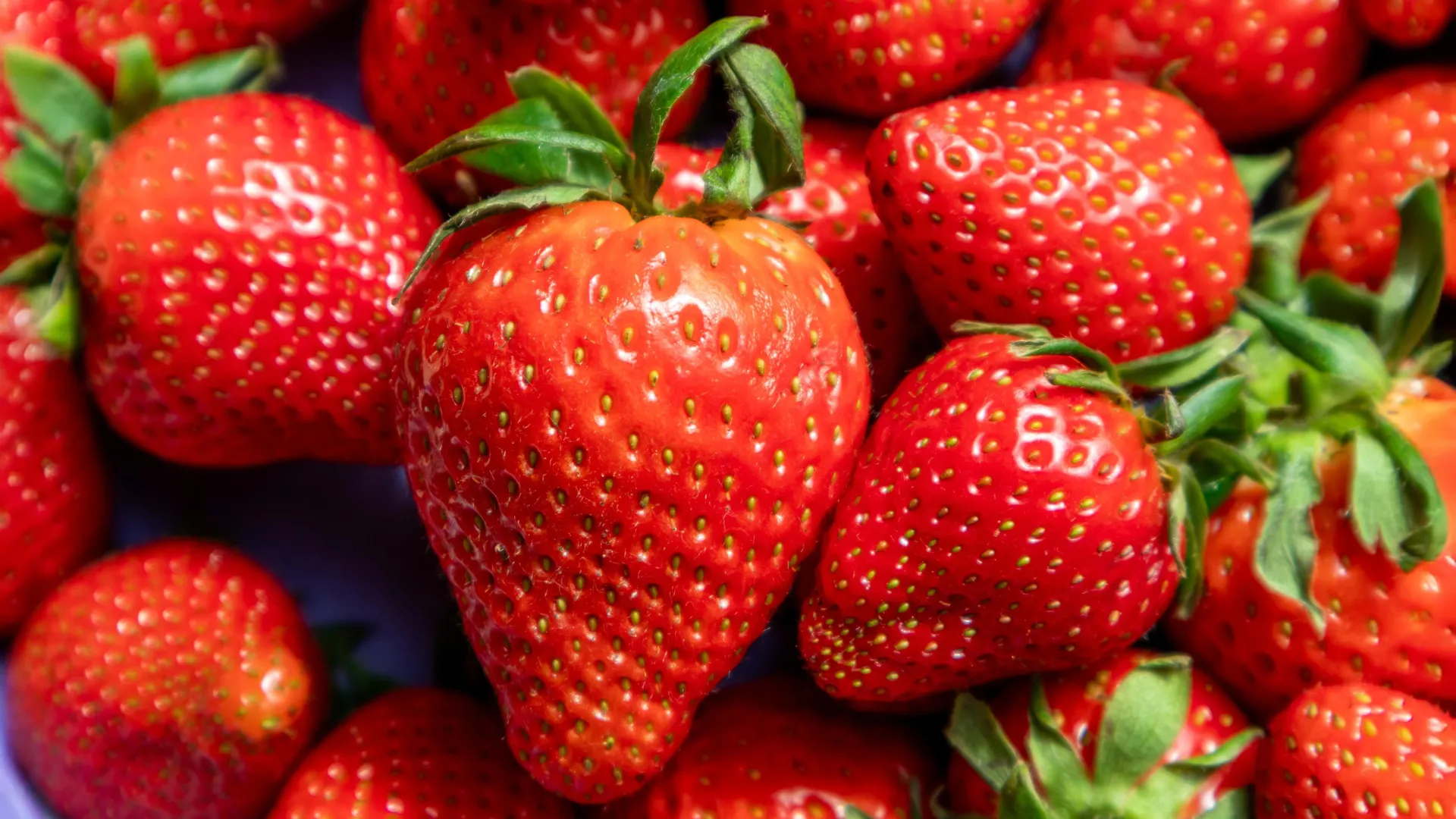
When scientists peered into the DNA of the cultivated strawberry, they didn’t just find genes—they uncovered a hidden timeline stretching back more than four million years. Using a novel method that treats mobile DNA sequences like genetic fossils, researchers have reconstructed the step-by-step assembly of the octoploid strawberry’s complex genome, revealing a history shaped by at least three major hybridization events. This breakthrough not only rewrites the origin story of one of the world’s most beloved fruits but also opens a new window into how crops evolve at the genomic level.
Polyploid plants, which carry multiple sets of chromosomes from different ancestors, include staples like wheat, cotton, and potatoes. But tracing their lineage has long been a puzzle—especially when ancestral species are extinct or unknown. Traditional methods rely on comparing modern genomes to living diploid relatives, but those relatives don’t always exist. Now, a team from the U.S. Department of Agriculture and collaborating institutions has developed a powerful alternative: a bioinformatic framework that uses long terminal repeat (LTR) retrotransposons—jumping DNA elements that accumulate in lineage-specific patterns—as evolutionary time stamps.
By analyzing how these retrotransposons cluster across chromosomes, the researchers built a "serial similarity matrix" that distinguishes subgenomes and dates when they merged. The technique was first validated in well-understood polyploids like cotton and teff, where it accurately separated pre- and post-hybridization events. It even worked on synthetic genomes, proving its sensitivity to both divergence times and transposable element abundance.
When applied to Fragaria × ananassa, the cultivated strawberry, the method revealed four distinct subgenomes and uncovered three sequential allopolyploidization events: the earliest occurring between 3.1 and 4.2 million years ago, followed by another between 1.9 and 3.1 million years ago, and a final merger between 0.8 and 1.9 million years ago. The findings confirm close relationships between two of the subgenomes and the diploid species Fragaria vesca and Fragaria iinumae, while challenging earlier models that suggested additional, now-unsampled progenitors. Some contributors may have vanished entirely from the planet, leaving only their genetic echoes behind.
This discovery does more than clarify strawberry ancestry—it demonstrates that transposable elements, once dismissed as junk DNA, are in fact rich archives of evolutionary history. As genome complexity increases in many crops, tools like this could accelerate breeding efforts by pinpointing the functional legacy of each subgenome. For scientists and breeders alike, the strawberry’s deep past is now a roadmap for the future.