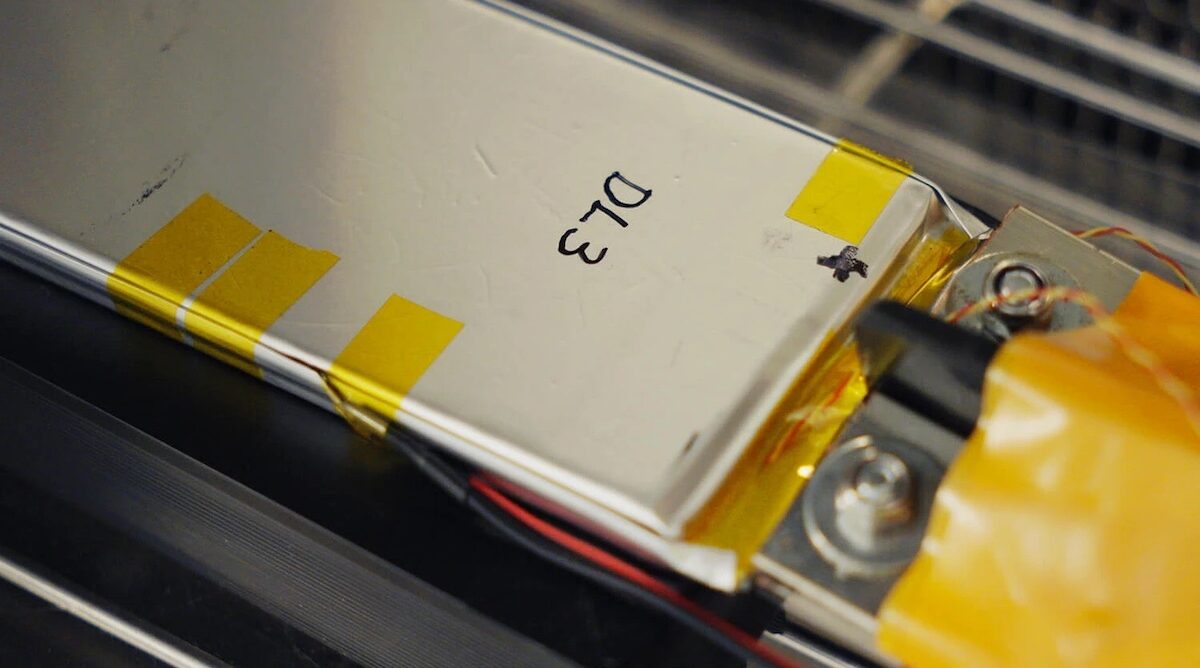
In a modest corner of Germany, a battery manufacturing revolution is quietly unfolding—one that strips away the sealed chambers, toxic solvents, and weeks of energy-intensive processing that have defined lithium-ion production for decades. Donut Lab, a startup that has shrouded its methods in secrecy, recently unveiled a manufacturing process so fundamentally different from the industry standard that it could reshape where and how batteries are made worldwide.
To understand why this matters, consider the current state of battery manufacturing. The process we use today traces back to Sony's first lithium-cobalt batteries for mobile electronics in the 1990s. Sony, drawing on its expertise in magnetic tape manufacturing, adapted that assembly-line approach to batteries: coating metal films with metal oxide slurries mixed in volatile, toxic solvents. The metal oxides used for cathodes are moisture-sensitive, so the entire operation must happen inside a gigantic sealed manufacturing chamber with constant filtration and solvent recycling to prevent emissions. After the cathode, separator, and anode sheets are layered and packaged—whether in cylindrical, pouch, or prismatic form—the assembled cells are injected with liquid organic electrolyte and subjected to a weeks-long "formation and aging" process. This charging and discharging cycle reshapes the battery's internal chemistry and forms a critical solid electrolyte interface layer. The energy demand alone is staggering: this formation step consumes enormous amounts of electricity and manufacturing space. No wonder battery production has consolidated into massive, capital-intensive facilities located near cheap power sources.
Donut Lab's process upends nearly all of these requirements. Most radically, it eliminates the need for low-moisture processing using organic solvents altogether. Manufacturing can now happen in a standard industrial environment—a warehouse, a converted grocery store, a ordinary factory building—rather than a sealed, climate-controlled chamber. Capital costs drop by at least an order of magnitude. The backend processing is equally transformed: there is no filling with electrolyte, no weeks of formation, no massive charging energy requirement. The entire workflow becomes faster and far less resource-intensive.
The company has revealed little detail, but industry speculation points toward CT-Coating AG, a German technology firm that appears to have links to Donut Lab's innovation. CT-Coating, which shares few public details and guards its methods behind non-disclosure agreements, is believed to have developed a nanopaste-based coating process—something closer to printing than traditional battery assembly. Screen printing, the likely technique, uses a mesh to apply material in layers, with a blade spreading ink across the screen and pressing it onto the substrate in a single automated stroke. Different material layers can be added sequentially, much like silk-screening in art production. This approach fundamentally changes the engineering constraints that have defined battery manufacturing since Sony's era.
The secrecy surrounding Donut Lab begins to make sense: if the company is operating under licensing agreements with CT-Coating, the non-disclosure requirements explain the tight-lipped approach. Yet the implications are clear from what has been shared. The decentralization of battery production—the possibility of manufacturing in standard buildings anywhere in the world—could untether battery supply chains from the traditional geography of cheap electricity and sealed industrial complexes. For a world racing to scale battery production for electric vehicles and renewable energy storage, this shift from sealed chambers to ordinary warehouses might prove as significant as the batteries themselves.