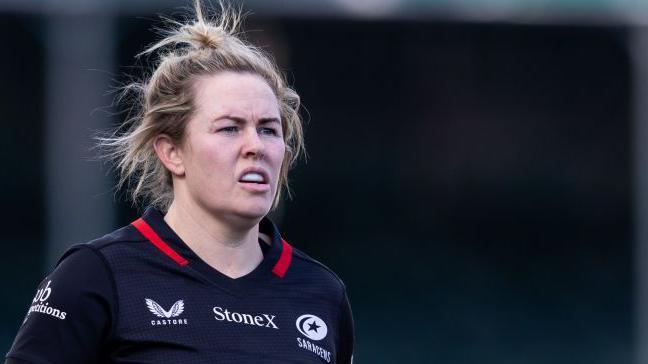
Marlie Packer, the England flanker who captained her country to World Cup glory in 2025 and still holds memories of lifting the trophy 11 years earlier, is stepping away from the club that shaped her into one of rugby's most fierce competitors. After nine years with Saracens, the 116-cap Red Rose is moving on from the London-based professional outfit where she arrived in 2017 and immediately made an impact with six tries on debut.
Packer's departure marks the end of an era for a player who has become inseparable from women's rugby's evolution into the professional sport it is today. Her resume speaks to consistency at the highest level: two World Cup victories (2014 and 2025), a 2023 World Rugby women's 15s player of the year award, and a body of work with Saracens that helped define the club during its professional transformation. For much of the last decade, she has worn the captain's armband not just for her club but as a leader and advocate pushing the entire women's game forward.
Alex Austerberry, Saracens' director of rugby, described Packer as an "exceptional servant" to the club, acknowledging the rare quality of longevity combined with excellence. "There have been many great players to represent Saracens and Marlie will undoubtedly be remembered as one of them," Austerberry said. He pointed specifically to what made her indispensable: "Her competitiveness, quality and ability to deliver in the biggest moments have helped shape this club throughout the professional era."
What stands out about Packer's nine-year tenure is the timing of her arrival and her role in the professionalization of women's rugby. She joined Saracens in 2017, a pivotal moment when the sport was beginning its transition toward full-time professional status. She was there through the growing pains, the expansion of investment, and the moment when women's rugby went from semi-professional ambition to genuine world-class sport. Her captaincy and leadership weren't ceremonial—they were the substance that helped teams win when it mattered most, including that 2025 World Cup victory that crowned her career alongside her earlier triumph in 2014.
The statement from Austerberry captured something often missed in coverage of women's sport: that Packer had "embodied what it means to be a Saracen" not through individual brilliance alone, but through her role as "captain, leader, trailblazer and advocate" for the game itself. Her advocacy extended beyond the pitch—she has been a visible figure in pushing for equality, investment, and recognition for women's rugby at a time when such voices were neither numerous nor always welcomed in traditional sporting hierarchies.
As Packer moves into the next chapter of her career, Saracens and English rugby lose a player who bridged the amateur and professional eras, who won at the highest international level while also building culture and standards at club level. Her nine years with the club coincided with some of women's rugby's most transformative years, and her fingerprints are visible on that progress.