Jesse Ridgway, known to millions as McJuggerNuggets, reached 1.5 million followers with a single post announcing he and his wife had terminated a pregnancy after a Down syndrome diagnosis. His words—framed around medical statistics and personal conviction—sparked a wave of discussion, but also revealed a deeper, more troubling current: the persistence of outdated, eugenic narratives that continue to shape how society views disability. For disability scholars and advocates, what’s at stake isn’t just one family’s choice, but the information guiding it. When Down syndrome is reduced to a list of health risks without context, it distorts reality and erases the lived joy of thousands of people who thrive with the condition.
Ridgway cited that 50% of babies with Down syndrome have heart defects, 75% face hearing challenges, and over half experience vision problems—statistics that, while partially accurate, lack crucial nuance. What he omitted is that congenital heart conditions, present in about half of newborns with Down syndrome, are now highly treatable. In fact, people with Down syndrome often have better survival rates after cardiac surgery than the general population. They also face a significantly lower risk of most solid-tumor cancers—a protective effect scientists are still studying. And while health challenges do exist, they are not synonymous with suffering or a diminished quality of life. The average life expectancy for someone with Down syndrome has risen from 25 in the 1980s to 60 today, a testament to medical progress and inclusive care.
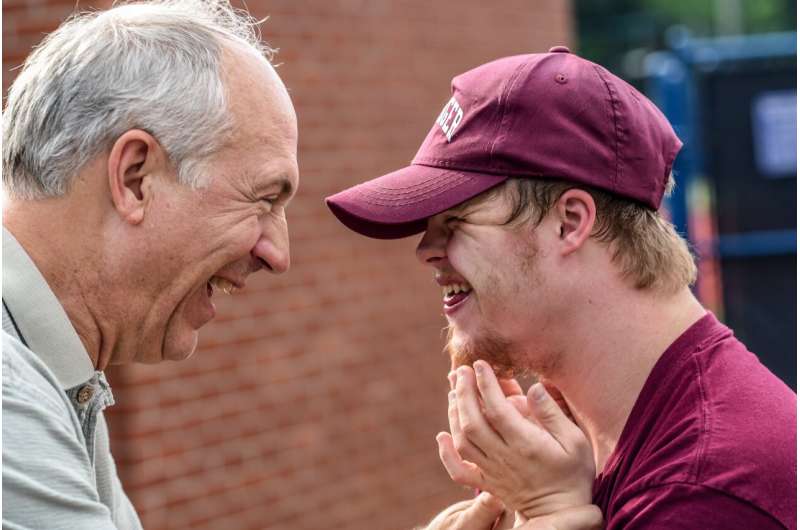
More powerful than any statistic, however, is the voice of the community itself. A 2023 U.S. study of 242 families found that 99% of people with Down syndrome report being happy with their lives, and 97% like who they are. Their parents echo this sentiment: 99% say they love their child, 97% are proud, and nearly 80% say their child has enriched their lives. Siblings, too, express overwhelming affection and pride. Yet, in prenatal counseling, this reality is rarely shared. Over 60% of parents in that same study reported that doctors delivered the diagnosis as "bad news," reinforcing stigma instead of offering balanced, up-to-date information.
This gap matters. It shapes decisions made in moments of vulnerability. It perpetuates a medical model that sees disability as deficit, rather than a form of human diversity shaped by social support and opportunity. The social model of disability, developed in the 1970s, reminds us that barriers are not inherent to the individual, but built by society. When we focus only on biology, we ignore the power of community, love, and inclusion to transform lives.
The conversation sparked by Ridgway’s post is not about shaming personal choices, but about demanding better information. As families face life-changing decisions, they deserve facts that reflect the full picture—medical realities, yes, but also the joy, resilience, and belonging that define so many lives touched by Down syndrome. The future of disability inclusion begins not in the clinic, but in the stories we choose to tell.