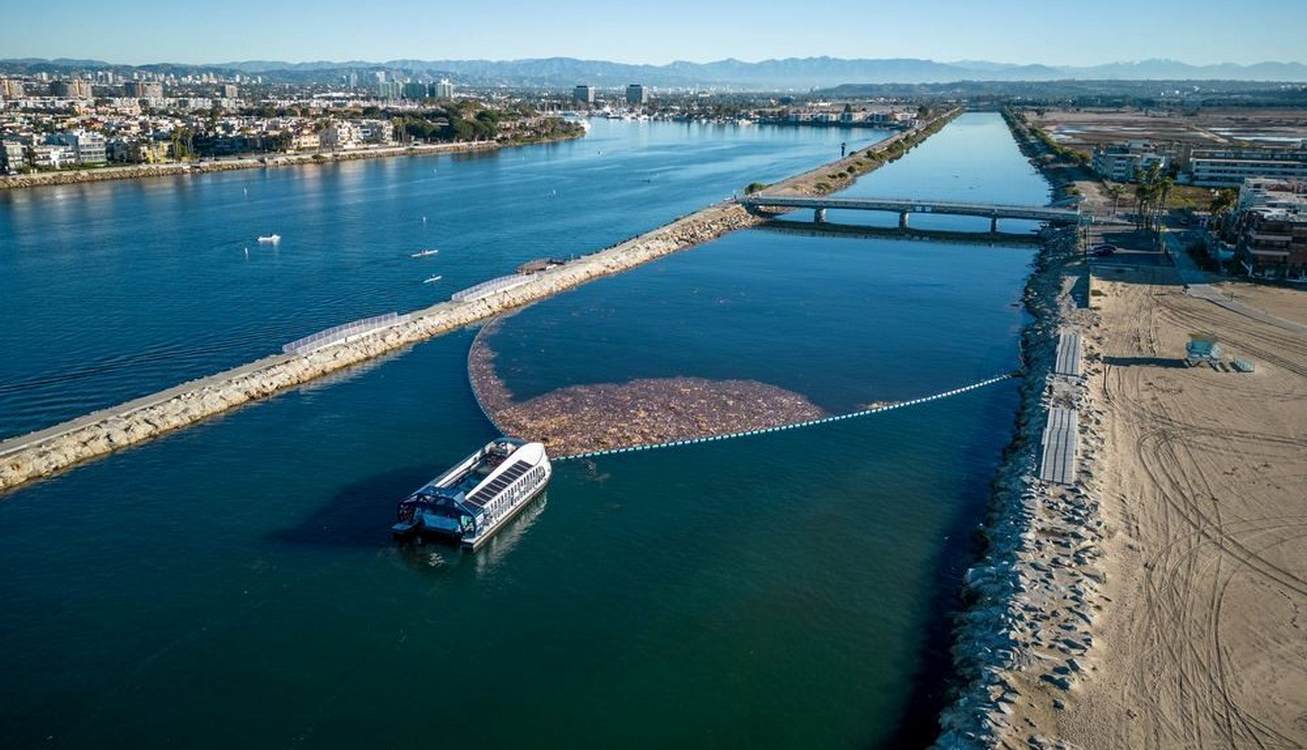
Boyan Slat's barge sits quietly in Ballona Creek near Marina Del Rey, waiting. It is a hulking white thing, bulbous and still, doing almost nothing at all—until the rain comes. Then thousands of gallons of stormwater rush down from Venice, Beverly Hills, and Santa Monica, carrying with them the accumulated refuse of a dozen neighborhoods toward the ocean. That is when the Interceptor springs to life.
Since its installation in 2022, this deceptively simple machine has pulled more than 200 tons of trash from Los Angeles's waterways each year, intercepting everything from plastic bags to discarded furniture before it can reach the Pacific. Now, as the city prepares to host the 2028 Summer Olympics, local authorities are bringing in reinforcements. Seal Beach City Councilmember Joe Kalmick and California State Assemblywoman Diane Dixon have partnered with Slat's nonprofit organization, the Ocean Cleanup, to deploy a second Interceptor barge on the San Gabriel River—a river system that has long struggled with the sheer volume of urban waste.
The Interceptor is elegantly mechanical in its operation. When rain triggers stormwater flows, a diver positions a boom and net against the concrete side of the river canal. The trash-laden current funnels into a central mouth, where a conveyor belt mechanically extracts the debris and deposits it into six bins mounted on the barge's deck. Once full, the vessel is towed to harbor, where a crane hoists the accumulated waste for processing and eventual recycling or proper disposal. It is a solution born from necessity and refined through practice, invented by Slat after he initially became known for his ocean-based cleanup efforts targeting the Great Pacific Garbage Patch.
The stakes for this expansion are high. Long Beach, which will host Olympic rowing and open-water swimming events, needs beaches and waterways that reflect the city's best self. Long Beach Mayor Rex Richardson, announcing the decision to bring the multimillion-dollar barge to San Gabriel, articulated this clearly: "We want to make sure we present the very best of Los Angeles and Long Beach, and that includes a cleaner, healthier, more beautiful coastline." The Olympics serve as both deadline and motivation—but the work itself matters independently of any sporting calendar.
James Patterson, head of the Ocean Cleanup's Los Angeles operations, has been candid about the challenges ahead. The LA River and San Gabriel River demand a different engineering approach than the rivers where the Interceptor was originally conceived. Slat developed the technology for the world's 100 most polluting rivers, many in low and middle-income countries, but the sheer volume of trash in Southern California's urban waterways is formidable. Each barge, Patterson noted, is built a little differently—customized to its specific environment and the particular waste profile it will encounter.
What makes this effort worth noting is not merely the spectacle of the 2028 Games, but what it signals about the feasibility of automated, scalable solutions to one of cities' thorniest environmental problems. A single barge collecting 28,000 pounds of trash annually from Ballona Creek is not solving Los Angeles's waste crisis—but it is proof that even in dense urban environments, strategic intervention can measurably reduce what flows into our oceans. As the second Interceptor takes shape, Los Angeles offers other coastal cities a quiet lesson: sometimes the best way to prepare for the world's attention is to clean house.