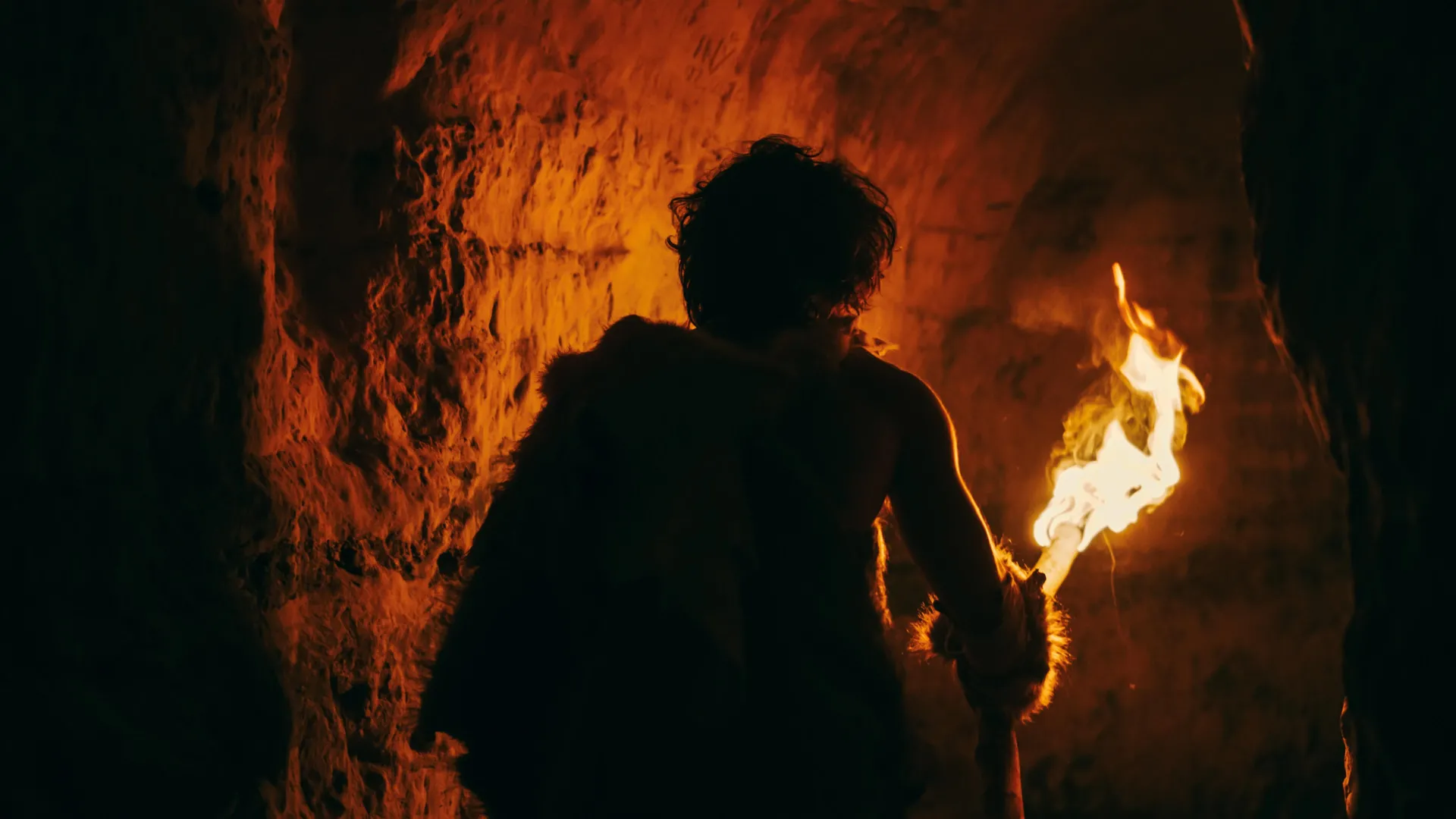
Inside the dusty depths of Wonderwerk Cave, 30 meters from the entrance in South Africa’s arid Kalahari Desert, tiny fossilized rodent bones glow under a special light—not with life, but with the faint, enduring signature of ancient flame. These minuscule remains, once swallowed by owls and regurgitated as pellets, bear microscopic traces of fire that burned between 1.07 and 1.79 million years ago—evidence that early human ancestors were not just witnessing fire, but carrying it into the dark. This discovery, led by Dr. Liora Kolska Horwitz of the Hebrew University of Jerusalem and an international team spanning nine countries, rewrites one of the most elusive chapters in human evolution: our first meaningful relationship with fire.
For decades, archaeologists have debated when hominins first began using fire intentionally. The answer has remained frustratingly out of reach, obscured by the subtlety of ancient burn marks and the difficulty of distinguishing human activity from natural wildfires. The 2012 identification of fire remnants at Wonderwerk Cave—dating to around one million years ago—was once considered the earliest definitive evidence. But now, thanks to a groundbreaking technique that detects light emitted by burned bone, researchers have pushed that timeline back by nearly 800,000 years.
The new method, non-invasive and portable, analyzes the luminescence of fossilized bones when exposed to specific wavelengths. When combined with chemical analysis, it revealed burned animal bones deep within the cave’s archaeological layers—far beyond where lightning-sparked wildfires could reach. These remains were found alongside early Acheulean stone tools, likely crafted by Homo erectus, and in a layer devoid of guano, ruling out spontaneous combustion. The conclusion is compelling: early humans were collecting fire from natural sources—perhaps after lightning strikes or grassfires—and bringing it into the cave, maintaining it for warmth, protection, and light.
Even more intriguing is the possibility that ancient humans used owl pellets—rich in dry, combustible material—as fuel. The burned rodent bones within them suggest these pellets may have fed the flames, revealing a resourceful adaptation long before fire-making was mastered. While there’s no evidence yet that these hominins could create fire at will, the ability to transport and sustain it marks a cognitive and behavioral leap—one that laid the foundation for cooking, social gathering, and survival in harsh environments.
“This study provides new tools for identifying traces of ancient burning and reveals that fire was repeatedly present deep inside Wonderwerk Cave,” said Dr. Kolska Horwitz. As this technique spreads to other sites, it opens a new window into humanity’s fiery past—one flicker at a time.