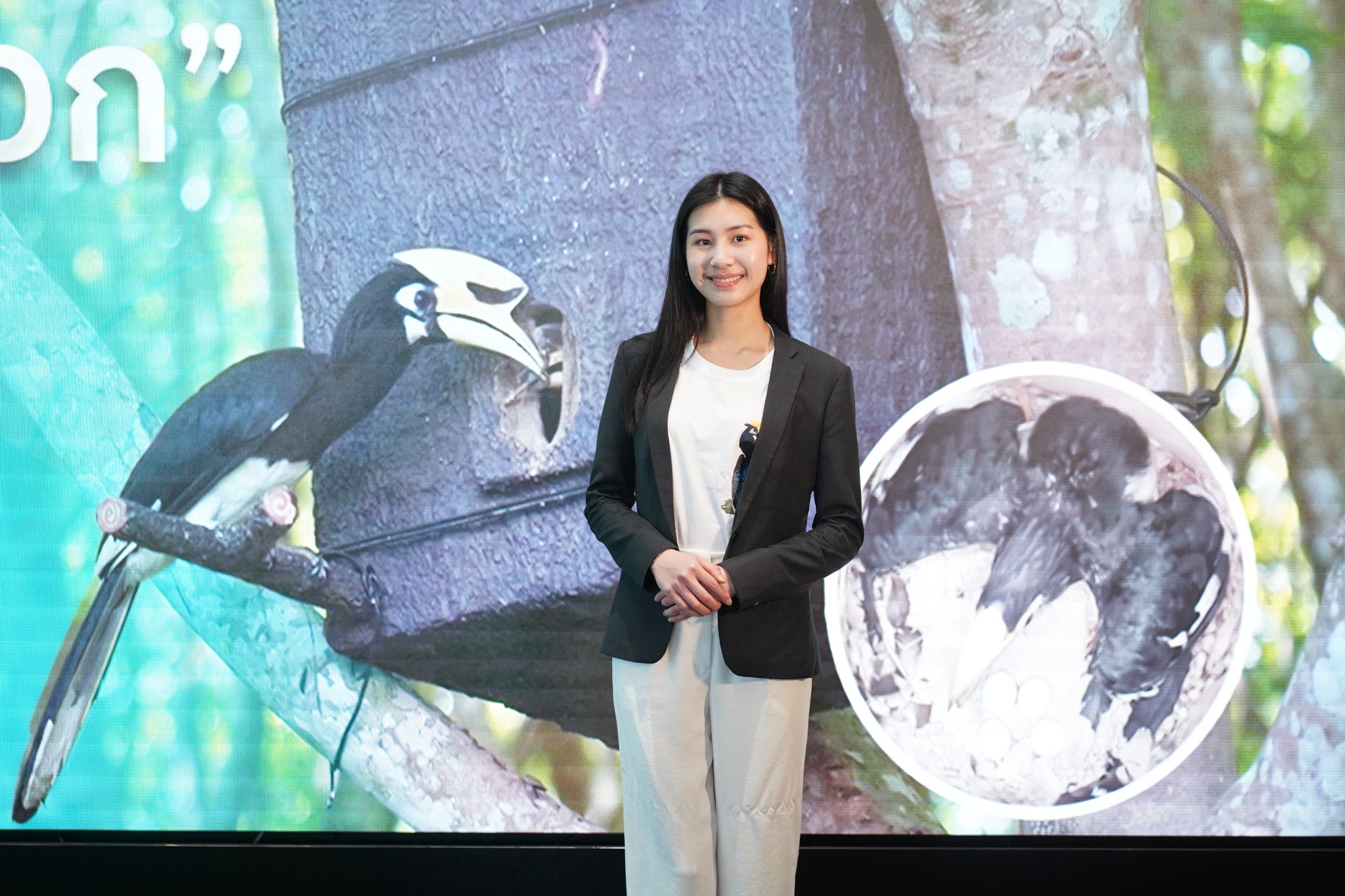
When 17-year-old Yanin Tangkaravakoon, known as Proud, first saw a hornbill gliding through the canopy of Khao Yai National Park on a school trip, its massive beak and slow, powerful wings left an impression that would years later become a mission. Today, in southern Thailand, 20 artificial nests made from upcycled plastic bottles hang in the trees—each shaped to the exact nesting needs of hornbills, each a lifeline for a species in decline. With 51 of the world’s 62 hornbill species losing ground to deforestation, poaching, and habitat loss, Proud’s Homes for Hornbills isn’t just about shelter—it’s about restoring ecological balance. Hornbills are vital seed dispersers, shaping how forests regenerate across Southeast Asia. Her project combines nest deployment, a school-based conservation curriculum, and community income alternatives to reduce reliance on poaching. In 2025 alone, 14 hornbill chicks fledged from these nests, and 14 nests are now occupied—a quiet but measurable victory. Proud’s documentary, now streaming on Thai PBS, tells the story of this effort, and her Earth Prize win will help expand both nest installations and community partnerships.
Meanwhile in Puerto Rico, 17-year-old Helena do Rego is turning a beachside crisis into innovation. Sargassum seaweed, once a natural part of marine ecosystems, now arrives in suffocating waves—over 40 million metric tons across the region in 2025. Helena’s SargaTex PR transforms this overwhelming biomass into biodegradable flip-flops and beach products, using local waste like coffee grounds and cranberry juice in early prototypes. The resulting biofabric breaks down within weeks, offering a sustainable alternative to plastic-laden tourism goods. With prize funding, she’s scaling collection through Scuba Dogs, a local ocean cleanup group, and developing the material in university labs for broader use.
In Brazil, Bernardo Renner and Ísís Valentin—both volleyball players—grew frustrated with the limitations of conventional bandages. Their invention, HADA, is a biodegradable dressing made from aloe vera and chamomile, plants known for their healing properties. It doesn’t just cover wounds—it supports regeneration and decomposes in soil within 48 hours. With an estimated 2.2 billion plastic bandages discarded globally in 2023, HADA offers a smarter, kinder alternative. Backed by four research papers and a partnership with Instituto Caldeira, the duo is now pushing toward real-world deployment in schools and clinics.
These young innovators represent the heart of the Earth Prize 2026, now in its fifth year and born from the 2019 School Strike for Climate. With public voting open until May 29, their ideas are not just solutions—they’re invitations to reimagine a world where waste becomes resource, and small actions spark large change.