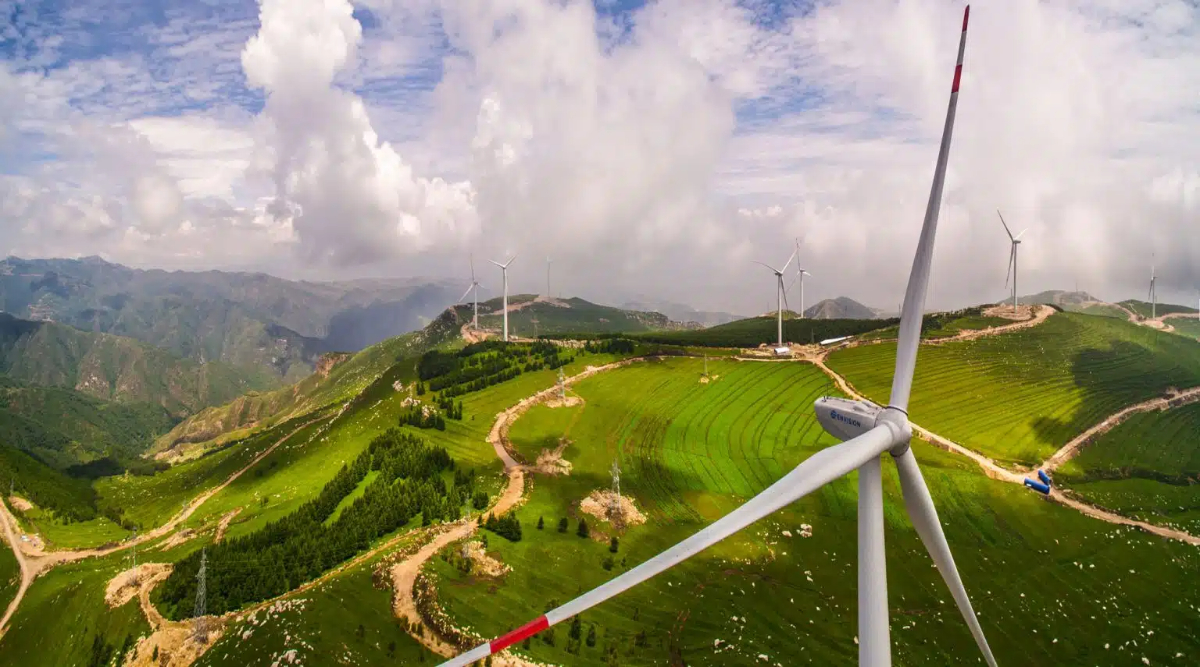
The wind doesn't always blow, and the sun doesn't always shine. It's the oldest objection in the clean energy debate, and it rests on a foundation of half-truths that became obsolete years ago. But Earth.org has now assembled hard data showing that the mythology surrounding renewable energy—that it's too expensive, unreliable, and environmentally destructive—belongs to a different era entirely.
The facts matter because they shape energy policy, investment decisions, and the future of the planet. According to a 2024 International Renewable Energy Agency report cited by Earth.org, 91% of new renewable power projects commissioned globally cost less than the cheapest new fossil fuel option available. This represents a dramatic reversal from 2010, when solar panels cost five times more than thermal generation. Today, solar is 41% cheaper and onshore wind is 53% cheaper than they were back then. In 2024 alone, the shift to renewables saved an estimated $467 billion in global fuel expenditures—nearly half a trillion dollars in a single year.
The reliability argument falls apart once you factor in energy storage, which has undergone its own revolution. The cost of fully installed battery storage dropped 93% between 2010 and 2024, making grid-scale systems economically competitive at a scale unimaginable a decade ago. These batteries operate at millisecond speeds, capturing excess solar power during midday peaks and releasing it during evening demand surges. The U.S. Energy Information Administration projects that 24 gigawatts of new utility-scale storage will come online in the United States in 2026—shattering the previous year's record of 15 gigawatts. Most strikingly, renewables combined with storage now account for 93% of all new utility-scale capacity additions in the U.S., leaving natural gas with just 6.3 gigawatts of the market share.
Environmental critics point to manufacturing and raw material extraction, raising legitimate concerns about the carbon footprint of renewable infrastructure. Yet research from the National Renewable Energy Laboratory reveals that wind turbines emit just 13 grams of carbon dioxide per kilowatt-hour during their operational lifetime. Solar panels produce 43 grams. Compare that to natural gas at 486 grams and coal at 1,001 grams per kilowatt-hour—meaning coal is nearly 80 times more carbon intensive than wind. An average wind turbine or solar panel recoups the carbon cost of its own production in a matter of months, then operates with near-zero emissions for 25 to 30 years.
What makes Earth.org's analysis compelling is its refusal to dismiss the kernels of truth embedded in old arguments. Solar panels were indeed vastly more expensive in 2010. The sun doesn't always shine, and the wind does stop blowing. But technological breakthroughs and cost declines have moved the conversation so far beyond those constraints that citing them as reasons to abandon renewable energy requires either willful ignorance or motivated reasoning.
The renewable transition is no longer a future scenario or a moral aspiration. It's the economic reality of how new electricity generation gets built today. The data suggests that for anyone still operating on 15-year-old information, it's time to update the calculation.