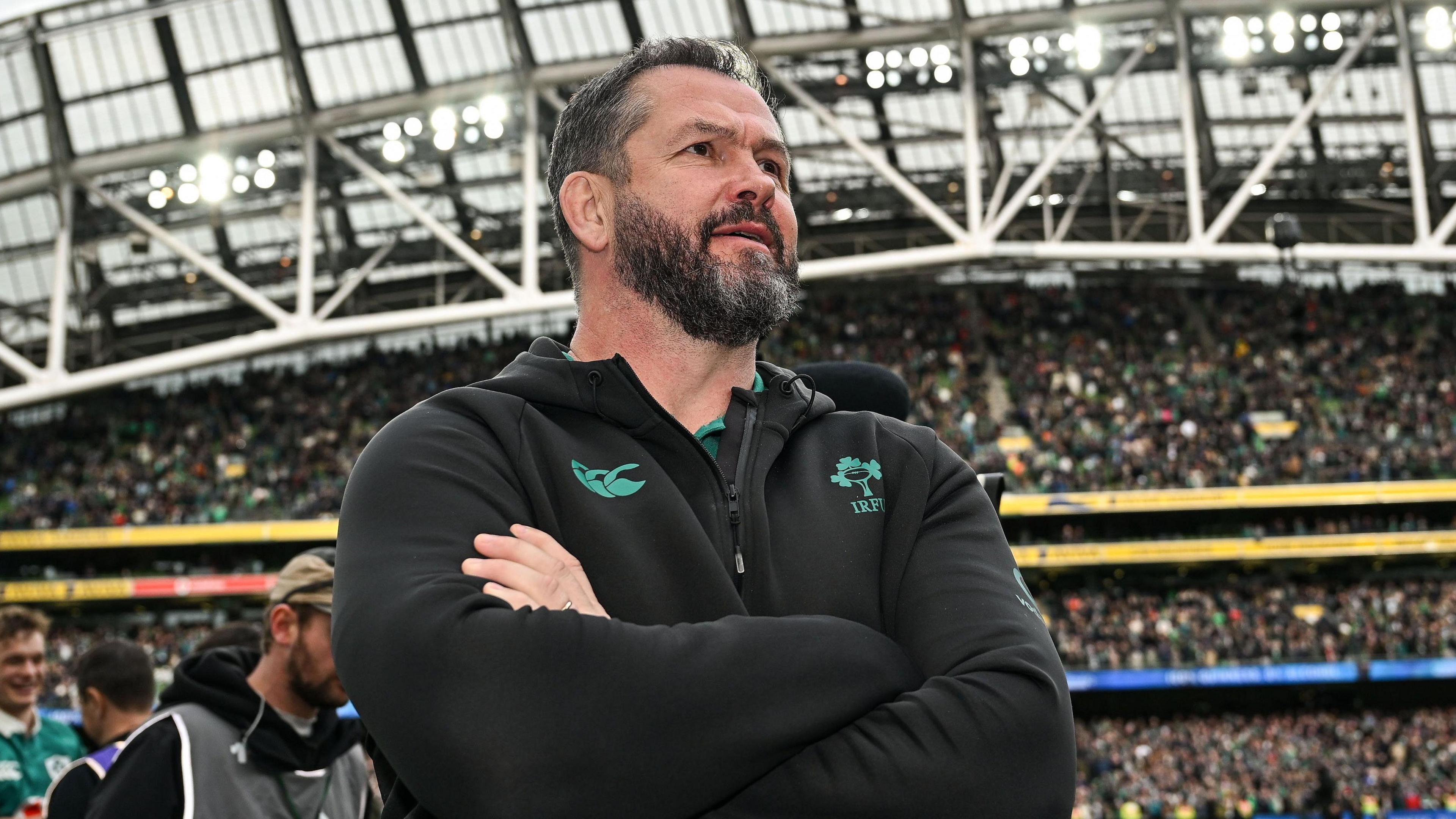
Andy Farrell inked a four-year contract extension with Irish Rugby Football Union on Tuesday, committing to lead the team through the 2031 World Cup in the United States—a decision he described as effortless. The 51-year-old English coach, whose previous deal was set to expire after the 2027 Rugby World Cup in Australia, will now guide Ireland for five years, anchoring the team through a transformative period that promises both opportunity and challenge.
Since taking over from Joe Schmidt in 2019, Farrell has delivered tangible success. He steered Ireland to two Six Nations titles, including the 2023 Grand Slam, and orchestrated a historic Test series victory over the All Blacks in New Zealand—a watershed moment for Irish rugby. Yet his greatest aspiration remains unfulfilled: a World Cup run beyond the quarter-finals. That agonizing last-eight exit to New Zealand in Paris three years ago still stings, and it will likely define the mission ahead.
"To be asked means a lot because it means a little bit of what you do is appreciated," Farrell told IrishRugby TV. "But to get to this point, there's so many people that have helped us get to this point." The commitment signals continuity at a time when speculation had linked him with positions at Saracens and with England—distractions that have now evaporated.
The road forward is dense with possibility and complexity. Ireland face a summer tour to the southern hemisphere in July, with fixtures against Australia, Japan, and New Zealand before Nations Championship matches in November. The Six Nations title defense comes next spring, followed by the World Cup in Australia—what Farrell calls "some of our lads who've been there" navigating alongside younger players experiencing these stages for the first time. "There's a lot of firsts that are constantly going to happen," he reflected. "What a year, what an 18 months that's going to be."
Yet the contract extension arrives against an unavoidable reality: wholesale generational change looms. Many of Farrell's most experienced figures—Tadhg Furlong (33), Tadhg Beirne (34), Josh van der Flier (33), Jack Conan (33), Bundee Aki (36), Stuart McCloskey (33), Jamison Gibson-Park (34), and Robbie Henshaw (33)—will view next year's Australian World Cup as their final shot at rugby's ultimate prize. James Lowe, another Farrell cornerstone at 33, remains in limbo as his Leinster future sits unresolved. The stakes for 2027 are extraordinarily high, both personally for these players and collectively for a nation hungry for its first World Cup.
Farrell has weathered seismic transitions before. He absorbed the retirements of captains Johnny Sexton and Peter O'Mahony alongside stalwarts Conor Murray, Cian Healy, and Keith Earls. That experience navigating squad evolution suggests he possesses the acumen to rebuild while maintaining momentum. Recent signs are encouraging: Tommy O'Brien and Robert Baloucoune have injected pace into the attack, while McCloskey has solidified midfield play.
With his future now secured, Farrell can focus without distraction on the coming months. He enters a critical window where Ireland will attempt to land psychological blows against the All Blacks and Springboks exactly one year before the World Cup. The contract isn't merely about stability; it's an investment in a coach trusted to lift Irish rugby to its highest peak.