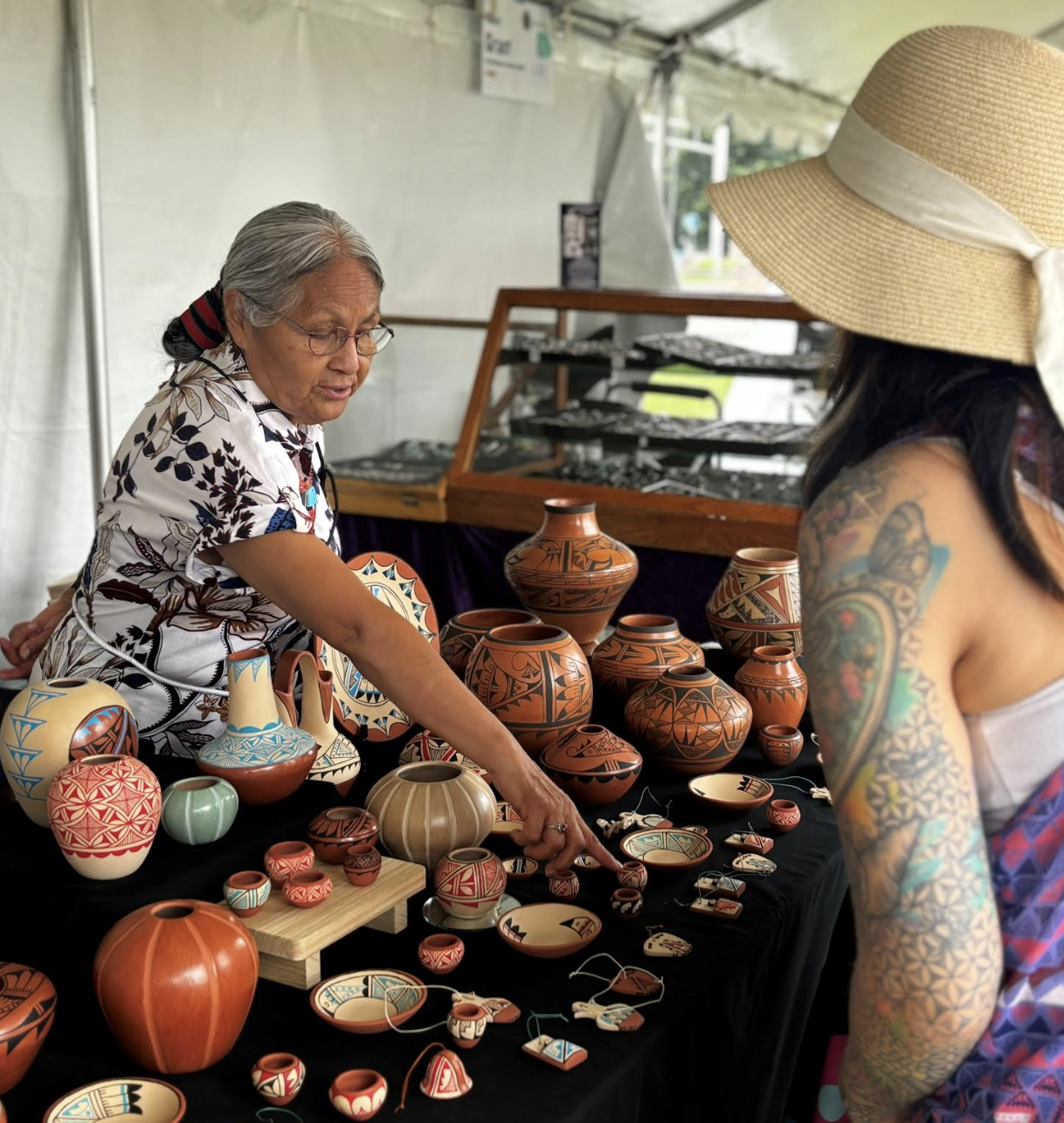
More than 100 Native American artists from across the United States and Canada are converging on Indianapolis on June 27-28 for the 34th annual Indian Market & Festival at the Eiteljorg Museum, one of the nation's premier celebrations of Indigenous art, culture, and community. It's a weekend that transforms a museum into a living gallery of resilience and creativity — where visitors don't just observe Native cultures, they directly support the artists keeping traditions alive.
The festival's breadth is striking. Artists will showcase work in jewelry, pottery, basketry, beadwork, carving, and contemporary fine art, with many returning award winners joined by first-time participants making their debut. Visitors have the rare opportunity to purchase directly from creators, cutting out middlemen and ensuring artists capture the full value of their craft. What makes this gathering significant is how it positions Indigenous art not as historical artifact, but as a vital, evolving tradition.
This year introduces a groundbreaking cultural performance new to Indianapolis audiences: Turtle Island: From the Creation Story of the Haudenosaunee, an outdoor production combining dance, aerial puppetry, and music. A massive multicolored turtle balloon suspended above the stage will anchor the performance as dancers from the Skywoman Dance Theater bring the Haudenosaunee creation story to life through movement. The production embodies the festival's core philosophy — that Native cultures are dynamic and alive. Alongside it, Indigenous Enterprise returns for its second year, performing a style that blends traditional powwow dance with contemporary influences like hip-hop, demonstrating how Indigenous communities have always adapted and evolved.
Conner Richberg of the Mohawks of the Bay of Quinte, the Eiteljorg's festivals manager, explains the deeper purpose at stake. "Every year the Eiteljorg Indian Market & Festival invites people to experience the vibrancy and resilience of Native cultures as living, evolving traditions — not something stuck in the past," Richberg said. "When visitors come, they're directly supporting Native artists, hearing stories from Native voices, and engaging with traditions that have endured despite generations of challenges." He was explicit about what the festival rejects: "At its core, this weekend isn't about appropriation — it's about appreciation, learning, and connection. It's a celebration of Native resilience, creativity, and the cultures that continue to shape our communities today."
Beyond performances and sales, the festival weaves education throughout the weekend. Visitors can participate in hands-on activities, watch artists at work in live demonstrations, meet artists scheduled for future museum residencies, and explore exhibitions including Cowboy Couture: The Fashion of Jerry Lee Atwood. A juried art competition will recognize outstanding works, with winners receiving ribbons and cash prizes during the Market Morning Breakfast on June 27.
The festival has also thought through access. Admission discounts are available for advance purchases, while museum members and Native visitors presenting tribal identification receive free admission. Native-owned food and beverage vendors will operate throughout the weekend, ensuring that economic benefit spreads through Indigenous businesses. This year's commemorative T-shirt features Turtle Drum by David Martin, another direct investment in an artist's work.
What emerges is a model of cultural celebration rooted in genuine exchange — not extraction. The Eiteljorg isn't asking people to consume Native cultures from a distance. It's asking them to show up, listen, buy directly, and witness traditions that have survived centuries of pressure precisely because they continue to evolve. For artists and for visitors, that's the real story.