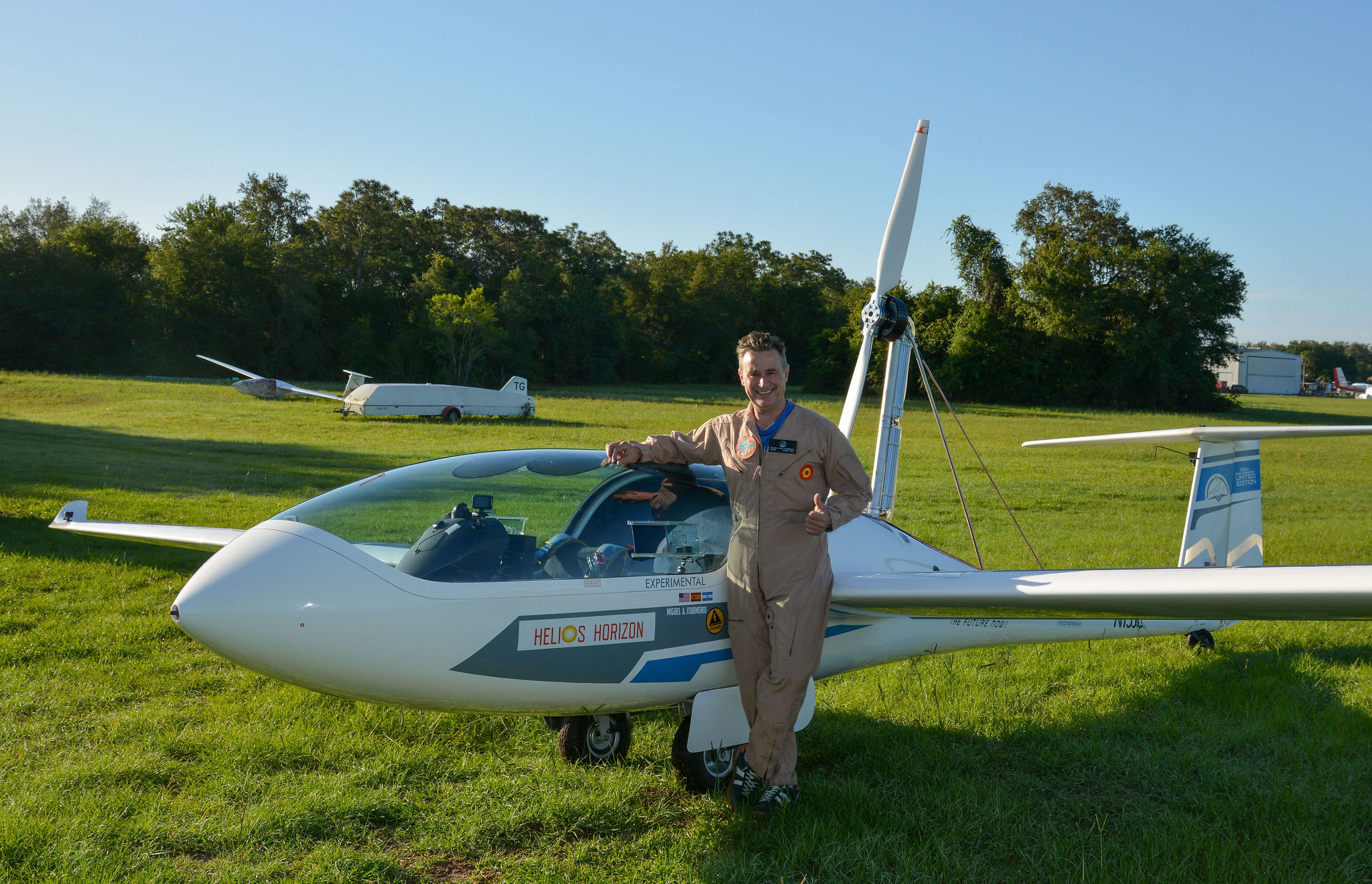
A 25-foot aircraft with a 61-foot wingspan lifted into the sky over the United States this spring, its pilot the only human aboard—a milestone that signals solid-state batteries have moved from laboratory promise into lived reality. Helios Horizon, a nonprofit organization advancing electric aviation, completed a crewed test flight of an experimental aircraft powered by solid-state battery cells, marking a tangible step toward a technology that has long hovered at the edge of commercial viability.
For years, solid-state batteries have represented the next frontier of energy storage. Unlike conventional lithium-ion cells that power today's electric vehicles and consumer devices, solid-state batteries use a solid electrolyte instead of a liquid one, promising dramatically higher energy density and improved safety. The prospect has captivated engineers and investors, yet commercial availability has remained frustratingly out of reach. Helios Horizon's test flight—carrying no passengers, just founder and chief test pilot Miguel Iturmendi conducting assessment flights at approximately 60 miles per hour below 500 feet—offers concrete evidence the technology is ready to leave the drawing board.
The batteries powering the aircraft achieved 410 watt-hours per kilogram of energy density, a 60 to 80 percent improvement over the 260 Wh/kg of conventional lithium-ion cells previously used in the same aircraft. Each battery weighs about 80 pounds, and the aircraft can operate with either two or four batteries depending on mission requirements, providing a total battery weight of 160 to 320 pounds. The solid-state cells came from commercially available sources—Helios Horizon sourced them from various resellers rather than manufacturing them in-house, positioning the organization as an end-user much like any consumer adopting emerging technology.
The cost barrier remains substantial. The total battery pack price reached $30,000, roughly three to four times the cost of building an equivalent lithium-polymer battery pack. Yet Iturmendi expressed confidence that prices will decline significantly as the technology scales and adoption widens. Beyond energy density, the solid-state batteries deliver additional advantages that matter enormously for aviation safety: they can charge from nearly empty to 80 percent capacity in less than 15 minutes, and they exhibit remarkable thermal stability. Unlike conventional batteries prone to combustion when exposed to high temperatures or physical punctures, solid-state batteries remain stable under these stressors, drastically reducing fire risk—a critical consideration in aircraft design.
The test flights on Friday were abbreviated pattern flights designed as a careful first step, focused on assessing changes to center of gravity and handling characteristics with the new batteries installed. Earlier, Helios Horizon had completed tethered ground runs with the aircraft operating at full power until battery depletion, along with extensive electrical system testing under load. These Friday flights pave the way for stratospheric envelope expansion testing scheduled for fall—more ambitious altitude and duration flights that will push the boundaries of what's possible with this emerging battery chemistry.
Commercial certification of solid-state batteries for aviation could arrive within two to three years, though that timeline depends on battery manufacturers and regulatory approval. Industry experts anticipate energy density gains of another 40 percent within the next two years alone. For an industry searching for solutions to long-range electric flight, these advances signal a shift from speculation to demonstration, from "someday" to the tangible work of making it real.