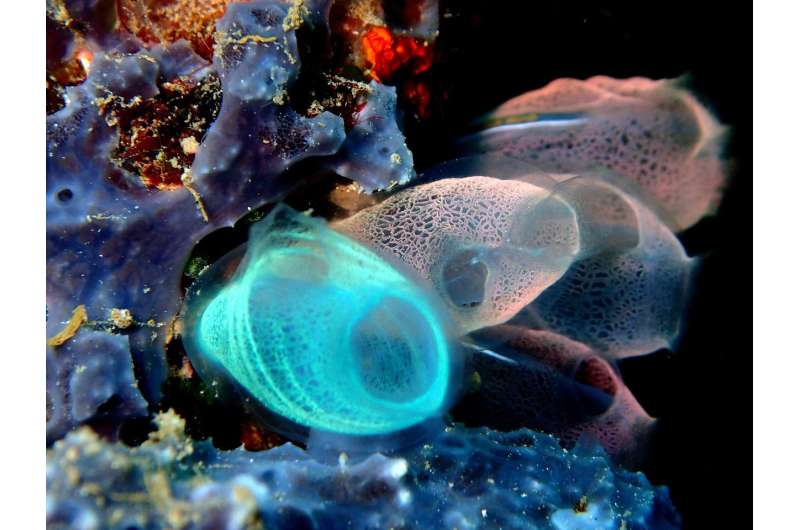
When Jos Domen set out during the COVID lockdowns to help his teenage daughter find a science project, he had no idea he was about to unlock a mechanism for reversing aging itself. The experiment began simply enough: applying electrical pulses like those used in human pacemakers to the tiny hearts of sea squirt colonies at Stanford's Hopkins Marine Station. Within 48 hours, something extraordinary happened. The creatures grew larger, turned brighter in color, and became visibly rejuvenated. This wasn't just cosmetic—the sea squirts were growing faster and becoming more fertile, displaying the unmistakable markers of youth.
The discovery, published in PNAS and conducted by researchers at Stanford and other institutions, reveals that brief bursts of electrical stimulation can trigger profound and long-lasting health improvements in these ancient creatures. Sea squirts may seem like unlikely candidates for unlocking human aging secrets—spineless, gelatinous beings that look like tiny, brightly colored flower petals—but they share approximately 70 percent of human genetic material, a legacy of a common ancestor from roughly 500 million years ago. This biological kinship is precisely why researchers like Ayelet Voskoboynik, an assistant professor of biology at Stanford, have studied them for decades to understand stem cell function and human immune systems.
What makes sea squirts uniquely valuable for this research is their remarkable biology: they rebuild their entire body tissue about every week, making stem cell activity visible and easy to observe in real time. Over more than 20 years, Stanford researchers tracked changes across more than a thousand cycles of regeneration, building a deep understanding of how these creatures age. The key insight is that sea squirts only truly age when their stem cells do, making them a living laboratory for studying the cellular basis of aging itself.
The experimental protocol was elegantly simple: three rounds of five-minute electrical pulses, applied to boost the colony's coordinated heart rate. As the electrical stimulation increased, blood moved more freely through the sea squirts' shared circulatory systems. The researchers then analyzed gene expression immediately after treatment and 24 hours later, discovering what Voskoboynik describes as a "reboot and rebound" of many genes. The treatment caused sea squirts to shut down gene activity and then ramp it back up—a process that directly affected the stem cells driving aging itself.
Even more remarkably, the effects proved durable. When researchers applied just 15 minutes of electrical stimulation to a sea squirt colony in the laboratory, the resulting changes persisted for at least four months. The team documented that some genes impacted in the treated sea squirts are the same genes activated in humans after intense exercise—genes associated with stress, inflammation, and crucially, with strengthening and repair pathways.
"This treatment recharges stem cells," Voskoboynik explained. "Understanding this mechanism is the key to unlocking how we might one day slow stem cell aging and trigger rejuvenation pathways." The implications extend far beyond curiosity. The findings open new possibilities for protecting marine species threatened by warming waters, for understanding why stem cells in human bodies degrade over time, and potentially for developing therapies that could one day apply these same principles to human medicine. What began as a pandemic-era father-daughter science project may have handed researchers a fundamental tool for understanding—and perhaps reversing—the biology of aging itself.