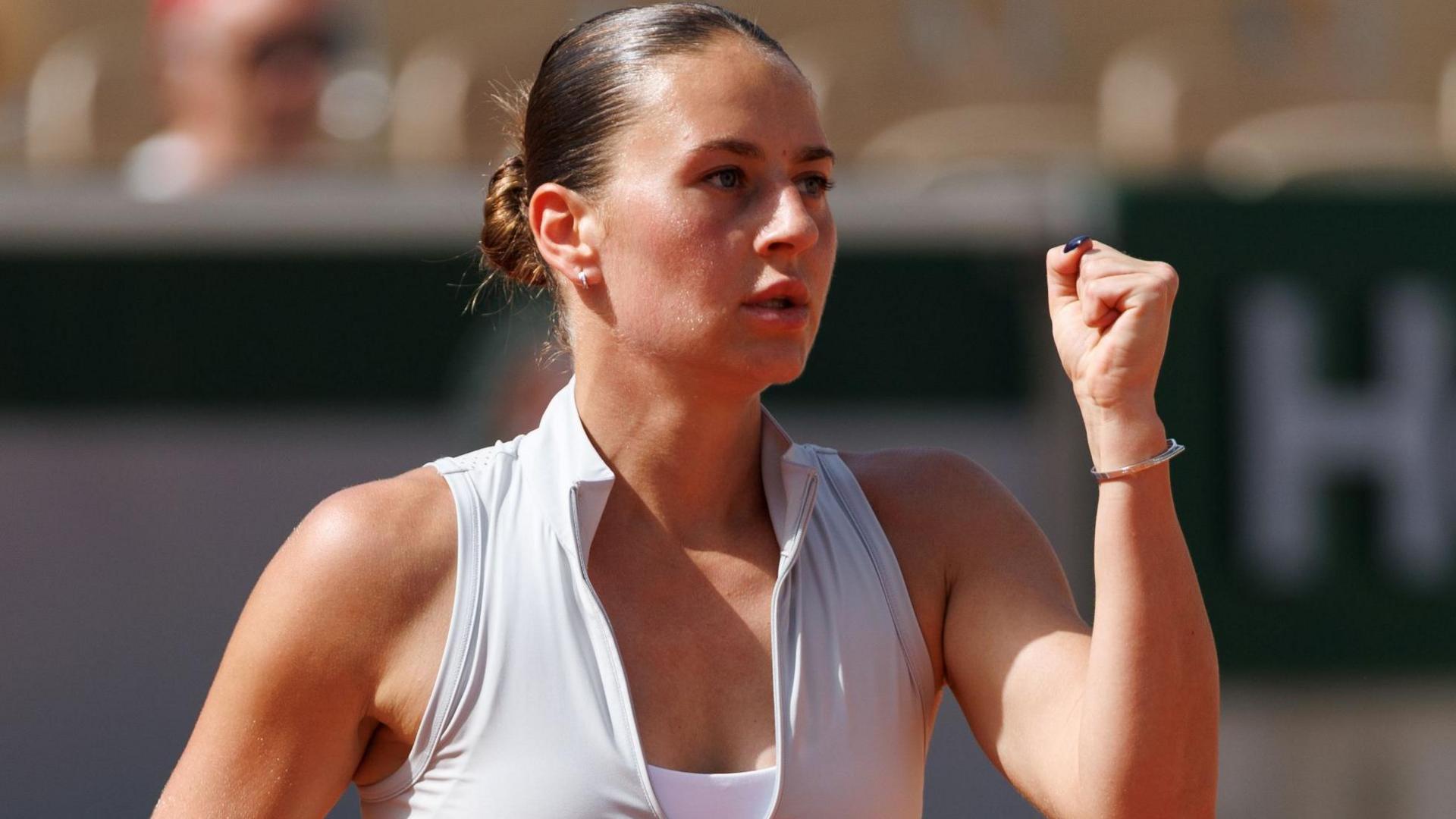
Marta Kostyuk's racket strike echoed through the Court de Suzanne-Lenglen in Paris, and her first thought was not of the victory—it was of home. The 23-year-old Ukrainian tennis player, locked in what she would later call one of the most difficult matches of her career, pulled off a first-round win at the French Open and immediately dedicated it to the people of Ukraine, a nation gripped by ongoing conflict that has defined both her professional path and her moral compass since 2022.
The win itself carried extra weight. Kostyuk's opponent, Mirra Selekhmeteva, was competing under the Spanish flag after switching allegiance earlier in the week. But the real weight came from the principle at stake: Kostyuk did not shake hands with her opponent, honoring a long-standing policy among Ukrainian players to refuse handshakes with Russian or Belarusian competitors. It was a quiet but unmistakable stand, one she has maintained as an outspoken critic of Russia and its Belarusian ally since their invasion of Ukraine began.
What made this moment resonate beyond the tennis court was Kostyuk's own words in the aftermath. "My biggest example is the Ukrainian people," she said, her voice steady and purposeful. "I woke up this morning and looked at all these people who woke up and kept living their lives, kept helping people who are in need. I knew a lot of Ukrainian people would come out and support today. My friends from Ukraine came to support and I'm very happy to have them here."
Those friends—her people—were watching from the stands. In a tournament that brings together athletes from around the world, their presence mattered profoundly to Kostyuk. She was not just playing for ranking points or a paycheck. She was playing for the resilience of a nation, for the ordinary people doing extraordinary things simply by continuing to live, to help, to show up for one another while their country endures.
The tennis itself tells its own story of form and momentum. Kostyuk is having a remarkable season on clay, the surface that suits her game and her temperament. She remains unbeaten on clay in 2026 with 12 wins, a streak that places her among the hottest players on the circuit. Only 15-year-old Mirra Andreeva has claimed more clay-court wins on the WTA Tour this season, a testament to Kostyuk's competitive fire even as she carries the weight of her country's struggle.
Now she advances to face American Katie Volynets, who dispatched France's Clara Burel 6-3, 6-1 in a dominant display. The road ahead at Roland Garros will test Kostyuk further, but her commitment is clear: every step forward is a step taken for Ukraine. In a sport often defined by individual achievement, Kostyuk has transformed her victories into something larger—acts of solidarity, reminders that sport can be a platform for principle, and that some things matter more than a trophy.