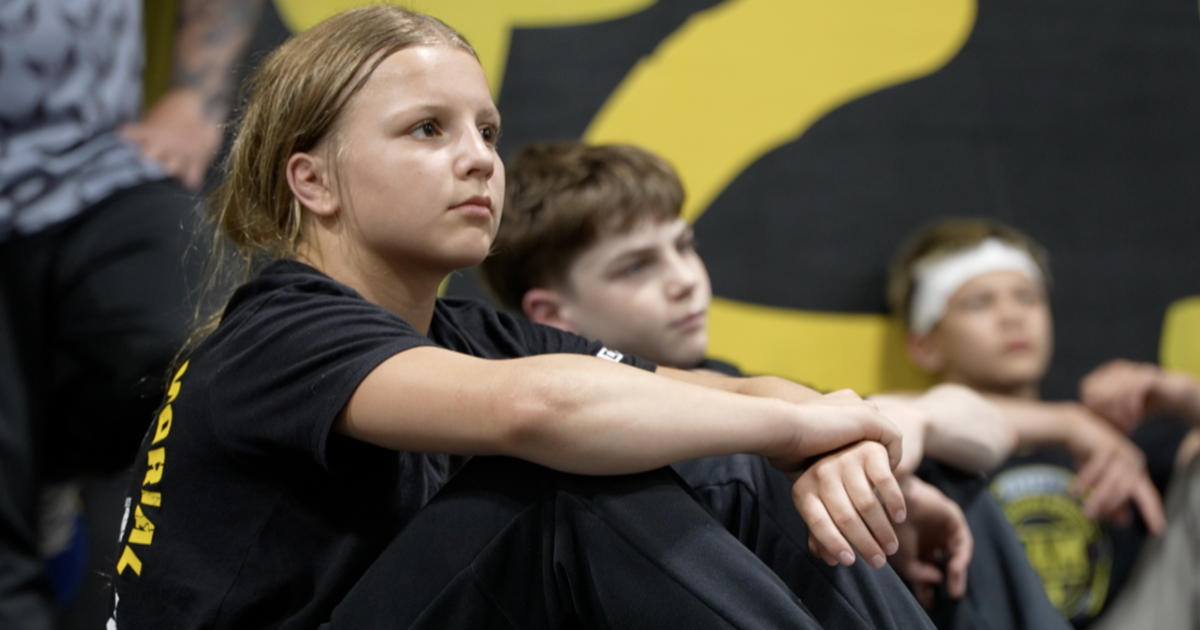
At 5:30 in the morning, while most teenagers her age are still sleeping, Julianna LaSavage is already in the gymnasium. The 13-year-old from Menomonee Falls, Wisconsin, starts each day with an hour and a half of strength and conditioning, then moves through weightlifting, online school, a midday wrestling practice, coaching younger athletes, and another full evening session on the mat. It's a routine most adults would find unsustainable, yet for Julianna, it's simply the path to where she's determined to go: the 2032 Brisbane Summer Olympics.
In just over a month, Julianna will travel to Mexico City as a member of Team USA to defend her Pan American wrestling title—a position she's earned alongside two national titles and a second consecutive year on the national team. The accomplishment matters not just for its prestige, but for what it represents: one of the sport's most talented young competitors is female, and she's pushing back against a landscape that has historically excluded girls from the wrestling mat.
Her father, Dan LaSavage, describes the Pan American championship as foundational. "It's really to define who the best is in this hemisphere," he explains. The honor carried particular weight when it opened the door for Julianna to train at the U.S. Olympic Training Center in Colorado Springs, where she rubbed shoulders with the country's elite wrestlers—world champions and Olympic medalists pursuing the same goal she's had written on her vision board for years.
The commitment required Julianna to make a significant sacrifice: switching to online school to accommodate her training schedule. She doesn't shy away from what she's lost. "I definitely loved being with my friends and talking to them. And I still do. I miss it a little bit," she said with the honesty that defines her. But with two national titles and another Pan American defense on the horizon, the trade-off has proven worthwhile. "It's really paid off, I think," she reflected.
Her coach at BAM Training Center, Anthony D'Alie, attributes her success to something he believes can't be taught. "You can't teach someone how to be a competitor—that has to come within you, and that's exactly what she's got," he said. The drive is evident in how she approaches every aspect of her day, including the time she spends coaching younger kids on the mat, already giving back to the sport that has given her so much.
What stands out most, perhaps, is Julianna's defiance of the narrative that wrestling is a boys' sport. "I hate when boys say you can't do it because you're a girl," she said, her competitive fire unmistakable. "I think girls can do anything boys can do, and they can do it better probably." It's a conviction she lives out every single day, waking before dawn and pushing harder than most.
D'Alie has no doubts about where her dedication will lead. "This doesn't just randomly happen. It takes a lot of hard work. I believe she is the type of athlete that is going to make this happen," he said. For Julianna, the next milestone is Mexico City—but her eyes remain fixed on Brisbane 2032, the first Games where she'll be eligible to compete, and a dream she looks at every single day and truly believes in.