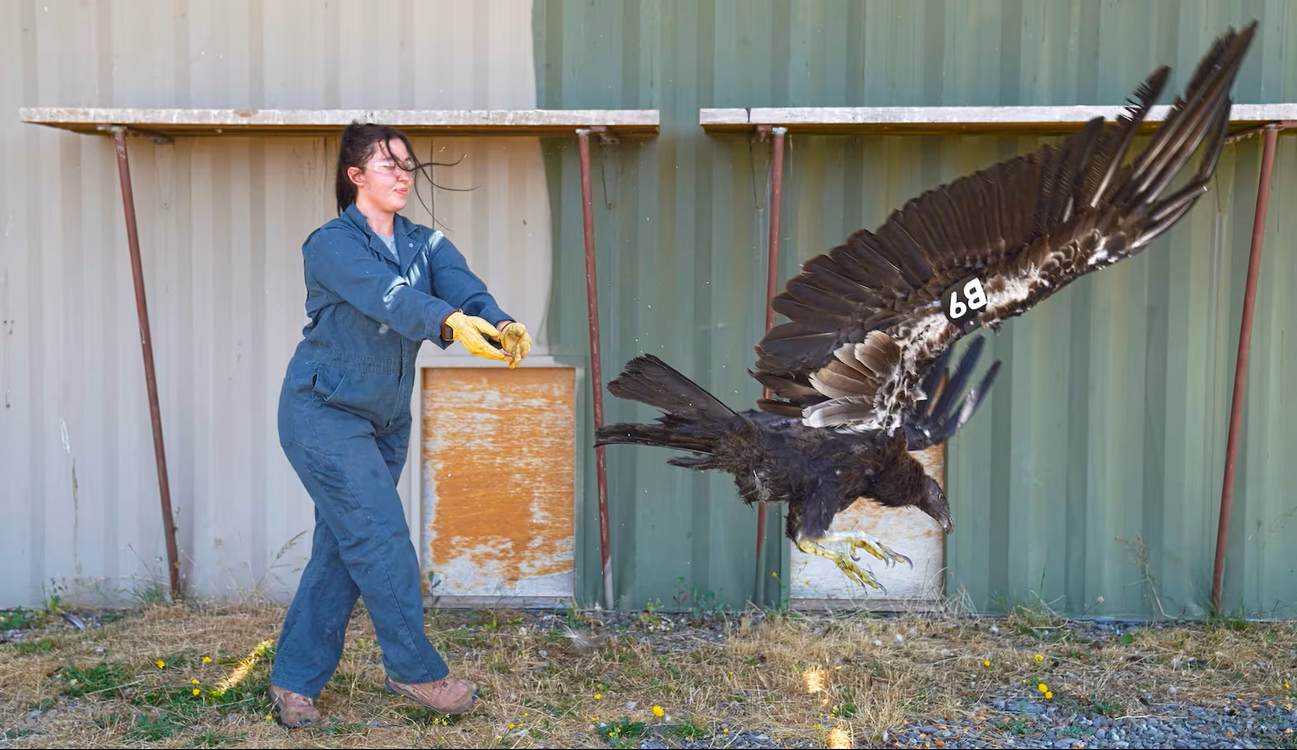
On a crisp morning in early March, condor B9 soared over the misty ridgelines of southern Oregon, its nine-foot wingspan catching thermals above the Rogue Valley—a sight unseen in the state for 122 years. This wasn’t just a flight; it was a homecoming. B9, a California condor born in captivity and released by the Yurok Tribe in 2022, had traveled 380 miles in four days, looping from Redwoods National Park through northern California and into Oregon, stopping near Medford, Cave Junction, and Brookings before returning home. The journey marked the first confirmed sighting of a California condor in Oregon since 1904, a powerful symbol of what’s possible when Indigenous leadership, science, and patience converge in species recovery.
The California condor is North America’s largest bird, once teetering on the edge of extinction. By the 1980s, only 22 wild individuals remained, all captured for a last-ditch breeding program. Today, thanks to decades of effort, there are 276 wild condors—and a growing sense that this species might yet reclaim its ancestral skies. The Yurok Tribe, whose ancestral territory spans the redwood forests of northern California, has been central to this revival. Their condor reintroduction program, launched in 2022, is not just about numbers; it’s about cultural restoration. For the Yurok, the condor is a sacred being, a messenger between worlds.
B9’s journey was more than instinct—it was exploration. "She flew almost 100 miles per day," said Tiana Williams Claussen, Director of the Yurok Tribe Wildlife Department, "which means she was really utilizing the landscape the way that only a condor can, really taking advantage of those mountains and riverways that give good flight corridors." The bird’s path followed natural flyways, tracing river valleys and mountain slopes that once guided condors across the West. Scientists and tribal biologists watched its GPS tracker with bated breath, witnessing in real time the expansion of a species’ range.
Even more hopeful: in February, a female condor laid an egg in a hollow redwood—the first such event in over a century. Though it didn’t hatch, Williams Claussen called it a milestone. "Even with the egg loss, that was still a really amazing milestone for us," she said. "It’s pretty common that eggs will fail in that first year, as these naive parents are really figuring it out." Each small step—each flight, each nest attempt—builds momentum.
This is not a story of sudden triumph, but of slow, steady return. The condor’s comeback is measured in miles flown, in eggs laid, in young birds learning to navigate ancient routes. And as B9 circles above the treetops, it carries with it the quiet promise that some losses can be undone—not all at once, but wingbeat by wingbeat.