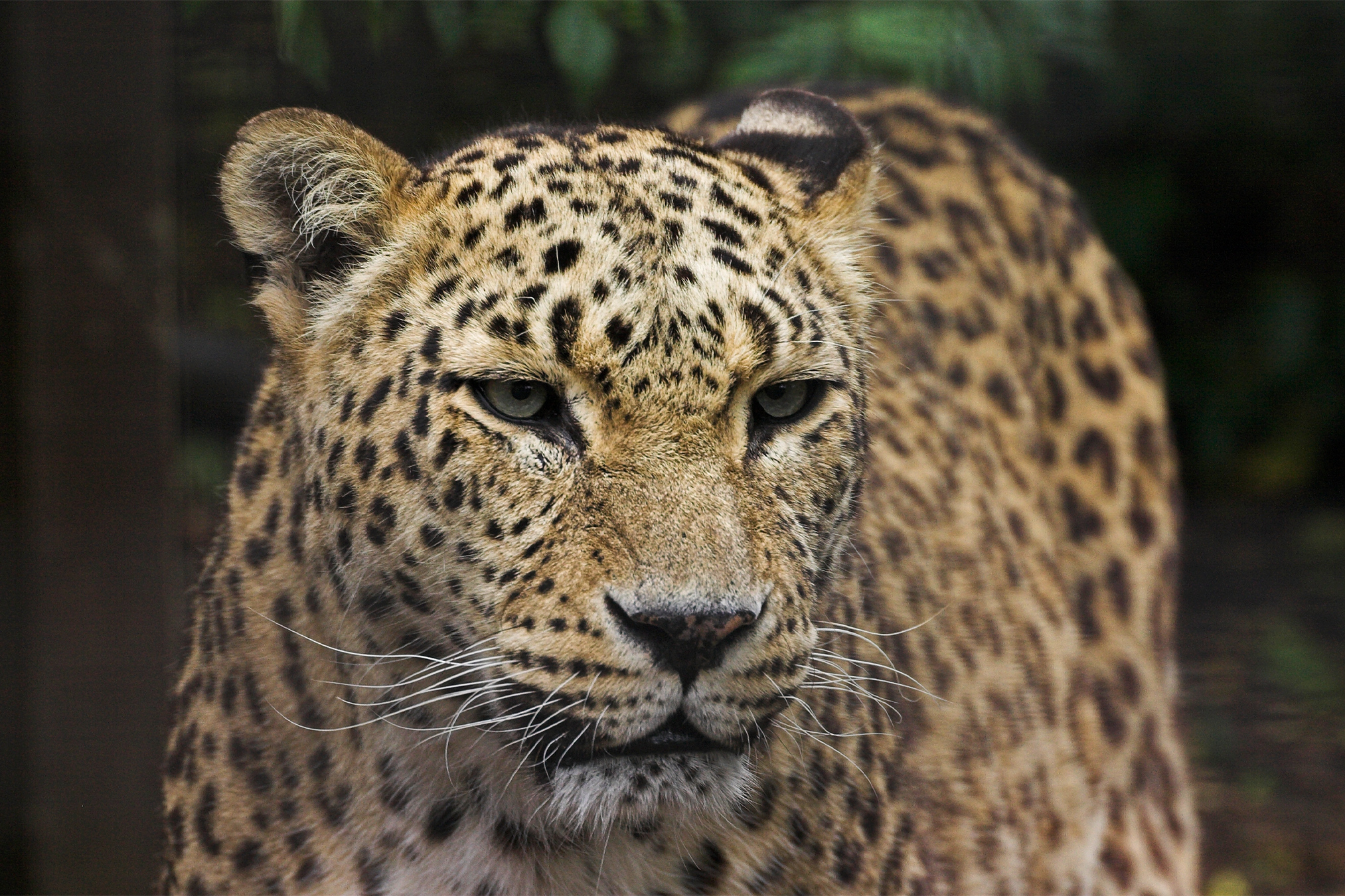
A three-legged Persian leopard named Aren appeared on a security camera in Georgia's Algeti National Park last September, offering conservationists a rare glimmer of hope for one of the world's most critically endangered big cats. The footage came from an ordinary CCTV camera surveilling a breeding enclosure for Caucasian red deer—not a wildlife trap—making the sighting all the more remarkable. When zoologist Bejan Lortkipanidze, who heads the Georgian NGO NACRES, watched the video sent by Tbilisi Zoo director Zurab Gurielidze, he was stunned. It was only the third confirmed Persian leopard sighting in Georgia in two decades.
Fewer than 1,100 Persian leopards remain in the wild today, with roughly 80 percent—perhaps 732 individuals—concentrated in Iran. A handful cling to survival in Russia, the Caucasus, and scattered across Central Asia, occupying just one-quarter of their historical range. The subspecies faces relentless pressure from multiple directions. More than half of all recorded deaths come from retaliatory killings by farmers who poison, trap, or shoot leopards in response to livestock predation. Others are maimed or killed by snares intended for smaller prey. Their fractured habitat is carved by dangerous roads and international borders fenced or laced with landmines—obstacles that would seem impassable for a wounded animal.
Yet Aren has crossed at least two international borders over the past several years. The male leopard was first spotted near Areni village in Armenia's Arpa Protected Landscape in spring 2019, all four limbs intact. By later that year, his left foreleg was gone below the joint. Rangers believe a landmine caused the injury—a sobering reminder of the dangers lurking in this war-torn region. Despite this disability, Aren thrived. Head ranger Samvel Karapetyan described him as "fat," a sign of health in a landscape that proved to be, in his words, a "leopard paradise." The Persian leopard subspecies is the largest of all leopard types, with adult males reaching up to 90 kilograms. Aren adapted his hunting strategy masterfully, hiding in cave mouths before launching himself at Bezoar goats and other ungulates.
In 2022, Aren vanished. Two years later, he reappeared some 130 kilometers to the north in Georgia's Ijevan Forest—a journey that defied the odds stacked against him. His crossing of borders marked by razor wire and the lingering threat of explosives underscores both the resilience of the species and the extraordinary obstacles they face. Biologist Vazha Kochiashvili with WWF Caucasus had suspected the identity of the three-legged leopard the moment he heard the description, a recognition that speaks to how closely conservationists now track these precious remaining individuals.
Aren's story reveals what is possible when habitat connectivity is restored and conservation becomes a regional priority. The Persian leopard's survival depends not on miraculous individual journeys, but on systematic efforts to reduce poaching, address retaliatory killings, and create safe passages across the fractured landscape these animals call home. With fewer than 1,100 left, every border crossing matters.