On the Philippine coast, where turquoise waters meet white sand beaches, a quiet transformation is taking shape beneath the waves. Wind turbines the size of football fields are being planned for the country's deep waters — and now, a $50 billion plan could connect them all the way from Vietnam to India.
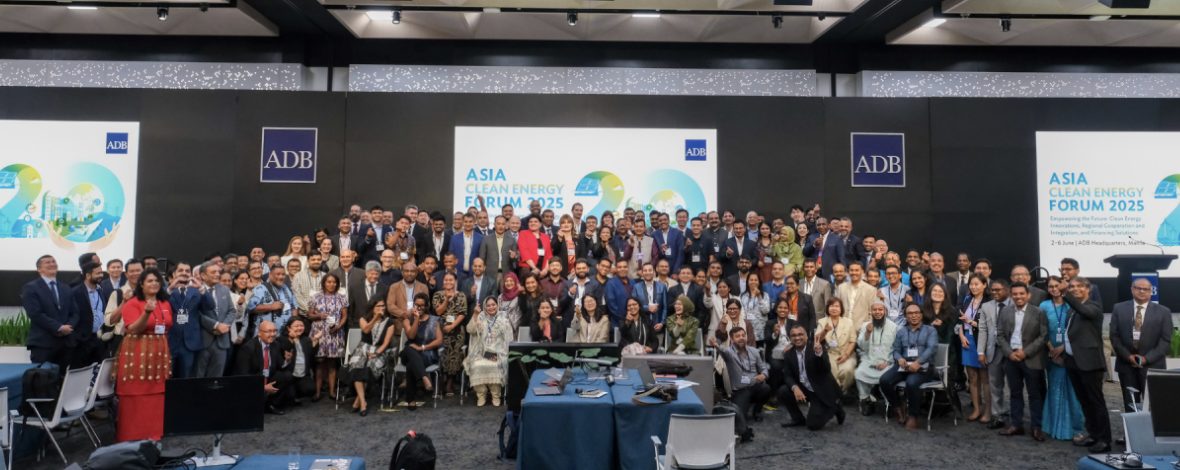
That ambition took center stage at the 2026 Asia Clean Energy Forum held in Manila this June. For four days, government leaders, engineers, and investors gathered at the Asian Development Bank's headquarters to wrestle with one big question: how fast can Asia move toward clean energy, and how do countries work together to get there?
The answers they landed on were surprisingly bold.
More than 400 million people across Asia still lack reliable electricity — 53 million with no access at all and another 350 million with only limited power. Geopolitical conflicts have exposed how vulnerable import-dependent economies are when global fuel prices spike. And now, the rise of AI data centers is pushing electricity demand to record highs.
ADB President Masato Kanda set the tone on June 9. "We have been painfully reminded in recent weeks that, when it comes to energy security, no country can go it alone," he told delegates. His prescription: build power systems that cross borders and share resources.
By the end of the forum, that idea had evolved into something concrete. Kanda unveiled the Pan-Asia Power Grid Initiative — a plan to mobilize $50 billion by 2035 to connect national grids across the continent. The goal is to stitch together existing regional projects, like the ASEAN Power Grid and South Asia's connectivity efforts, into one giant shared electricity market.
The logic is simple. Renewable energy isn't evenly distributed — some countries have lots of wind, others have vast solar potential. No nation can capture all that value alone. Cross-border power sharing lets countries buy and sell electricity like never before, boosting reliability and keeping costs down.
Offshore wind drew especially enthusiastic crowds. A session hosted by the Norwegian Embassy drew standing-room-only attendance, reflecting growing investor interest in the Philippines, which has deep waters and powerful winds. But experts warned that big wind farms need major grid upgrades to deliver their power. Modernizing transmission lines isn't optional — it's the gate that decides whether billions in clean energy investment flows into the country or goes elsewhere.
Nuclear energy crept back into regional discussions too. The International Atomic Energy Agency's chief noted that several Southeast Asian countries are now exploring nuclear power seriously. The ADB said it will focus on helping countries build expertise rather than funding reactors directly — a cautious but real shift.
Throughout the forum, one idea kept surfacing: countries that once competed for energy are now realizing they need to cooperate. The $50 billion plan, if it succeeds, could reshape how a continent powers itself — turning scattered solar panels and wind turbines into one connected clean energy network stretching from the Caspian Sea to the Pacific.