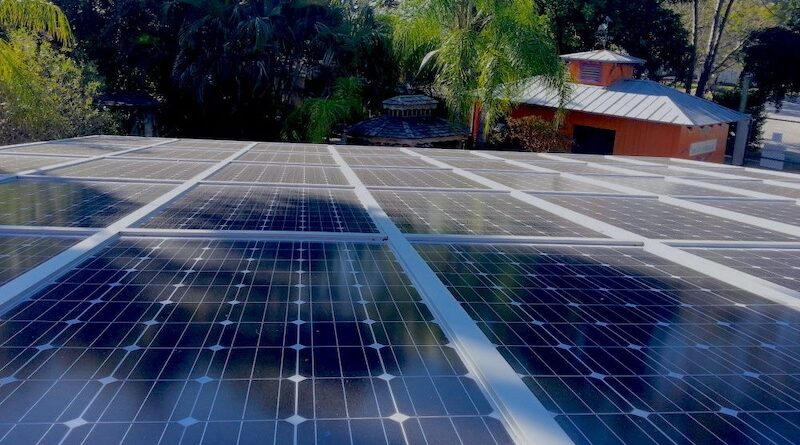
When 78 percent of U.S. homeowners already worry about their power grid failing, a rooftop solar panel stops being just a way to save money — it becomes a lifeline. That’s the reality Alexis Abramson, dean of the Columbia Climate School, sees unfolding across America, where energy independence is fast becoming the most compelling reason to go solar. No longer driven solely by environmental idealism or cost savings, millions are turning to solar and battery systems as a form of self-reliance in an era of blackouts, war-driven fuel spikes, and economic unease.
For decades, the clean energy movement leaned on moral appeals. Earth Day 1970 mobilized 20 million Americans around pollution, yet by 2010, solar still powered less than 0.1% of U.S. electricity. The real shift came with economics: the 2006 solar investment tax credit and later the Inflation Reduction Act ignited a boom. Solar capacity exploded by over 10,000% in 15 years, and in 2024, it made up more than 80% of all new grid-scale power capacity in the country. But now, a third force is accelerating adoption — the desire for control.
People aren’t asking, 'How much will I save?' anymore. They’re asking, 'How do I protect my family?' Sixty-four percent of Americans say recurring blackouts would push them toward solar within five years. Since the onset of the conflict with Iran, nearly half report being extremely or very concerned about affording fuel. Solar paired with home batteries and electric vehicles offers something the traditional energy system no longer can: certainty. As Abramson puts it, these technologies are no longer just products — they’re acts of self-determination.
The geopolitical lens sharpens the argument. David Wallace-Wells, writing in The New York Times, called the Iran conflict a 'mid-transition war' — one fought over fossil fuels just as the world is moving beyond them. There are no wars over sunlight or wind, he noted. Why depend on volatile global markets when energy can be harvested locally, cleanly, and freely? Andrew Dessler, atmospheric scientist at Texas A&M, adds that the true cost of fossil fuels includes these hidden risks — instability, conflict, and exposure — costs that don’t appear on utility bills but are paid in national security and personal resilience.
The message is clear: every dollar invested in solar today is a hedge against tomorrow’s shocks. While the push for clean energy was once about saving the planet, it’s now about securing the home. And in that shift, solar finds its most powerful selling point yet — not just power, but peace of mind.