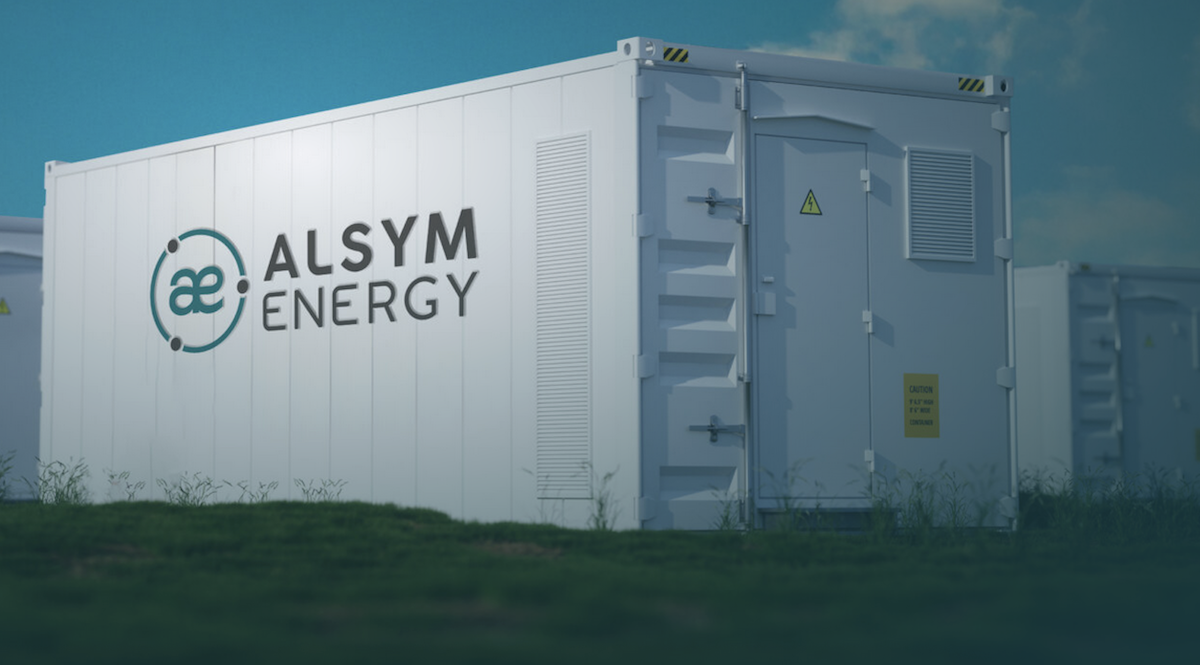
The key ingredient is literally salt — and that simple fact could help America win the race to store clean energy.
A new coalition of U.S. battery companies is pushing to keep American energy storage technology competitive, even as federal policy shifts create uncertainty. The group, called the American Battery Leadership Coalition, launched last week in Washington D.C., bringing together nine companies including Alsym Energy, Peak Energy, Mana Battery, and ESS Tech.
The coalition's chair, Alsym Energy CEO Graeme Grant, is leading the effort alongside Peak Energy Vice Chair Edward McGlone. Their mission: convince Congress and the White House to support domestic battery manufacturing before China dominates the market.
China has already jumped ahead. Last week, the Chinese company CATL unveiled what it calls "the world's first real-world validated sodium-ion energy storage solution" — a system that stores electricity made by solar panels and wind turbines so it can be used anytime, not just when the sun shines or wind blows. CATL expects to ship one gigawatt's worth of these batteries before the end of this year, with sales to other countries starting next June.
Sodium-ion batteries run on salt — yes, the same salt you might put on French fries. Salt is abundant in the United States, inexpensive, and unlike the materials used in most phone and car batteries, it won't catch fire or harm the environment. The U.S. Department of Energy calls any storage system lasting 10 hours or more "long duration," and sodium-ion technology is well-suited for that, while most lithium-ion batteries (the kind used in smartphones and electric vehicles) only last about four hours.
The technology isn't brand new. Scientists first imagined "salt batteries" about 50 years ago, but earlier versions didn't work well enough. Now, after decades of research, companies are finally ready to compete with lithium-ion on its own turf — the short-to-medium duration market where storage systems last between two and eight hours.
The American industry faced a setback last September when Natron, a sodium-ion company in Massachusetts, shut down and took roughly 1,000 clean-energy jobs with it. But other companies have kept going. ESS Tech, which previously developed flow batteries using iron, announced plans on June 23 to enter the sodium-ion market, reporting strong interest from customers eager for American-made products.
U.S. battery makers argue that supporting the industry now — through tax incentives and other policies — could help them catch up to China and build a domestic supply chain for clean energy storage. Without that push, industry leaders warn, the United States could find itself dependent on foreign batteries while trying to power an all-clean electricity grid.