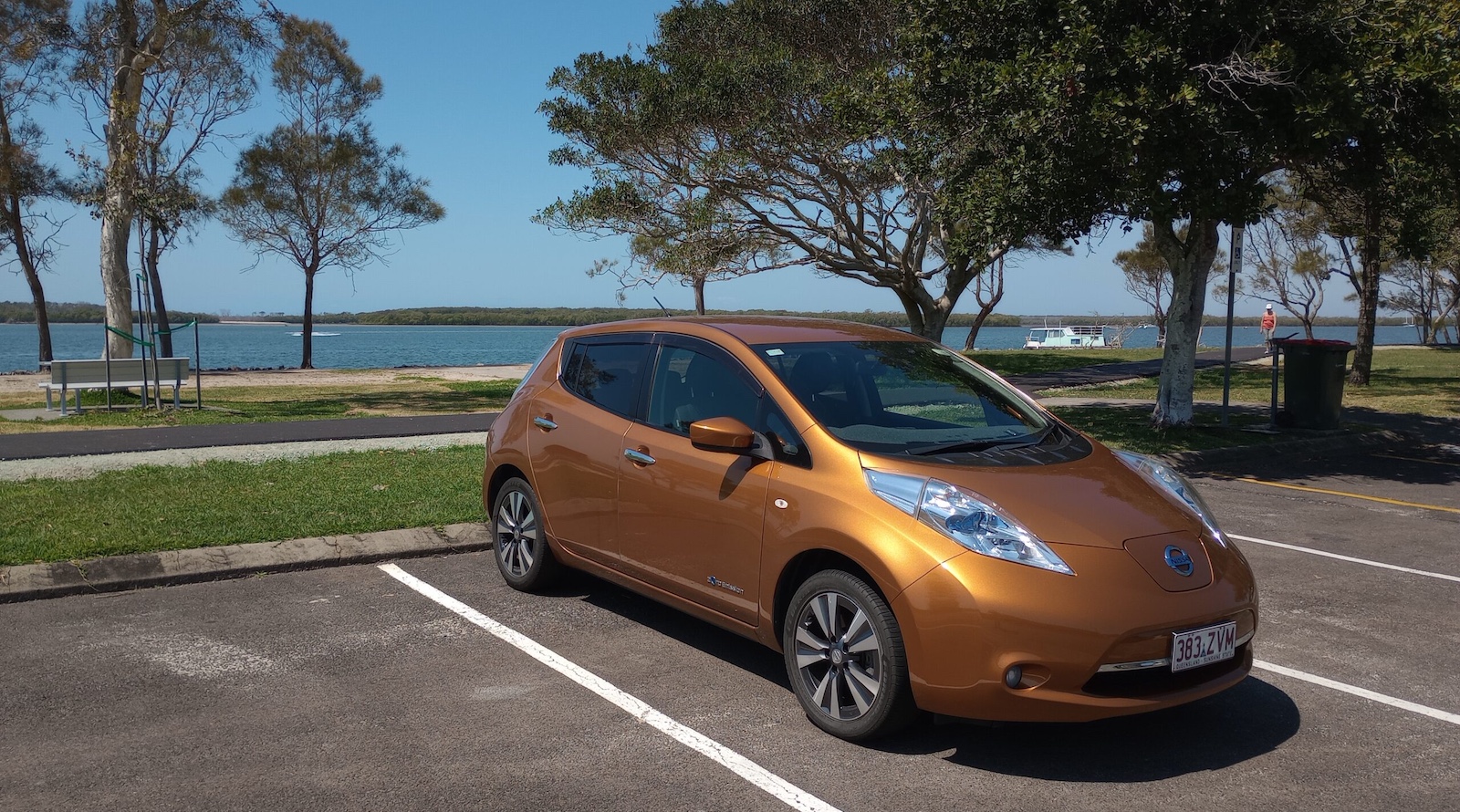
When a Tesla battery pack or Nissan LEAF battery reaches the end of its automotive life, it hasn't actually run out of juice—it's merely graduated to its second act. Volt Harbor, a Michigan-based startup, just raised $2 million in seed funding to unlock that second life at scale, using software and repurposed EV batteries to power data centers and the grid with dramatically lower costs than conventional energy storage systems.
The timing couldn't be sharper. Over the past decade, electric vehicle manufacturing has exploded, and so has the supply of used batteries with substantial energy capacity still left to give. Ten years ago, researchers in France were already repurposing Nissan LEAF batteries for stationary storage; today, that trickle has become a flood. Yet most energy storage systems still treat every battery the same, processing all the power through expensive converters—a wasteful approach that Volt Harbor's technology fundamentally reimagines.
Dr. Al-Thaddeus Avestruz, the company's President, CEO, and co-founder, cracked a counterintuitive problem: you don't actually need to process 100% of the power flowing from batteries. His team's patented Media Access Control (MAC) architecture uses fewer converters arranged in two strategic layers—higher-power converters handling average mismatches between battery groups, and smaller, cheaper converters managing individual variations. The result is striking: 94% energy utilization compared to 78% for conventional partial-power processing and just 23% for full-power systems. Translation: vastly more of each battery's actual energy reaches the application, with 10 to 20 times lower power conversion costs.
The system also creates AC power directly from batteries, eliminating the inefficiency and expense of a DC-AC inverter conversion step entirely. That architectural elegance extends to real-world reliability: the system achieves sub-100-microsecond response times—fast enough to stabilize the grid during disturbances that would otherwise trigger backup generation—and reliability comparable to aerospace equipment, with distributed architecture meaning no single point of failure and each component hot-swappable without interrupting service.
Perhaps most revolutionary for second-life operations is Volt Harbor's ability to accept heterogeneous batteries. Rather than requiring the expensive sorting and homogenization of incoming used batteries, the software-defined platform tolerates mixing lithium-ion packs, LFP, NMC, sodium-ion, and other chemistries from different manufacturers in the same system. For operators running second-life battery programs, this flexibility cuts out what is typically the costliest part of the operation—and Volt Harbor delivers storage at roughly one-half to one-third the cost of new battery systems with equivalent capability.
The company is already proving the concept in the field. A pilot deployment with DTE Energy in Michigan uses a 100 kW / 300 kWh system designed to buffer EV charging peaks while demonstrating demand response, peak shaving, and backup power capabilities. Though modest in size, the modular MAC-BESS architecture scales from compact commercial installations to multi-megawatt utility deployments. The platform can also extend usable battery life by up to 30% compared to conventional approaches—a gain that further improves project economics and delays the point at which even second-life batteries must eventually be recycled.
With $2 million in seed capital behind them, Volt Harbor is moving toward the future grid's unspoken reality: tomorrow's most valuable batteries won't be brand new. They'll be yesterday's EVs, cleverly orchestrated by software to run the data centers and stabilize the grids that make our digital world possible.