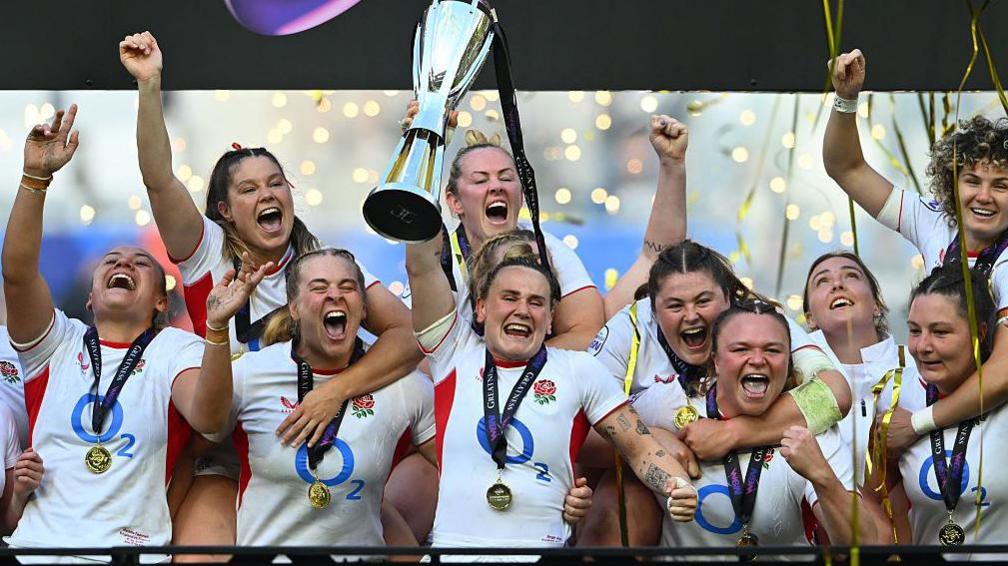
In the roaring cauldron of Stade Atlantique in Bordeaux, England's Red Roses combined nerve and surgical precision to claim their eighth successive Women's Six Nations title, holding off a ferocious French comeback to win 43–28 and cement a dynasty that now surpasses their own previous record.
The achievement marks far more than another trophy. England has now secured five straight Grand Slams and extended an extraordinary streak to 38 successive Test victories. For context, their previous record run of consecutive titles spanned from 2006 to 2012—seven years of dominance that made them the gold standard of women's rugby. They have just beaten themselves.
France arrived in Bordeaux hungry to snap a 17-match losing streak against England, and the 35,062 spectators who packed the stadium—a new home attendance record for Women's Six Nations rugby—made their presence felt from the opening minutes. The hosts struck first, with scrum-half Bourdon Sansus, the only survivor from France's last victory over England in 2018, diving over after a dazzling coast-to-coast move that caught the English defence scrambling. The roar that followed seemed to promise an upset.
But England, stripped of several frontline players from their Rugby World Cup triumph in September, possessed the depth and composure to weather the storm. Sarah Bern levelled the scores with a muscular effort, and two tries from Ellie Kildunne—one set up by a loose-ball hack from Meg Jones—helped England build to a 26–7 half-time lead that looked flattering even then. Zoe Harrison's boot remained precise throughout, her penalty shortly after half-time pushing England out to 29–7 and what appeared to be a commanding position.
France, however, refused to fade. Anais Grando and Bourdon Sansus struck again, cutting the gap to eight points as the volume in the stadium climbed. With more than 20 minutes remaining and momentum gathering, a comeback felt genuinely possible. The favourites could feel the danger closing in.
What killed France's resurrection was a combination of precision and circumstance. Jess Breach's well-worked try, scored after she burst through a wrap-around move off first-phase ball, sucked the life from the crowd at the moment when the hosts needed it most. Then came the turning point: Alexandra Chambon's sin-binning for a high tackle, reducing France to 14 players and fundamentally altering the contest's trajectory. England's replacements, led by their tightening defence, seized control of the final quarter.
Amy Cokayne's 76th-minute try, which she celebrated by throwing the ball into the stands, confirmed the outcome and drew a chorus of jeers from French supporters who had invested everything in an unlikely turnaround. The drama, England's coaches would later reflect, never quite matched the intensity of the men's Six Nations final between these nations two months prior—few matches could. Yet this was still an enthralling conclusion to a Women's Six Nations that has attracted more people and attention than ever before.
England's eighth consecutive title represents not just rugby excellence but a seismic shift in the sport's landscape. As women's rugby commands ever-larger crowds and deeper investment, this Red Roses team has become the benchmark by which international rugby—men's or women's—must measure itself.