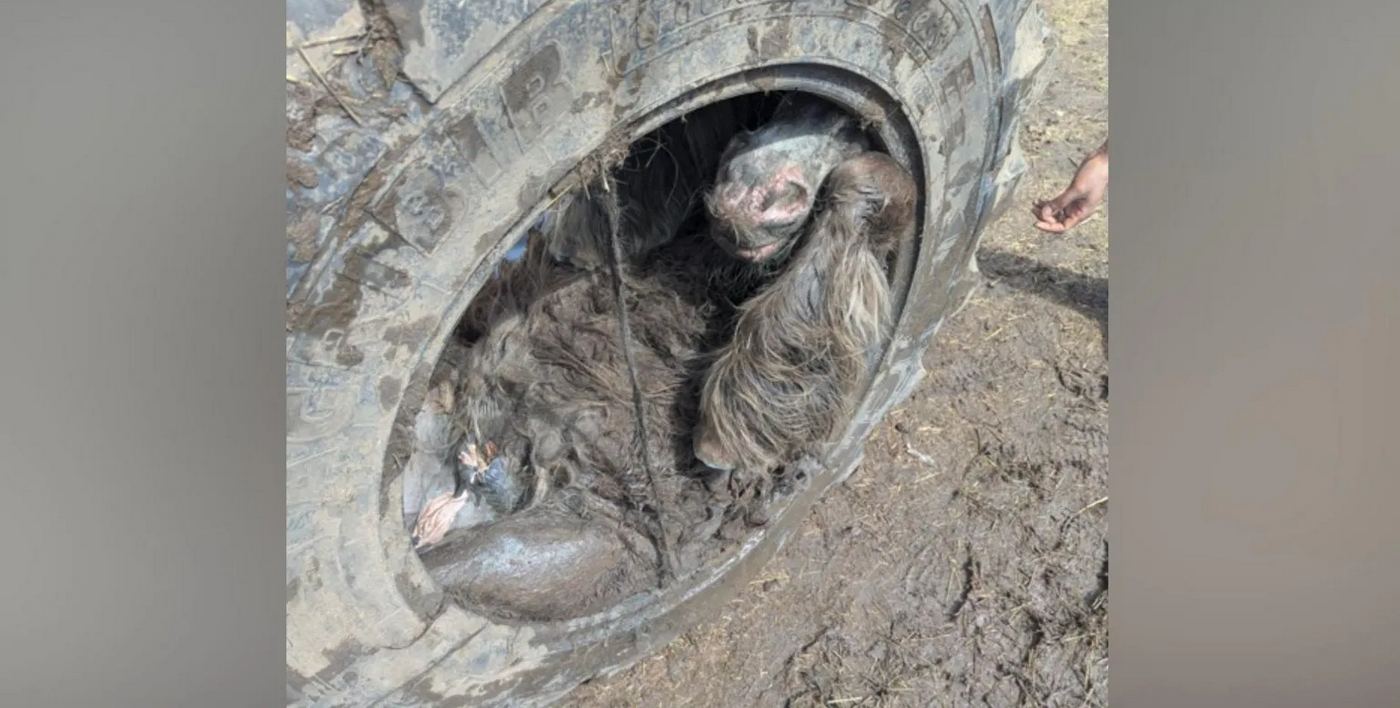
In a field outside Stoke-on-Trent, a pony emerged from inside a tractor tire — a mystery of its own making that nobody, not even the rescuers who freed it, could quite explain. But the animal's deliverance came swiftly and safely, thanks to quick-thinking residents and the skilled hands of RSPCA officers who understood that every moment mattered.
The pony's predicament was discovered by nearby residents, who immediately recognized danger when they saw it. Rather than speculate about how the animal had become so thoroughly trapped, they did what could save a life: they called the Royal Society for the Prevention of Cruelty to Animals. Rescue officer Nicola Riley arrived ready for what she would describe to the BBC as a "delicate operation" involving an "understandably very scared and uncomfortable animal." The pony was in distress, its body lodged inside the rubber confines of a piece of farm equipment, with no clear path out.
The rescuers made a critical decision: they would not resort to cutting tools. Instead, they worked with gentle precision, using their hands and knowledge to ease the pony's head and shoulders carefully out of the tire. The animal, still trembling and disoriented, gradually found its footing. Once freed, it stood on shaky legs and wobbled back toward the herd of ponies in the field — a small journey that meant everything.
"Thankfully, everyone worked really well together and we managed to get him out without causing any injury," Riley said. But the work didn't end there. She stayed close by for the next hour, monitoring the rescued pony to ensure it wasn't suffering from hidden injuries or lingering shock. The animal showed the first real sign of recovery when it began to feed — a quiet indicator that it was settling back into its normal rhythms.
The matted, very dirty fur told its own story: this pony had been stuck for far longer than anyone could comfortably imagine. How it had wedged itself so completely into the tire remains unknowable. What matters is that it didn't have to remain trapped. Riley emphasized to the BBC how differently this story could have ended. If the residents had walked past. If they had assumed someone else would call. If they had decided it wasn't their responsibility. "It could have ended very differently if the residents hadn't called," she said, and her words carry the weight of hard experience.
In praising the response, Riley encouraged anyone who witnesses an animal in distress to do exactly what these residents did: pick up the phone and alert the authorities. The RSPCA exists to answer those calls, to show up with expertise and composure, and to treat every trapped and frightened creature as worthy of a careful, determined rescue.
Today, a pony is back with its herd, feeding and recovering, its fur eventually to be groomed clean. No one may ever know what led it to climb inside that tire, but everyone involved in its rescue knows something more important: that compassion and quick action can rewrite the ending of a story that might otherwise have been tragedy.