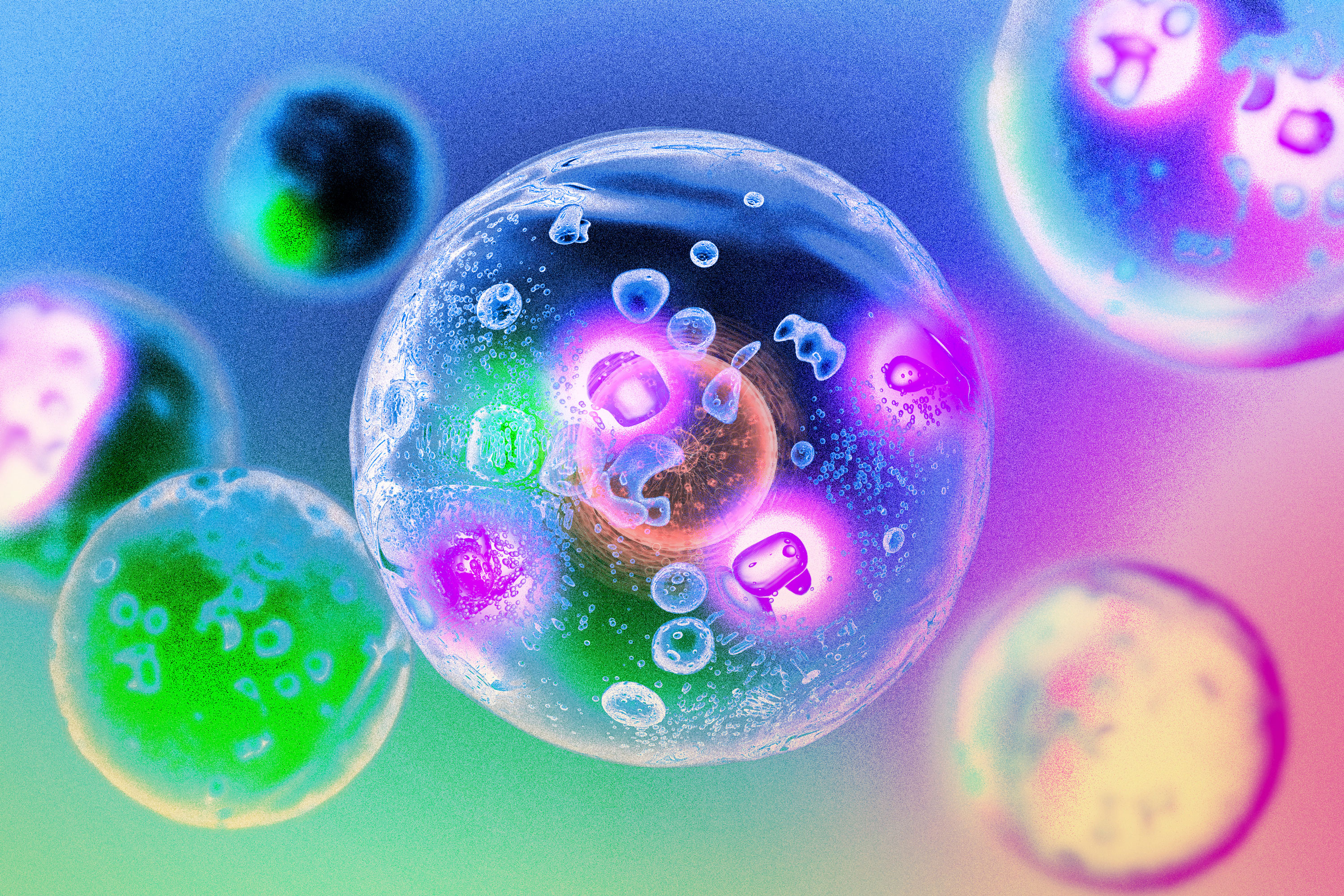
At MIT, researchers have discovered something striking: when enzymes called kinases clump together into tiny droplets inside cells, they become dramatically more efficient at their job—sometimes even changing what they do altogether. The finding, published in Cell Reports by graduate student Nicholas Lea and assistant professor Lindsay Case, reveals a hidden logic behind how cells organize their molecular machinery.
For the past decade, biologists have known that cells use a process called phase separation to stay organized—similar to how oil spontaneously forms droplets in vinegar. Now Case's team has shown that this same principle applies to kinases, a crucial class of enzymes that activate cell signals by attaching phosphate groups to other proteins. When kinases condense into these cellular droplets, they create the ideal chemical conditions for faster reactions and more efficient signaling.
The implications are immediate and urgent. Many cancers rely on kinases that have gone haywire, and understanding how droplet formation affects their behavior could unlock new ways to design drugs that actually work. "Understanding the chemistry of these compartments, and what molecules go into them and what molecules don't go into them, could help us design drugs that better localize to their target of interest," Case explains.
The researchers focused on an enzyme called focal adhesion kinase, or FAK, which normally activates when cells attach to their surroundings, sending pro-growth and pro-survival signals. In cancer cells, this pathway becomes dangerous—cells can keep growing even after detaching, leading to metastasis. What the MIT team discovered was sobering: when FAK became too concentrated, it spontaneously assembled into droplets and switched on growth signals whether or not the cell was properly attached to its environment. "It was surprising that just by condensing this protein into a droplet, you can actually turn on a signaling pathway that should be turned off," Case says.
This insight reframes a central cancer problem. In overexpressing FAK, cancer cells may be accidentally—or deliberately—triggering constant phase separation, creating an "always-on" signal that makes cells ignore their environment entirely. As Case puts it, "If FAK concentration is too high, you're always getting these droplets and you're always signaling, regardless of what the receptors that are supposed to be controlling this are doing."
The team's findings extended beyond FAK. They observed the same droplet-formation behavior in two other kinases, Mst2 and Abl, suggesting this is a broader principle of how cells work. Each enzyme could phase separate at high concentrations, boosting its activity. Understanding these patterns opens a therapeutic door: if researchers can prevent kinases from forming these droplets, they might cut off cancer's ability to proliferate uncontrollably.
Case has been studying how physical organization inside cells affects their behavior since her graduate school days. Her work suggests something elegant about cellular life: the right molecules in the right place at the right density are not just convenient—they're essential. For cancer researchers, the message is clear: the next generation of kinase-targeting drugs may need to do more than block enzyme activity. They may need to disrupt the very droplets that make those enzymes so dangerously effective.