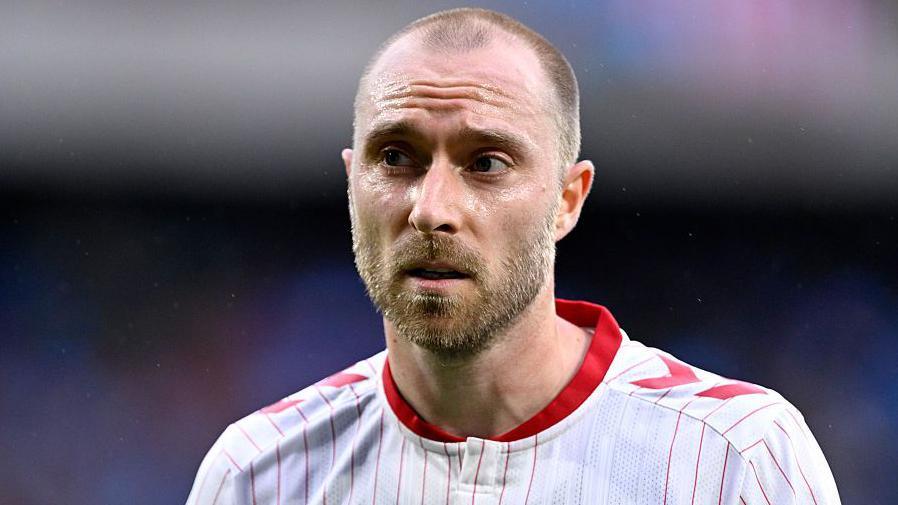
Christian Eriksen was back on his feet within minutes after collapsing during Denmark's match against Ukraine in Odense—and by the following morning, he was in good spirits and preparing to leave the hospital.
The 34-year-old midfielder's swift recovery speaks to both modern medical intervention and the resilience of an athlete who has already navigated one of professional football's most harrowing moments. During the Euro 2020 championship three years ago, Eriksen suffered a cardiac arrest on the pitch against Finland. That near-fatal incident led to the implantation of an Implantable Cardioverter Defibrillator (ICD)—a sophisticated pacemaker designed to monitor his heart and deliver therapy if dangerous rhythms occur. The device didn't end his career; instead, it became the foundation for one.
On Sunday, when Eriksen collapsed during the 65th minute of the Denmark-Ukraine qualifier in Odense, his ICD did exactly what it was engineered to do. "The pacemaker responded as it should," confirmed Denmark's national team doctor Morten Boesen. Within moments, Eriksen regained consciousness and was able to walk from the field under his own power—a stark contrast to the frightening scenes from 2021. The match was abandoned shortly after.
Speaking to Boesen the morning after the incident, the midfielder's condition had already stabilized dramatically. "I spoke with Christian this morning, and he is doing well. He is with his family and in good spirits," the doctor said. "The expectation is that he will be discharged soon and can return home." There was no sign of prolonged complications or hospital stays stretching into days of uncertainty.
The path from that Finland match in 2021 to playing professionally again was anything but guaranteed. Yet Eriksen, then with Brentford, resumed his career just eight months later—an audacious decision that required not only medical clearance but also the kind of mental fortitude that separates the extraordinary from the ordinary. "I don't see any risk, no. I have an ICD, if anything would happen then I am safe," he said at the time, a statement of faith in both the device and his own body.
Since then, he has moved to Manchester United for three seasons and now plays for Wolfsburg, each match a quiet affirmation that life after cardiac arrest is possible. His presence on the pitch—and his ability to compete at the highest level—has become a form of lived testimony for others navigating serious health challenges.
This latest incident, handled swiftly by medical personnel and contained by technology that has become an invisible partner in his athletic life, underscores how far sports medicine and cardiac care have advanced. What might have been a career-ending or life-threatening event is now something Eriksen can recover from in a single day and prepare to move forward from.
It's worth noting that neither Denmark nor Ukraine qualified for the World Cup beginning Thursday, so Eriksen's immediate focus is now recovery and returning to club football rather than international competition. But his presence in the sport—and his continuing ability to play with purpose and excellence—remains a powerful reminder that second chances, and even third ones, are real.