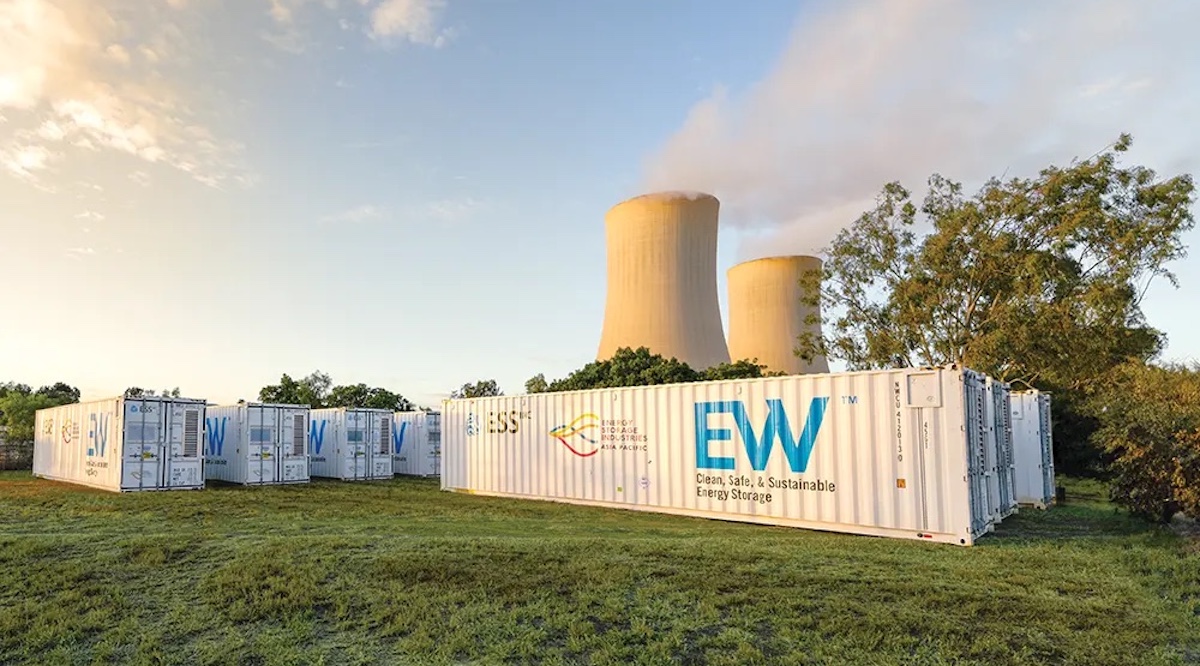
A company in Oregon is helping lead a quieter revolution in how we store electricity — and it just landed a deal that could reshape America's power grid.
ESS Tech, based in Wilsonville, Oregon, has signed an agreement with Juniper Energy, a renewable energy development company, to deploy 500 megawatt-hours or more of sodium-ion battery storage across the United States. That's enough clean energy storage to power tens of thousands of homes.
The partnership begins with an 80 megawatt-hour project in California, targeted to start running by 2027. The companies have also set a goal of reaching 500+ megawatt-hours of deployments by 2032.
What makes this deal significant goes beyond the numbers. Sodium-ion batteries use materials that are abundant and easy to source — unlike lithium, which is harder to get and often comes from overseas. ESS's technology is designed to be safer and to avoid supply chain problems that can drive up costs and create.
"This agreement with Juniper Energy validates ESS's strategy to expand our technology portfolio and bring sodium-ion energy storage to market," said Drew Buckley, CEO of ESS. He pointed to growing demand for domestically sourced alternatives to conventional lithium-ion batteries.
Keith McDaniels, Managing Partner of Juniper Energy, said his company focuses on partnering with firms that can bring innovative energy technologies from development into commercial operation. "ESS has demonstrated its ability to integrate, deploy, and scale advanced energy storage solutions," McDaniels said.
The initial California project will use ESS's newly announced Bridge energy storage platform, a modular sodium-ion system that can be scaled up as needed. Unlike some battery technologies that rely on rare or overseas materials, sodium is one of the most common elements on Earth — it's literally in table salt.
ESS believes this technology opens doors beyond just utility-scale projects. The company sees opportunities in powering AI data centers, factories, and critical infrastructure. As electricity demand grows with everything from electric vehicles to smart devices, storage solutions like this could become essential.
Founded in 2011 with a mission to accelerate clean energy adoption, ESS has been steadily building its case for alternatives to lithium-based storage. This latest deal signals that the market is taking notice — and that sodium, an element humans have known about for centuries, might play a starring role in the next generation of American energy infrastructure.