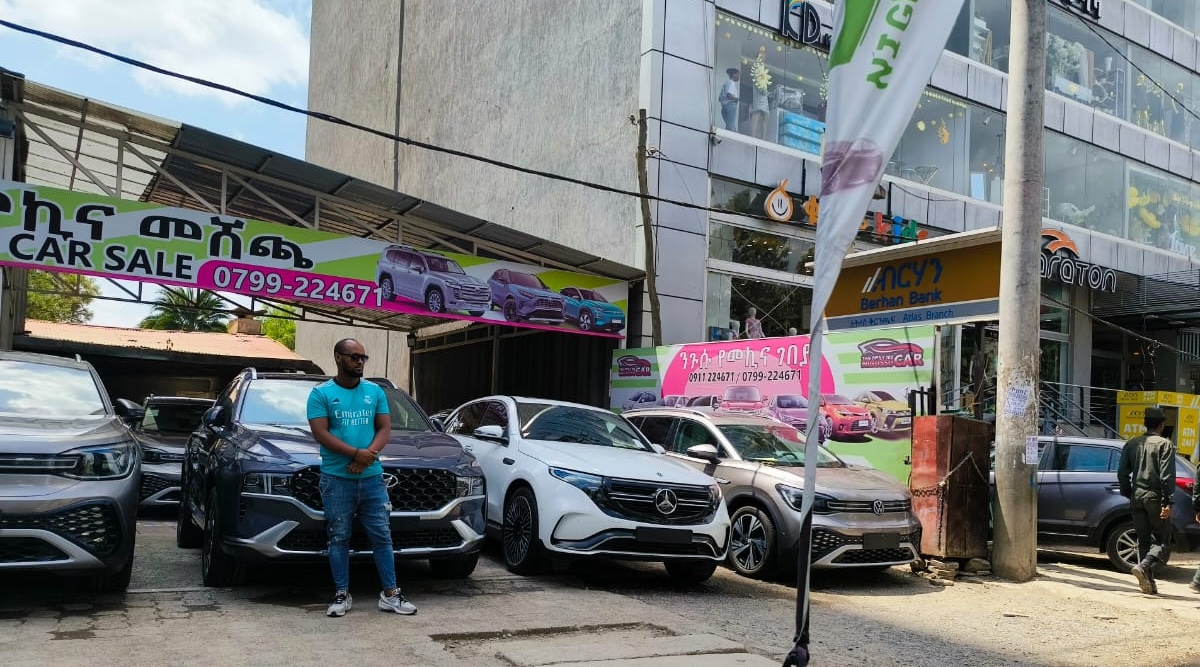
In Addis Ababa, architect Deghareg Bekele no longer spends two to three hours standing in fuel lines that often run dry before his turn comes. Instead, he charges his Volkswagen electric vehicle at home—a decision that seemed uncertain four months ago but now feels like liberation. His story is Ethiopia's story: a nation choking on fuel import costs and chronic shortages has chosen an audacious gamble, banning petrol and diesel vehicle imports two years ago and betting its transportation future on electricity.
The pivot is working. Ethiopia has become Africa's electric vehicle leader, importing 44,358 EVs from China in 2025—more than double the 19,386 imported in 2024. Those shipments, valued at over $200 million, represent a nation desperate to escape the drain of fuel dependency. Ethiopia now spends roughly $4.2 billion annually on fuel imports, plus another $128 million every month subsidizing fuel prices. When the closure of the Strait of Hormuz cut off 180,000 metric tons of fuel supplies, the government doubled down on EVs as a critical buffer against external shocks. More than 115,000 electric vehicles now operate on Ethiopian roads, accounting for roughly 8 percent of the national fleet—the highest EV penetration rate on the continent.
What makes Ethiopia's leap remarkable is not the absence of obstacles but the decision to jump anyway. The electrical grid, even in the capital, suffers frequent interruptions. Rural areas lack charging infrastructure almost entirely. A BYD EV costs about $13,000—a sum that seems modest until you recognize that Ethiopian physicians earn less than $100 a month. Yet the nation has removed virtually all import fees and duties on electric vehicles, and the pain of fuel scarcity has become more intolerable than the uncertainty of going electric.
The foundation for this gamble rests on renewable energy. Ninety percent of Ethiopia's electricity comes from renewable sources, predominantly hydroelectric and solar power. The Grand Ethiopian Renaissance Dam, Africa's largest hydroelectric project, is expected to double its power generation—a development that would dramatically strengthen the case for electrifying transport. "We have massive potential in renewables," said Ethiopia's transportation minister Bareo Hassen, framing the EV ban as part of a broader push toward green policies that might also ease the choking pollution that clouds Addis Ababa during rush hours.
Even with less than 100 public charging stations in the capital and virtually none outside it, Ethiopians are choosing electric. In 2025 alone, they imported one-third of all vehicles Africa bought from China, surpassing EV markets in South Africa, Egypt, Morocco, and Nigeria combined. "By replacing imported fuel with domestically generated electricity, Ethiopia is strengthening its energy security position," said Hiten Parmar, executive director of South African-based The Electric Mission.
What Ethiopia is building is not a perfect solution—the grid remains fragile, range anxiety is real, and ownership remains out of reach for millions. But in choosing necessity over convention, in betting on renewable energy and domestic electricity rather than endless fuel imports, Ethiopia is demonstrating that transformation does not require Western infrastructure first. Sometimes it requires courage, and the willingness to move forward even when the path is imperfect.