Imagine losing the ability to read, recognize your grandchildren's faces, or live independently — and then getting some of that back. For millions of people with a common cause of blindness, that prospect just became real.
The European Union has approved a tiny bionic eye implant that can restore functional sight in people with severe vision loss from age-related macular degeneration, the leading cause of blindness in older adults. California startup Science Corporation received the green light to sell its PRIMA system in 30 European countries, making it the first treatment that can actually reverse the damage caused by the disease.
More than 5 million people worldwide have geographic atrophy, the late stage of dry age-related macular degeneration. The condition destroys photoreceptor cells at the center of the retina called the macula, which handles the sharp vision needed to read and recognize faces. In the United States, only two drugs exist that slow the disease — neither can undo the harm already done.
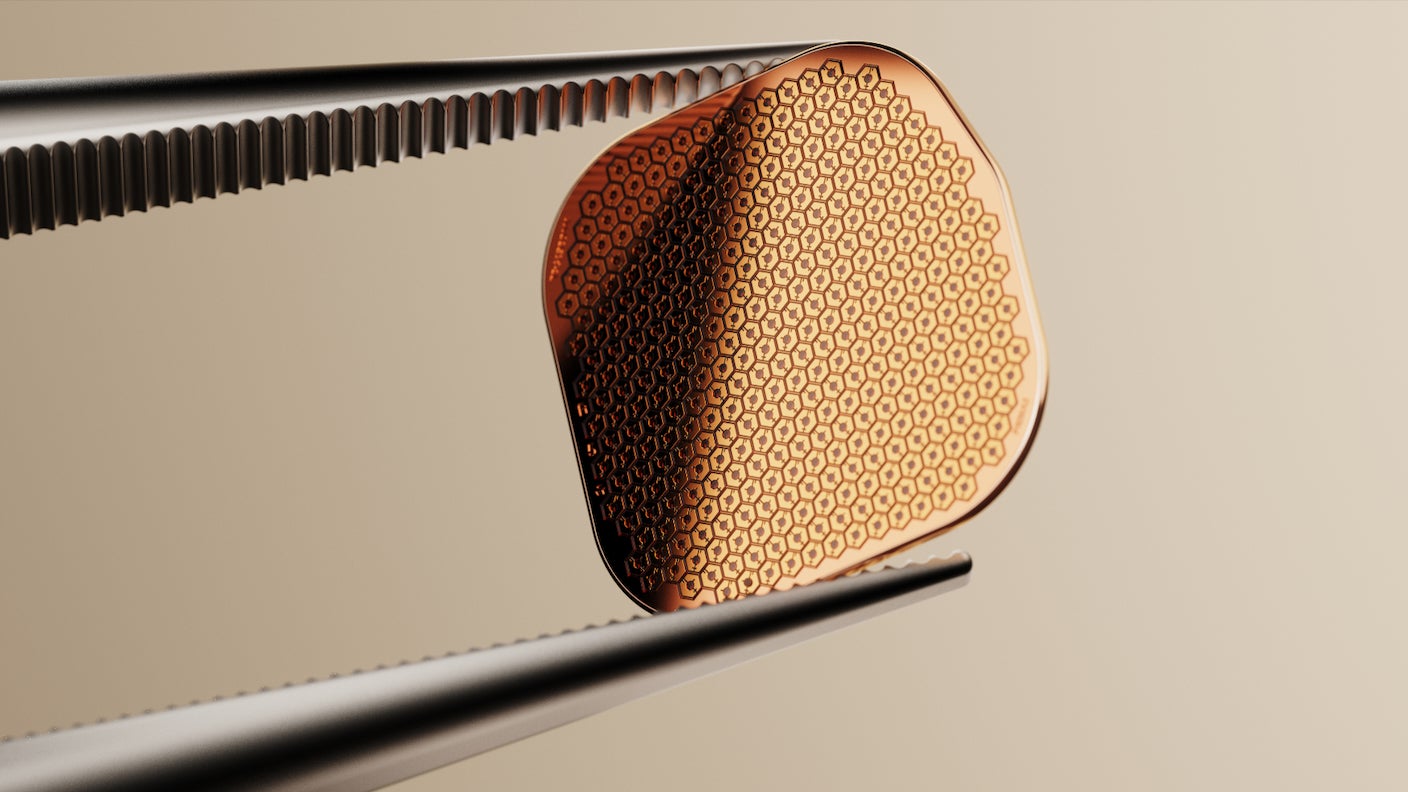
PRIMA changes that equation. The device combines an implant smaller than a grain of rice, surgically placed underneath the macula, with a pair of special glasses fitted with a tiny camera. The camera captures visual information and beams it as near-infrared light to the implant. Because the eye cannot detect this light wavelength, it does not interfere with any natural vision that remains. The chip then converts that light into electrical pulses that stimulate healthy retinal cells, bypassing the damaged ones entirely.
In a clinical trial involving 38 patients across five countries, published in the New England Journal of Medicine, participants gained an average of 25.5 letters on a standard eye chart — equivalent to more than five lines of improved vision. The experience is not like normal sight; images come through in black and white through an extremely narrow field. Science CEO Max Hodak described it to the Financial Times as "kind of like looking through a straw in the center of their vision." Still, patients who once could not read large text on a page can now make out words.
The first commercial implants will be fitted in Germany within weeks, followed by Italy, the Netherlands, and the United Kingdom. Hodak told STAT the company expects to install 20 to 40 devices this year and up to 200 globally by the end of next year if the FDA grants approval in early 2027. The U.S. agency has already designated PRIMA as a Breakthrough Device, fast-tracking its review.
The approval signals a turning point for the broader neurotechnology industry, which has attracted billions in investment with limited real-world results to show for it. "Science is showing that brain-computer interface companies have a path to real revenue now," Jacob Robinson, founder of startup Motif Neuroscience, told STAT. The field still has far to go — full-color vision and wider fields of sight remain on the roadmap — but for patients who have run out of options, this small device marks a significant first step forward.