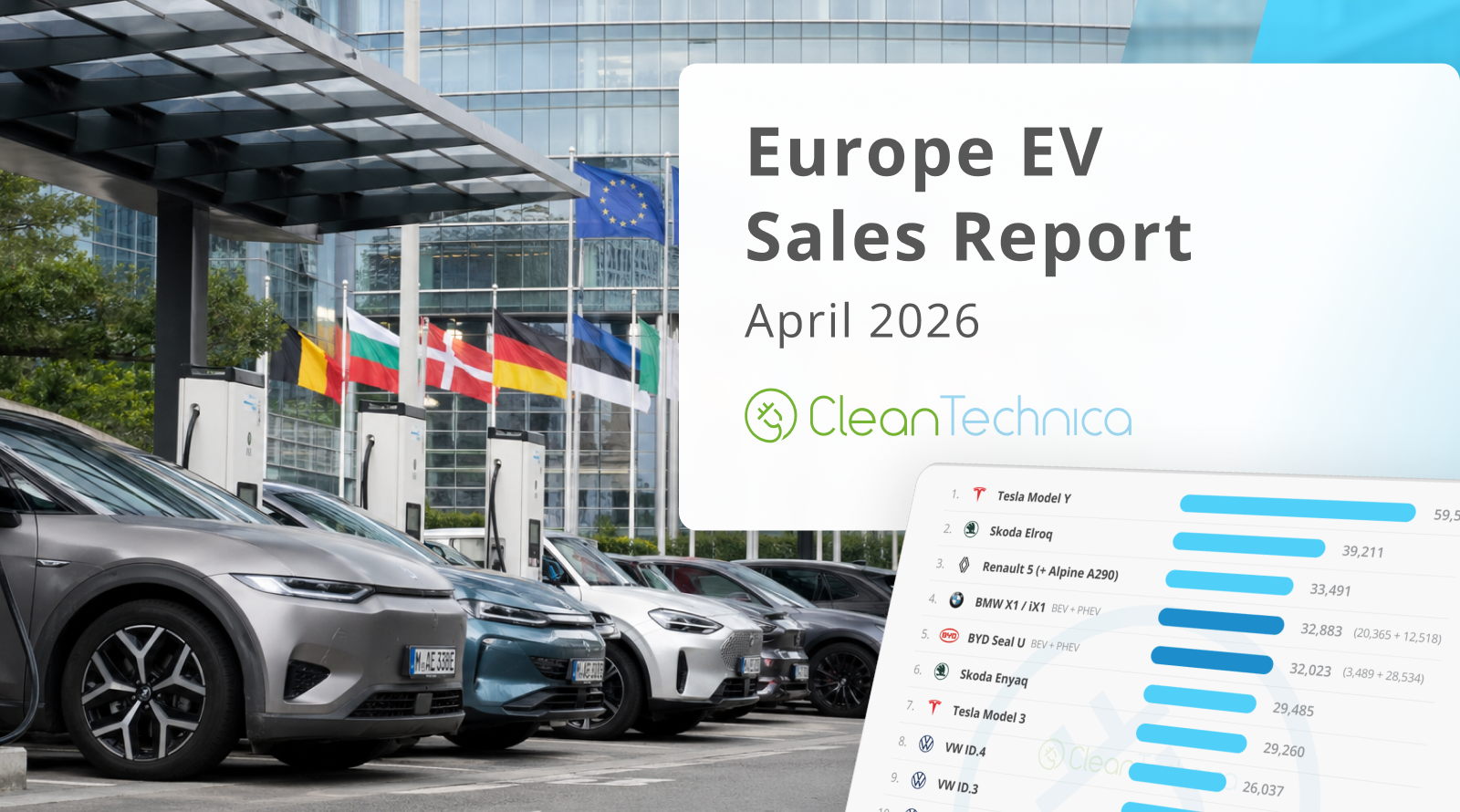
In April, Europe's electric car market hit a milestone that signals a genuine shift in how the continent moves: 262,000 pure battery-electric vehicles rolled off dealership lots in a single month, representing a stunning 42% surge compared to the same period last year. Combined with plug-in hybrids, nearly 385,000 electrified vehicles were registered across Europe—a reminder that the region's transition away from petrol and diesel is no longer a distant aspiration but an accelerating reality unfolding month by month.
This growth matters because Europe has committed to steeply reducing emissions from transportation by the 2030s, and April's numbers suggest the continent is tracking ahead of schedule. With battery-electric vehicles now claiming 23% of all new car sales, they've already nearly matched the 2025 full-year target of 20%. When you include plug-in hybrids, which added another 10% market share, electrified vehicles together captured one-third of Europe's car market—a proportion that seemed unthinkable just years ago.
The mechanics behind this surge tell a familiar story: falling EV prices, new models arriving from manufacturers across Europe and Asia, and sustained high petrol prices have all played a role. The broader auto market itself grew 7% year-on-year in April, reaching 1.1 million total registrations, with the year-to-date trend finally turning positive again at 5% growth. But the real story is what's happening to traditional powertrains. Petrol's share cratered 15 percentage points to just 22%, while diesel plummeted 17 points to a mere 7% of the market. Even conventional hybrids without plugs, once seen as the safest middle ground, are being outpaced by pure electrics.
The Skoda Elroq claimed the month's top-selling title with 10,817 registrations, a 34% increase from April 2024, followed closely by the BMW iX1 (9,447 units) and the Renault 5 (8,954 units). The fact that two Skoda models—the Enyaq and Elroq—landed in the top five reveals something important: European brands are finally competing convincingly with Tesla, which had an "off-peak month" in April. The Skoda Enyaq, despite facing potential sales cannibalization from its newer sibling the Elroq, still managed 8,160 registrations, a 52% year-on-year jump. Even BYD's Seal U, a Chinese model, cracked the top five with 8,101 units.
Perhaps most tellingly, 69% of all new cars sold in Europe in April had some form of electrification—whether plug-in, hybrid, or conventional hybrid. That figure underscores how comprehensively the market has transformed. The year-to-date BEV share of 22% combined with plug-in hybrids (10%) totals 32%, already exceeding the target of 29% for the full year 2025.
What happens next matters as much as what's happening now. Manufacturers have laid out aggressive launch schedules for new affordable electric models. The VW ID.Polo and Cupra Raval are coming. Skoda's cheaper Epiq crossover will arrive in late 2026. Each new model will further compress the space for petrol cars. The momentum isn't merely sales figures anymore—it's the wholesale restructuring of how Europe manufactures and sells automobiles.