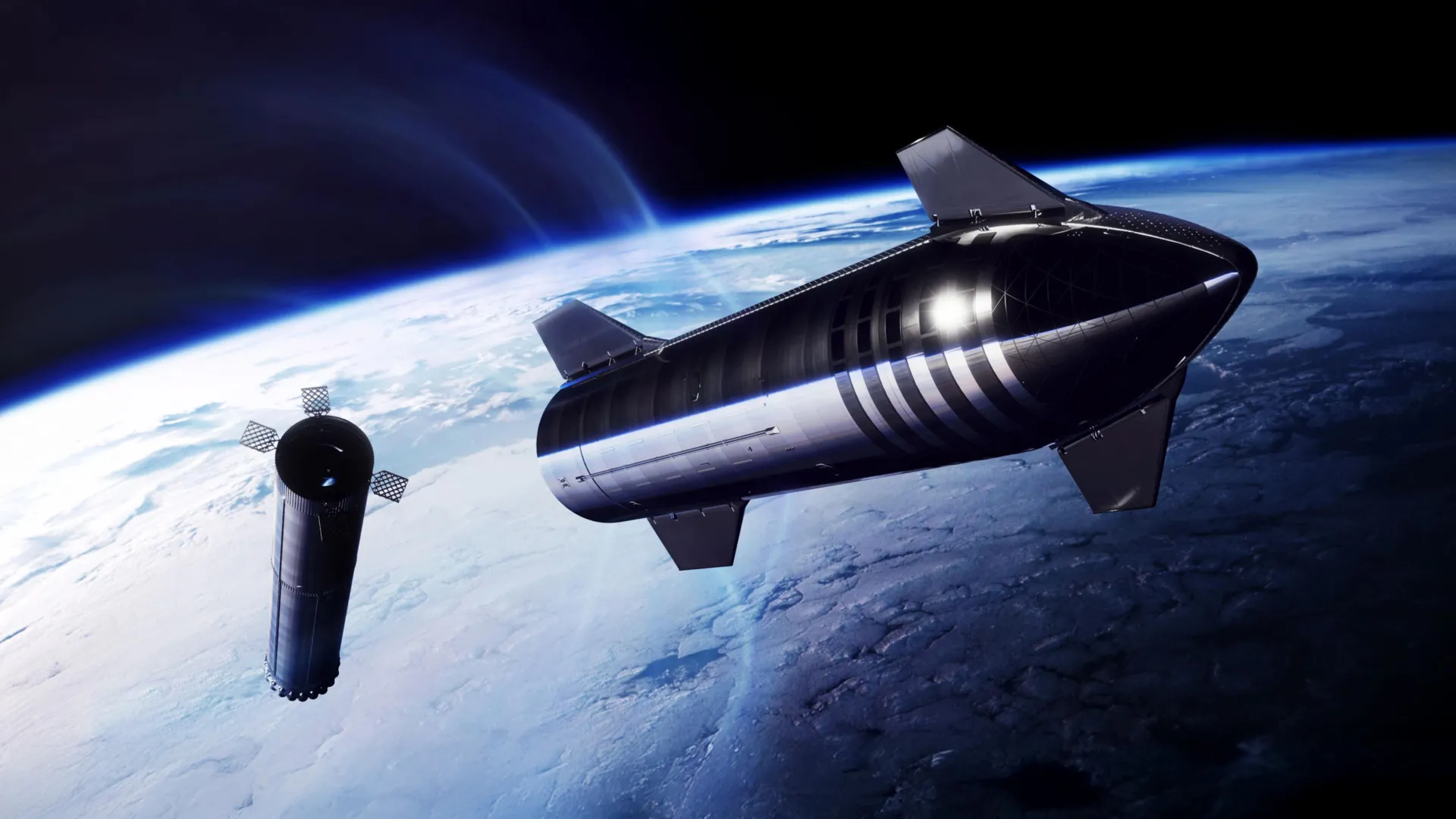
Imagine a rocket so powerful it could lift more than 100 elephants into space. That is the promise of SpaceX's Starship, and according to researchers in Germany, it might actually deliver on that promise sooner than anyone expected.
Scientists at the German Aerospace Center, known as DLR, recently studied Starship by watching videos of its first four flight tests and carefully analyzing the rocket's performance data second by second. Their independent findings confirm what SpaceX has been claiming: the current version of Starship can carry about 59 tonnes to orbit while still being reusable. The next version, with bigger fuel tanks and more powerful engines, could lift roughly 115 tonnes into orbit. In a configuration where the rocket is only used once, it might manage an astonishing 188 tonnes. That would make it more powerful than NASA's legendary Saturn V rocket, which sent astronauts to the Moon in the 1960s and 1970s.
Starship stands taller than a 30-story building and uses 33 engines to blast off from Texas. During its fifth test flight, SpaceX even caught the returning booster in mid-air using the giant mechanical arms of its launch tower. It was a moment aerospace engineers had dreamed about for decades.
But Europe is not sitting still. The same DLR team has proposed a concept called the RLV C5, a European super-heavy rocket designed with a different philosophy. Rather than trying to reuse every single part like Starship does, the RLV C5 would only reuse its booster, the main first stage. The upper stage would still be thrown away after each launch.
This difference matters more than you might think. Starship must carry heavy heat shields, extra fuel for landing, and structural reinforcements to survive returning from space. Those systems add so much weight that only about 40 percent of what Starship lifts actually becomes useful cargo. The RLV C5, by contrast, would dedicate roughly 74 percent of its launch mass to payload. It would be much more efficient, even if it cannot lift as much total weight.
The RLV C5 would glide back to Earth on wings after releasing its upper stage, then get caught by a large airplane flying overhead. It would not need to waste fuel doing a powered landing like SpaceX's boosters do.
Starship and the RLV C5 are not really competing against each other, the researchers say. Starship is built for enormous projects like bases on the Moon, missions to Mars, and launching thousands of satellites at once. The RLV C5 would give Europe its own independent way to launch heavy cargo without spending the enormous sums needed to build a fully reusable system from scratch.
There is one big catch, though. Starship is already flying and improving with every test. The RLV C5 currently exists only on paper. Turning it into a real rocket would take years of development. But the DLR team argues it could serve as a stepping stone, letting Europe build expertise gradually before eventually creating a fully reusable launcher of its own.