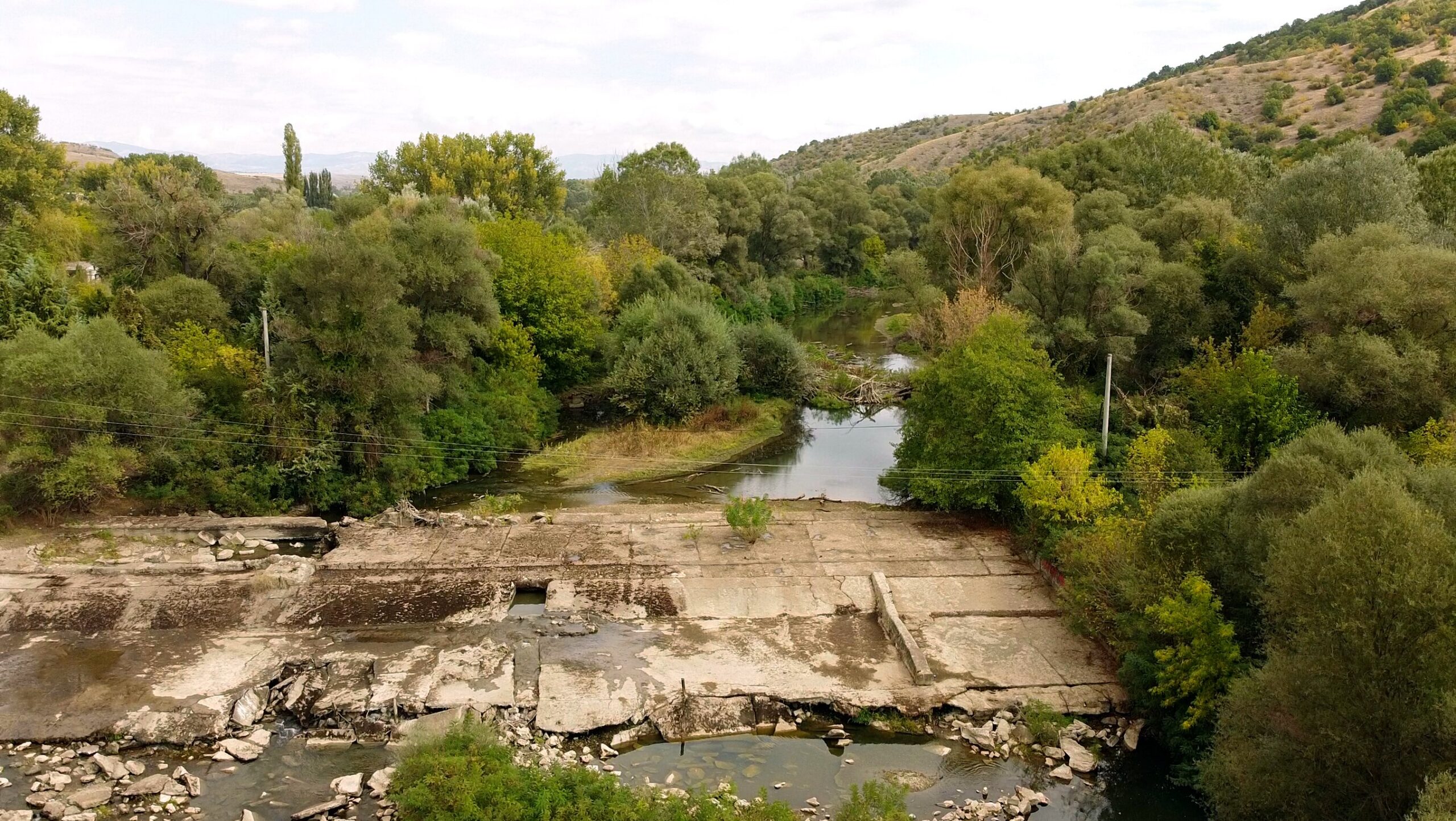
A wartime concrete barrier that had choked the Pčinja River in North Macedonia for over 70 years came down in late 2025, and with it fell a century of accumulated silt—and a door finally opened for fish that had never known what lay upstream. The structure, a 53-meter-long, 30-meter-wide slab of reinforced concrete studded with salvaged railway steel, had blocked the river's flow for at least 70 kilometers and plagued the local Shuplji Kamen community with safety concerns. Its demolition, led by the nation's Eko-svest environmental organization, marked North Macedonia's first large-scale dam removal ever.
But the Pčinja barrier was one story in a continent-wide transformation. Across Europe in 2025, governments and conservation groups removed 603 obsolete dams, weirs, and culverts—a single-year record—reconnecting 3,740 kilometers of fragmented rivers. That achievement puts Europe 15 percent of the way toward an ambitious 2030 target set by the EU's Nature Restoration Regulation to restore 25,000 kilometers of free-flowing rivers. The pace is accelerating. Since 2020, nearly 2,300 dams have fallen, mostly in Sweden, Finland, and Spain, with Iceland and North Macedonia joining the effort in 2025.
The ecological case is straightforward. At least 42 percent of Europe's freshwater fish species face extinction, according to the European Red List of Freshwater Fishes, and the barriers fragmented across the continent are a primary culprit. The Pčinja barrier alone had harmed at least 10 fish species, including four endemic species found nowhere else, and blocked the Vardar bitterling—one of just two bitterling species in all of Europe—from accessing breeding grounds upstream. When that barrier fell, it restored a passage that had been sealed for generations.
South of the Pčinja, in southern France, the October 2025 removal of the Isaby dam opened up to 10 kilometers of the Gave de Pau River tributary, allowing threatened Atlantic salmon to migrate and vulnerable Iberian desmans—small, mole-like insectivores—to reclaim habitat they had lost. Each removal ripples through an ecosystem, yet each tackles what Chris Baker, director of Wetlands International Europe, calls "one of the biggest ecological 'easy wins' available today." The barriers themselves no longer serve their original purpose. Of the roughly 1.2 million barriers fragmenting Europe's rivers, more than 150,000 are now considered obsolete—relics of hydroelectric eras or industrial infrastructure that modern infrastructure and energy sources have rendered unnecessary.
What makes this moment significant is the shift in thinking it represents. "People increasingly understand that obsolete dams do not need to stay forever," Baker said. Removing them is not about tearing down all river barriers—many still serve flood control, water management, and other critical functions—but about recognizing that rivers are living systems deserving of restoration. Healthy rivers provide flood protection, water security, biodiversity, and climate resilience. The concrete that once seemed permanent turned out to be temporary after all.