When Russia invaded Ukraine in early 2022, many European countries faced a harsh reality: they were spending enormous sums of money buying fossil fuels from other countries, and some of those countries were not exactly friendly. The price of natural gas especially skyrocketed, leaving families and businesses struggling with higher energy bills.
But something remarkable happened in response. Countries across the European Union doubled down on wind turbines and solar panels, building them faster than anyone expected. Just three years later, in 2025, wind and solar power provided 30 percent of all electricity across the EU. In 2021, that number was only 19 percent.
The shift was dramatic. Coal power dropped by 38 percent and gas power fell by 15 percent during the same period. By 2025, wind and solar together produced 852 terawatt-hours of electricity — more than all coal, gas, and oil combined, which made 760 terawatt-hours.
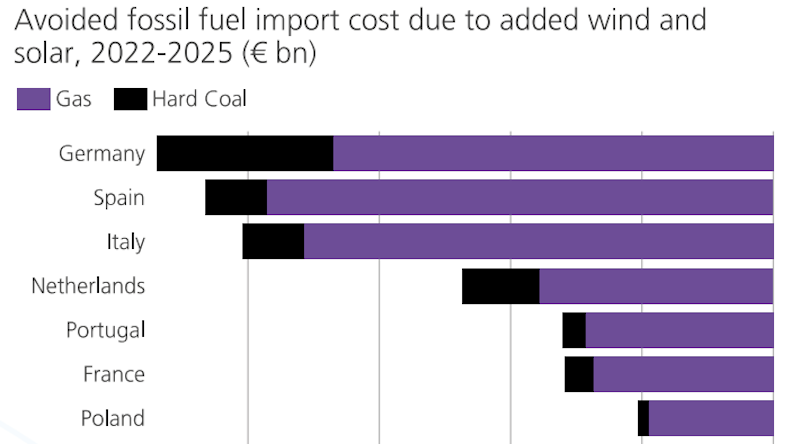
Most importantly, this clean energy boom saved Europe a staggering amount of money. According to an analysis by the energy research group Ember, the new wind and solar projects built since Russia's invasion helped European countries avoid spending 72 billion euros on imported fossil fuels between 2022 and 2025. To put that in perspective, that's enough money to buy roughly 18 million new electric cars at average prices. The biggest savers were Germany, Spain, and Italy, which built the most wind and solar capacity.
Much of that savings came from using less imported gas, which Europe used to buy heavily from Russia. Today, the continent is far less dependent on hostile foreign nations for its energy needs.
The European Union's plan, called REPowerEU, encouraged countries to move faster and set supportive policies. What started as a crisis response has become a lasting transformation of how Europe powers itself.
The work is not finished — Europe still imports some fossil fuels and needs more renewable projects. But the speed of change shows that when countries commit to clean energy, the benefits show up fast: cleaner air, lower bills, and money staying within the continent instead of flowing to foreign fossil fuel exporters.