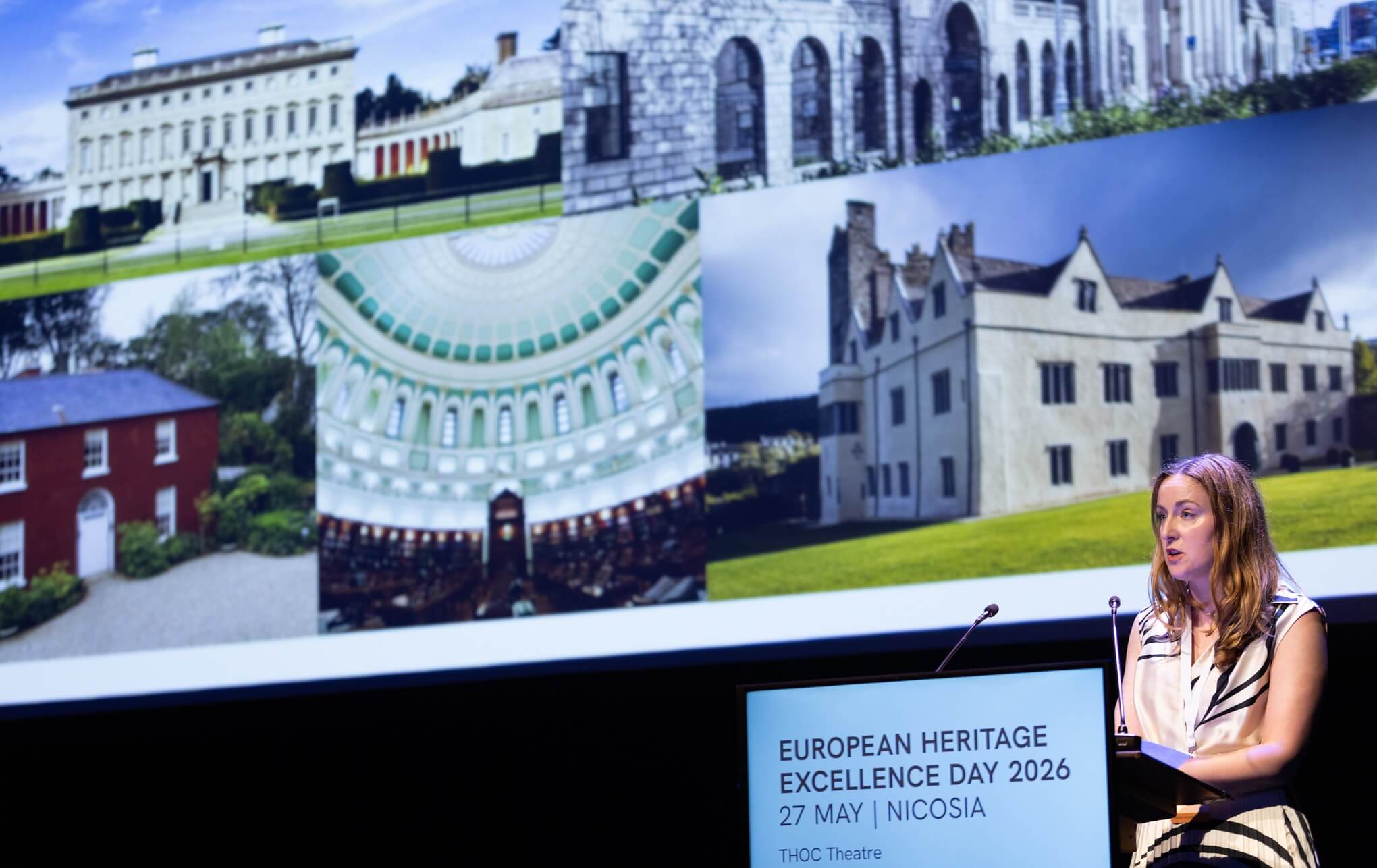
In the heart of Nicosia on May 27th, over 400 heritage advocates and experts from across Europe gathered to hear 30 award-winning projects explain how they're reshaping what cultural heritage means in the modern world. The European Heritage Excellence Day 2026, held at the THOC Theatre as part of the European Cultural Heritage Summit, became a powerful reminder that the past isn't simply something to preserve behind glass—it's a living force for building stronger, more connected communities today.
The day unfolded across five sessions, each dedicated to a different category of the European Heritage Awards: Citizens' Engagement & Awareness-raising, Heritage Champions, Education Training & Skills, Research, and Conservation & Adaptive Reuse. Laureates shared not just their successes, but the obstacles they'd overcome and the innovative thinking that made their work possible. What emerged from their presentations was a collective vision of heritage as something fundamentally about human connection.
The opening set this tone immediately. Nicoletta Demetriou, director of the Cyprus Music Archive and representative of The Cypriot Fiddler project, performed a traditional Cypriot song about welcoming guests—a gesture that transformed the event's structure from a conference into something closer to a gathering of a shared community. Androulla Vassiliou, Vice-President of Europa Nostra, reflected on the song's deeper meaning: "Cultural heritage is about bringing people together, across generations, cultures and borders." Maximilian Voigt, Policy Officer at the European Commission's Directorate-General for Education, Youth, Sport and Culture, reinforced this vision, describing heritage as "a powerful force for positive change, strengthening communities, supporting well-being, fueling creativity and contributing to a more sustainable, resilient and inclusive future."
One of the most striking presentations came from James Macmillan-Scott of the Factum Foundation for Digital Technology in Preservation, a Madrid-based Heritage Champions winner. He challenged the assumption that originals are always superior to reproductions. Through high-resolution recording and facsimile production, the foundation enables people to engage more deeply with cultural works. Macmillan-Scott argued that "the experience of the facsimile can be more authentic than seeing originals in museums" because it allows for physical interaction. "Touch is the most sensitive sense," he noted, describing how direct contact creates intimate connections with heritage that distance and barriers cannot.
The day also honoured profound human stories. Maryna Hrytsenko, chief custodian of the Galagan Art Museum in Chernihiv, was awarded posthumously in the Heritage Champions category. Hrytsenko died in 2025, her life cut short while protecting cultural treasures during Ukraine's ongoing conflict. Her presentation, delivered by Milena Chorna, stood as tribute not only to one woman's courage, but to all museum professionals who have lost their lives defending heritage during wartime—a stark reminder that cultural preservation remains a deeply human endeavour.
Throughout the day, the networking conversations between winners and participants created space for the kind of exchange that formal conferences rarely achieve. The event was jointly organised by Europa Nostra and the European Commission with support from the Creative Europe Programme, making clear that this work isn't isolated passion projects—it's part of a continent-wide commitment to recognising that heritage, in all its forms, is essential infrastructure for a more resilient future.