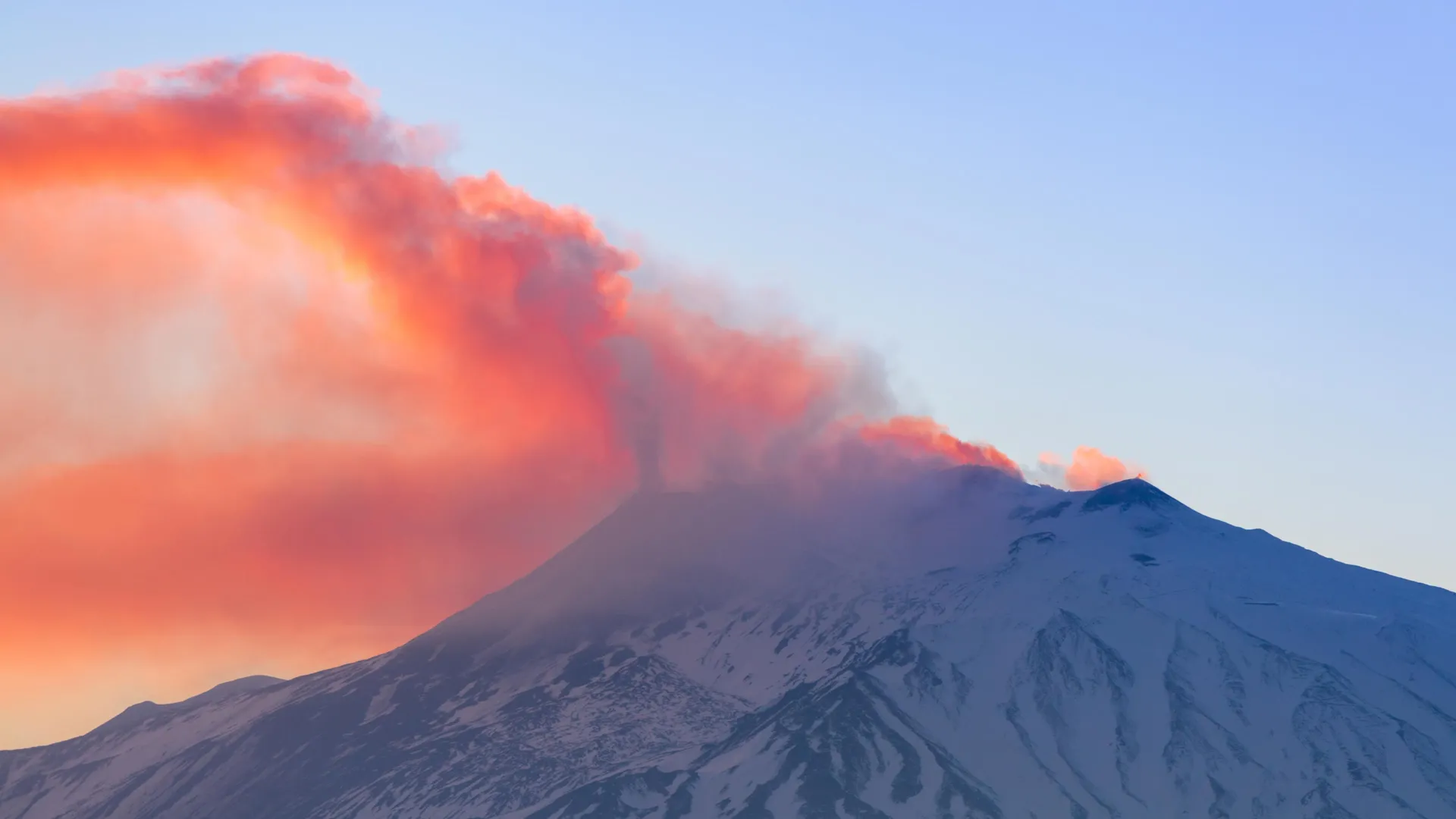
Deep beneath the Sicilian landscape, Mount Etna has been building for more than 500,000 years, reshaping the island with fire and stone. At 3,350 meters tall, it is Europe's most active volcano, erupting several times every year. Yet for decades, scientists have struggled to explain exactly how it formed — until now. Researchers at the University of Lausanne in Switzerland believe they may have finally cracked the mystery, and what they found was completely unexpected. Mount Etna might belong to a rare fourth category of volcanoes that no one suspected could produce something so massive. The team's findings were published in early 2024 in the Journal of Geophysical Research — Solid Earth, in collaboration with Anna Rosa Corsaro from the Istituto Nazionale di Geofisica e Vulcanologia in Catania, Italy. Scientists had long noticed that Mount Etna did not fit neatly into any of the three existing categories scientists use to explain how volcanoes form. Some volcanoes grow where tectonic plates pull apart, like along the Atlantic Ocean floor. Others form where one plate slides beneath another, triggering explosive eruptions like Mount Fuji in Japan. A third group forms in the middle of plates, above plumes of unusually hot rock rising from deep inside Earth, creating island chains like Hawaii. Mount Etna, however, shares chemical similarities with the third group but sits in a place where no such deep hot plume exists. The new research suggests an answer lies roughly 80 kilometers beneath Sicily's surface — a zone where small pockets of magma have existed for a very long time, perhaps millions of years. These ancient magma reservoirs are pushed upward not by a rising hotspot but by the slow grinding movement between the African and Eurasian tectonic plates. As the plates bend near their collision zone, fractures open in the rock above, and the trapped magma gets squeezed upward like liquid from a sponge. The researchers tested this idea by analyzing rock samples spanning roughly half a million years of volcanic activity. They found that Etna's lava chemistry has stayed remarkably consistent even as the tectonic environment around it shifted — a pattern that supports the idea of a stable, deep magma source. If confirmed, this would make Etna part of a little known group called petit-spot volcanoes, a category first identified by Japanese geologists in 2006. Until now, petit-spot volcanoes were thought to be small, humble structures rising only a few hundred meters above the ocean floor. Mount Etna, towering more than 3,000 meters above sea level, would be an extraordinary giant in that company. The discovery could reshape how scientists understand volcanism around the world and may eventually help researchers at INGV in Catania make better predictions about future eruptions, protecting the hundreds of thousands of people who live on Etna's flanks. "Our study suggests that Etna may have formed through a mechanism similar to the one that generates petit-spot submarine volcanoes," said Professor Sébastien Pilet of the University of Lausanne, the study's lead author. "This is unexpected, as such processes had previously only been observed in very small volcanic structures." For a volcano that has long puzzled science, Mount Etna may finally be revealing its oldest secrets.
← News
Science Breakthroughs Science Breakthroughs Knowledge
Europe's most active volcano may have a secret origin
500,000+ years Age
3,350 meters Height
80 kilometers Magma depth
University Of Lausanne And INGV Catania Researchers
Potentially "Petit-Spot" Volcano type
3,000 M height
500,000 Years age of volcano
80 Km depth of magma source