At 30 years old, Carlos Cuesta has just become Europe's youngest head coach in the top five leagues—a remarkable leap from the sideline at Arsenal, where he spent five years as Mikel Arteta's trusted assistant. This summer, the Spanish coach took the reins at Parma, a historic Italian club rebuilding its way back to glory, and in his first season has already steered the side to 13th place in Serie A after winning 11 of their 38 matches.
Cuesta's path to the dugout is anything but conventional. He retired from playing at just 18 and pursued a sports science degree, but his true calling was always coaching. Early in his career, he pursued an audacious strategy—messaging coaching staff at Real Madrid and Atlético Madrid on social media to volunteer with their youth teams. That persistence paid off: he worked with youth sides at Atlético and Juventus before catching the eye of Arteta, who became both his mentor and friend. For five years at Arsenal, Cuesta was woven into the fabric of one of England's most ambitious projects, learning from a manager he describes with genuine warmth. "When you know him day to day, only then can you understand that he's even better," Cuesta said of Arteta. "He's an incredible human being, leader and coach."
But Cuesta knew it was time to build something of his own. When he departed Arsenal in June 2025, he left a club on an upward trajectory. Yet the opportunity to manage Parma—a storied institution that once boasted Gianluigi Buffon, Lilian Thuram, and Fabio Cannavaro—was too compelling to resist. The club is in a rebuilding phase, chasing echoes of their late-1990s dominance, and Cuesta arrived with a clear philosophy about how to construct a winning culture from the ground up.
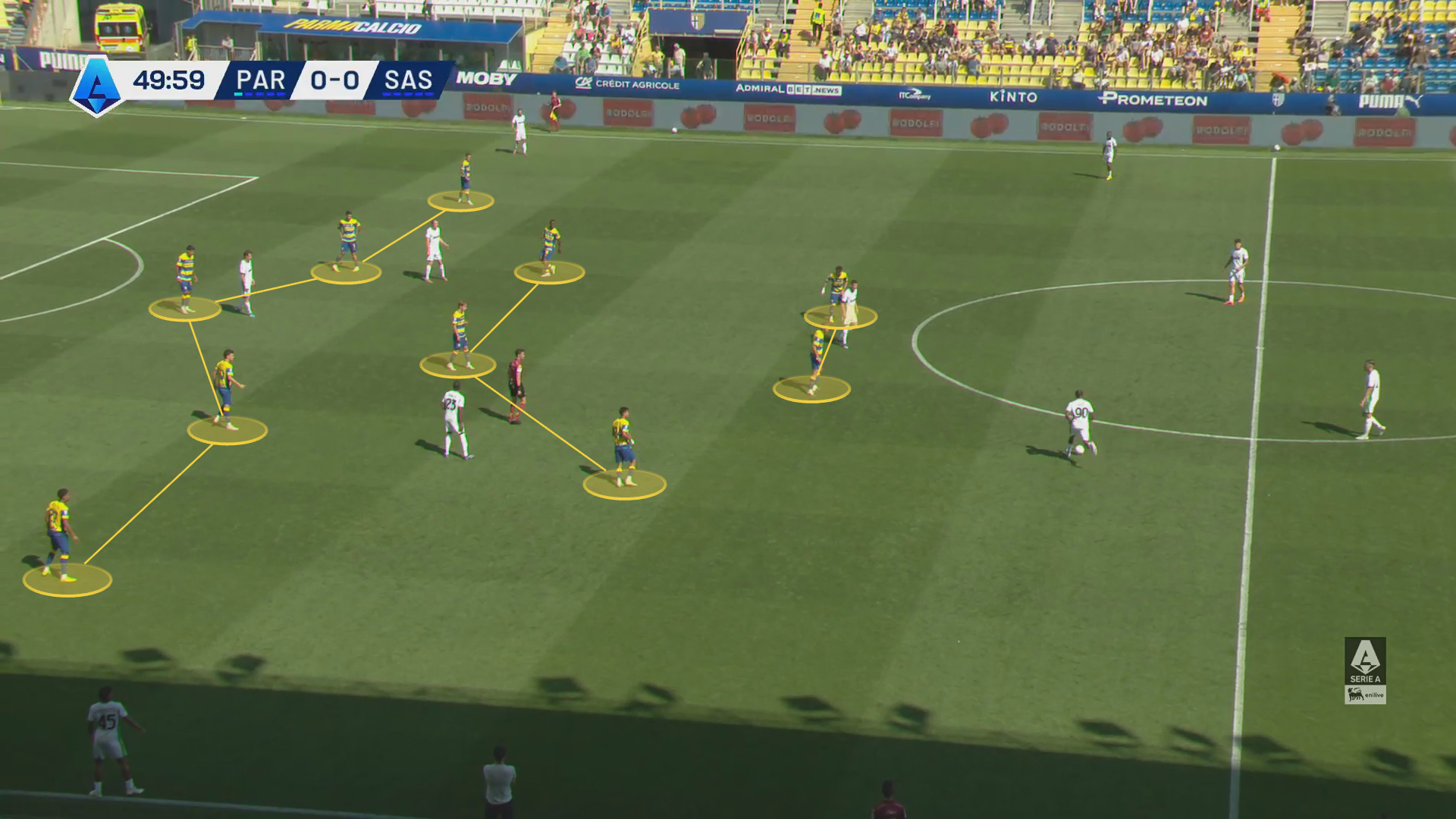
His first season revealed both the challenges and rewards of building from scratch. He began the campaign experimenting between a back four and a back five, but by February had settled on a more decisive 5-3-2 formation. "That gives you more cover inside," he explained, describing how the formation provided defensive density while creating threat on the counter-attack. The move demonstrated tactical flexibility—a willingness to adapt as he learned his squad's strengths and limitations.
What stands out most in Cuesta's approach is his philosophy on structure and creativity. Rather than imposing a rigid system, he builds around the characteristics of his available players, using clear principles and references as a scaffold for individual expression. "The references, the principles, the macro guidelines allow you to have more creativity because if you don't have clear references and signals to recognise during the game, it becomes total chaos," he said. This balance—giving players freedom within a defined framework—suggests a coach who learned well from Arteta's meticulous approach at Arsenal.
For a club like Parma, rebuilding is measured in years, not seasons. Cuesta understands this. His focus is on creating a shared collective identity, where players understand not just the tactical shape but the values and principles that bind them together. He emphasizes getting teammates to know each other—both on and off the pitch—so they can anticipate and complement one another's movements. It's a patient, human-centered approach to the beautiful game, one shaped by his mentors and refined through his first challenging season in charge. At 30, Cuesta has time on his side, and Parma may yet find their way back.