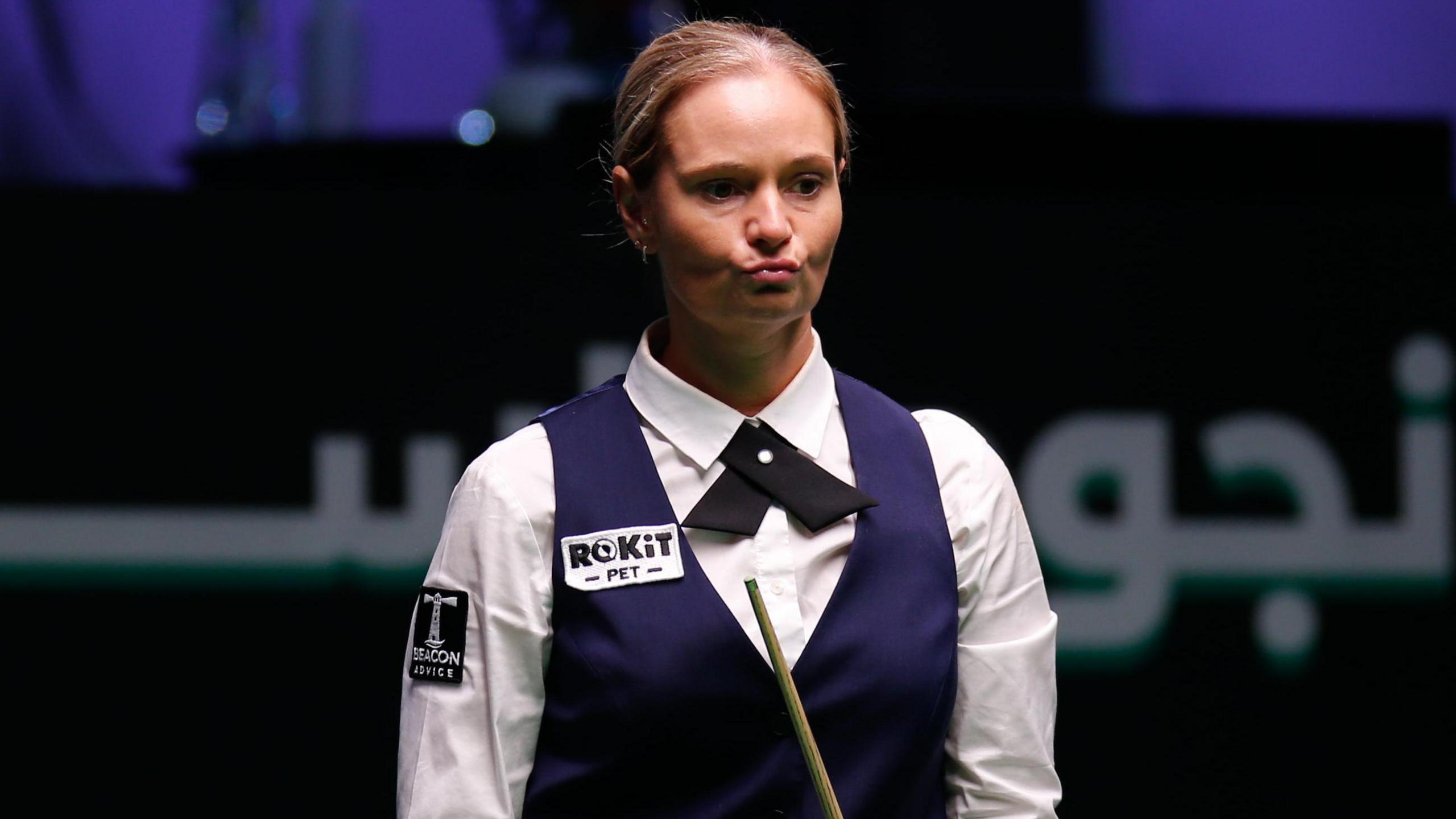
At eighteen, Panchaya Channoi claimed the Women's World Snooker Championship in Dongguan, China, with a commanding 6-2 victory that ended one of the sport's most remarkable individual streaks. Her opponent was Reanne Evans, the 40-year-old English champion who had won this tournament twelve times before—more than any other player in its history—yet found herself chasing the match from the opening frame.
The significance of this moment extends far beyond a single title. Evans has long been regarded as the most successful player in women's snooker history, a distinction she has earned through decades of precision, consistency, and mastery. For her to enter a World Championship final seeking a record-extending 13th crown only to fall short highlights both her enduring excellence and the emergence of a new generation capable of matching it. This was also her first world final since 2019, a five-year gap that made her pursuit of that 13th title all the more poignant—and her defeat all the more significant.
Channoi, however, was the superior player on the day. A century break in the first frame immediately signaled her intent, and she never relinquished control. By the third frame, she had established a commanding 3-1 lead. Evans managed to pull one frame back, briefly suggesting a comeback, but Channoi responded decisively with a break of 107 in the sixth frame to move 4-2 ahead. She then took the seventh frame, and a break of 59 in the eighth secured her the Mandy Fisher Trophy with two frames to spare.
What makes Channoi's victory even more remarkable is the historical weight it carries. She becomes only the second player ever to win both the World Championship and the Under-21 title—a double achievement previously managed only by China's Bai Yulu in 2024. Beyond that, she is the third Thai player to claim the world title, following the trailblazing Mink Nutcharut and Siripaporn Nuanthakhamjan. Thailand's emergence as a powerhouse in women's snooker represents a genuine shift in the sport's global landscape, with young players from the country demonstrating the skill and composure to compete at the highest level.
For Evans, this defeat carries particular weight: she was beaten in a World Championship final for the first time in her career. Her twelve previous world titles speak to an almost unparalleled ability to peak when it matters most, and while this loss is undoubtedly painful, it does little to diminish the legacy she has built. At forty, she remains a formidable competitor, and her presence in the final itself—after such a long absence—testifies to her enduring quality.
The changing of the guard in women's snooker is not a sudden rupture but a natural evolution. Channoi's composure under pressure, her clinical break-building, and her mental toughness against one of the sport's greatest ever champions all point to a player who belongs among the elite. As she lifts the Mandy Fisher Trophy in Dongguan, she carries the hopes of a new generation—one that is rewriting what is possible in this ancient game.