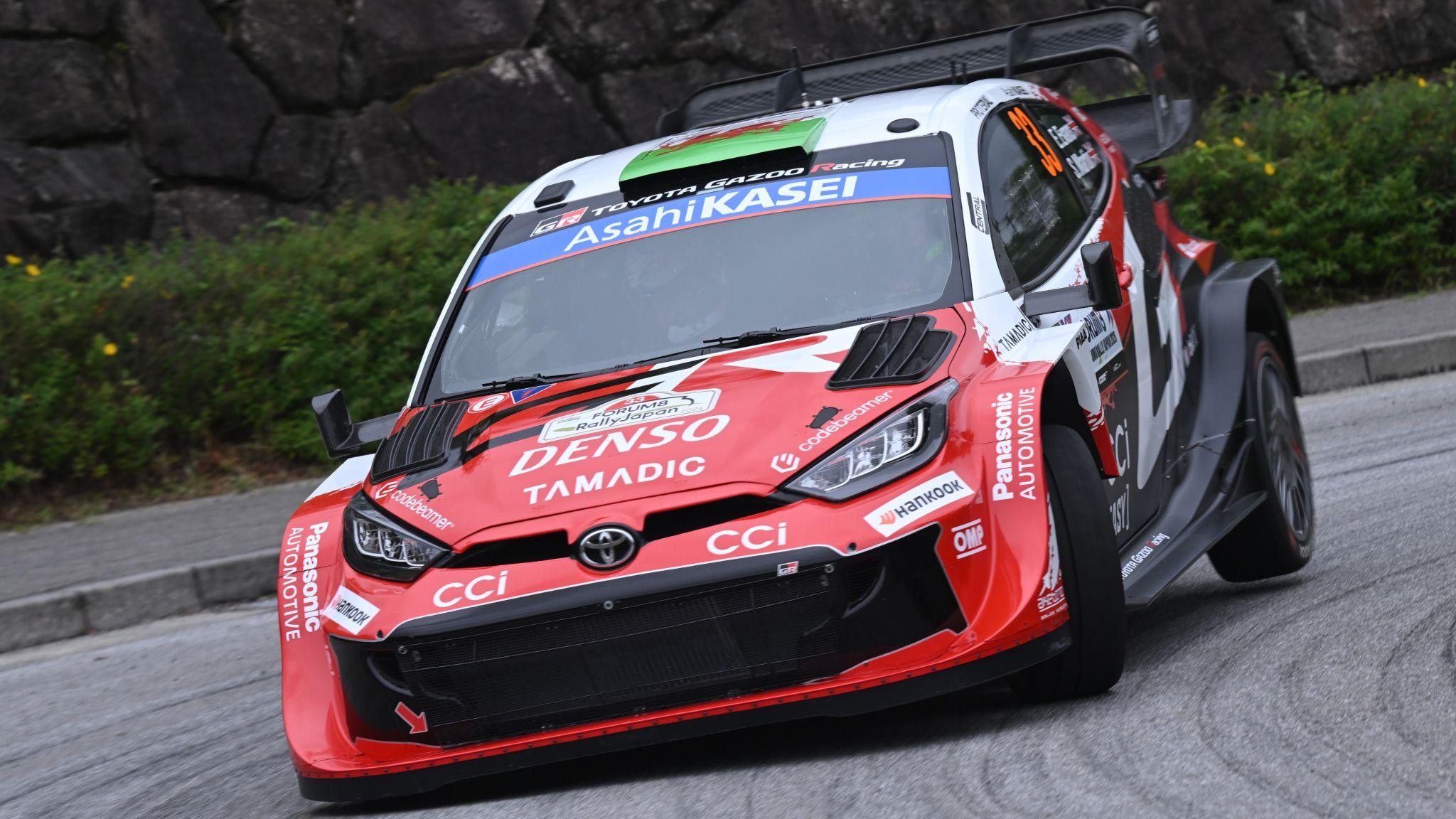
Elfyn Evans commanded Rally Japan from start to finish, claiming his third victory in four years at the iconic course and extending his World Rally Championship lead to a commanding 20 points at the halfway mark of the season. The 37-year-old Welsh driver, co-driven by Scott Martin, seized control on Friday with an electric drive through Isegami's Tunnel — stage two's legendary passage — and never relented over the remaining 18 stages, finishing 12.8 seconds clear of nine-time world champion Sébastien Ogier.
Evans's dominance comes at a critical juncture in the 14-race championship. Starting the weekend with a 12-point advantage over his Toyota Gazoo Racing team-mate Takamoto Katsuta, Evans stretched that buffer to 20 points by the halfway point. This margin is particularly significant given his history: he and Scott Martin finished as championship runners-up five times in six years, often undone by a sequence of gravel rallies that exposed weaknesses in their setup and approach.
The Welsh driver's performance in Japan showcased the kind of control that's been missing. He won stage two by 7.5 seconds, posted the fastest time on stage three, and won the afternoon's second run through Isegami's Tunnel to establish a commanding 15.7-second lead at day's end. While Oliver Solberg and co-driver Elliott Edmondson — Evans's Toyota team-mates — chipped away with two stage wins on Saturday morning, cutting the deficit to under 10 seconds, Solberg's subsequent crash on stage 12 effectively handed the victory to Evans. The 24-year-old Swede recovered for maximum bonus points on Sunday, but finished 49 minutes and 43 seconds back.
Ogier took second place, while Finland's Sami Pajari rounded out the podium 51.4 seconds behind Evans. Toyota's dominance was complete: they swept the top four positions, with Katsuta claiming fourth. The result marks Evans's 50th podium finish in the WRC, a milestone for the determined driver who has long carried the weight of championship near-misses.
Yet Evans himself cautioned against reading too much into his expanded lead. "Not sure, a long way to go and too early to talk about that," he said, preferring to focus on the present. The strategy reflects hard-won wisdom: the remaining seven rallies are contested entirely on gravel, Evans's acknowledged weak point in recent years. Last season, consecutive gravel-rally struggles cost him dearly — failures he's studied extensively. "Dry gravel rallies are what we identified as perhaps the weakest point of our championships in the past," Evans admitted.
The gravel shift also fundamentally changes the competitive landscape. Running first as championship leader becomes a disadvantage on unpaved surfaces, as the opening car 'sweeps' the road, leaving cleaner terrain for those behind. This dynamic could whittle away at Evans's points advantage as rapidly as he built it.
That reckoning comes swiftly. Round eight takes the championship to Greece for the Acropolis Rally on June 25–28, marking the first true test of whether Evans has addressed the vulnerabilities that have haunted his championship bids. For a driver who has knocked on the championship door so many times, this moment — with a 20-point cushion and gravel rallies ahead — represents both his greatest opportunity and his most pressing challenge.