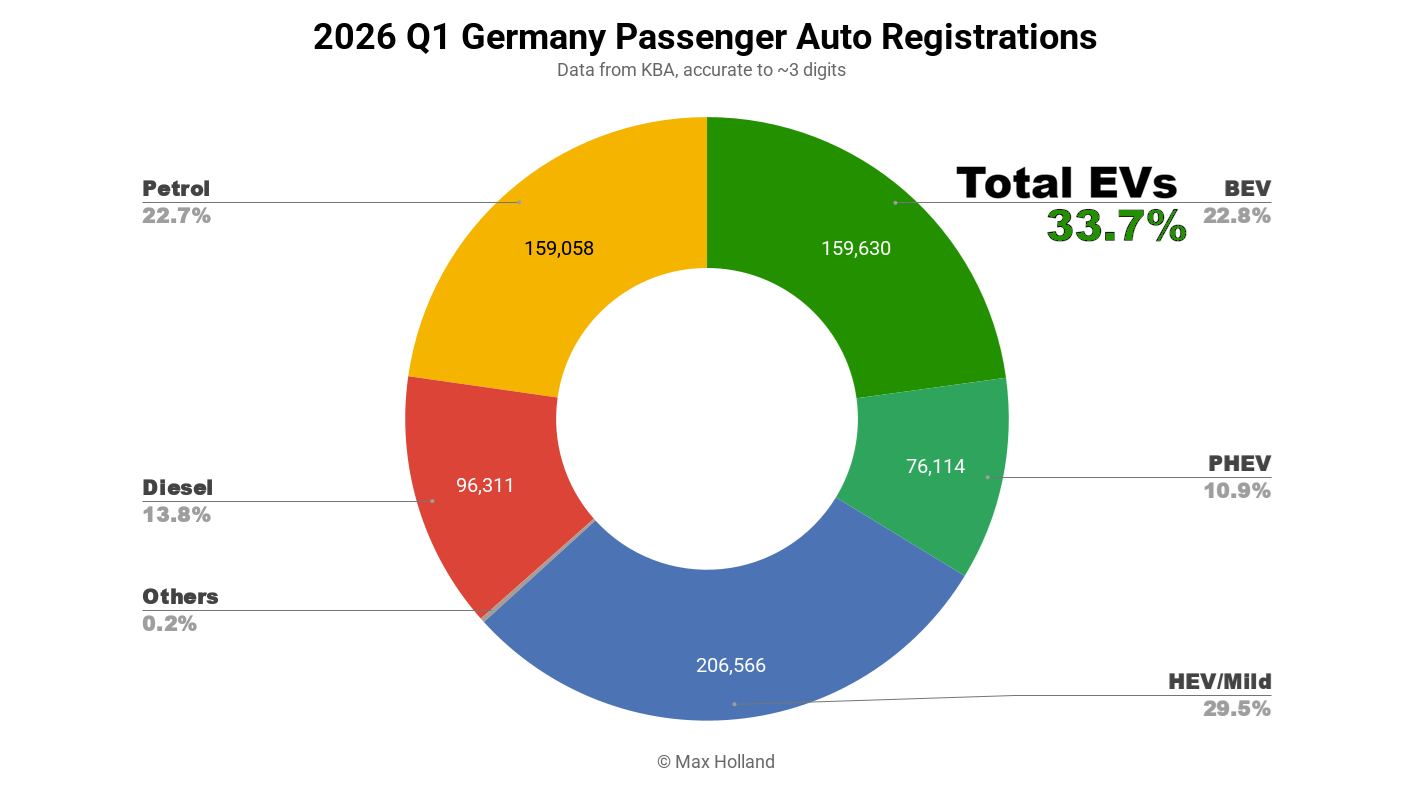
When the Skoda Elroq rolled off the lot 10,399 times in Germany this past quarter, it wasn’t just claiming a sales crown—it was signaling a shift. In the first three months of 2026, plug-in electric vehicles captured 33.7% of the German new car market, a significant leap from 26.6% in the same period last year. This isn’t a fleeting trend; it’s a transformation taking root in Europe’s largest auto market, where battery electric vehicles (BEVs) now make up 22.8% of sales and plug-in hybrids (PHEVs) another 10.9%. For the first time, the start of the year has outpaced the previous quarter’s momentum—a break from the old pattern of post-year-end slumps—and experts point to renewed government incentives as the spark. A €3,000 purchase bonus for BEVs and €1,500 for PHEVs, with added support for lower-income families, has reignited consumer interest at a time when economic growth is sluggish and inflation is creeping up.
The numbers tell a story of quiet but steady momentum. Total new car sales rose 5% year-on-year to 699,377 units, with electric options gaining ground even as petrol models declined by 16.6% and diesel by 6.5%. Meanwhile, hybrid and mild-hybrid vehicles grew 7.4%, serving as a bridge for legacy automakers to meet emissions targets—but the real future lies in full electrification. Germany, long known for its automotive heritage, is now navigating a new identity, one where the Tesla Model Y (9,300 units sold) and Volkswagen ID.3 (8,158 units) share the stage with rising stars like the affordable Kia EV2 at €26,600 and the Nissan Micra at €27,990. These new entrants, especially those under €30,000, could be the key to unlocking mass adoption beyond urban early adopters.
Beyond the leaders, the reshuffling in the rankings reveals deeper currents. The Hyundai Inster jumped seven spots to 16th, the Opel Grandland surged 14 places to 17th, and the BYD Dolphin Surf entered the top 20 after a 17-rung climb. Even debut models like the Porsche Cayenne and Mercedes EQC are finding buyers, though the real excitement lies in the accessibility of newcomers like the Renault Twingo, priced at just €19,990. While some, like the Cadillac Optiq and Subaru Uncharted, sold only in single digits, their presence signals automakers’ global pivot toward electrification.
With manufacturing confidence rebounding—PMI rising to 52.2 from 47—and incentives holding steady, the path forward looks increasingly electric. Germany may not be racing ahead at breakneck speed, but it’s no longer hesitating at the starting line. As more affordable models hit the road, the transition isn’t just about technology—it’s about who gets to be part of it.