Franziska Brandt has been car shopping in Munich this summer, and something caught her eye at the dealership — suddenly, everyone seemed interested in electric models. "I wasn't expecting that," she said. She wasn't imagining it. Electric cars just hit a record high in Germany, and the numbers are striking.
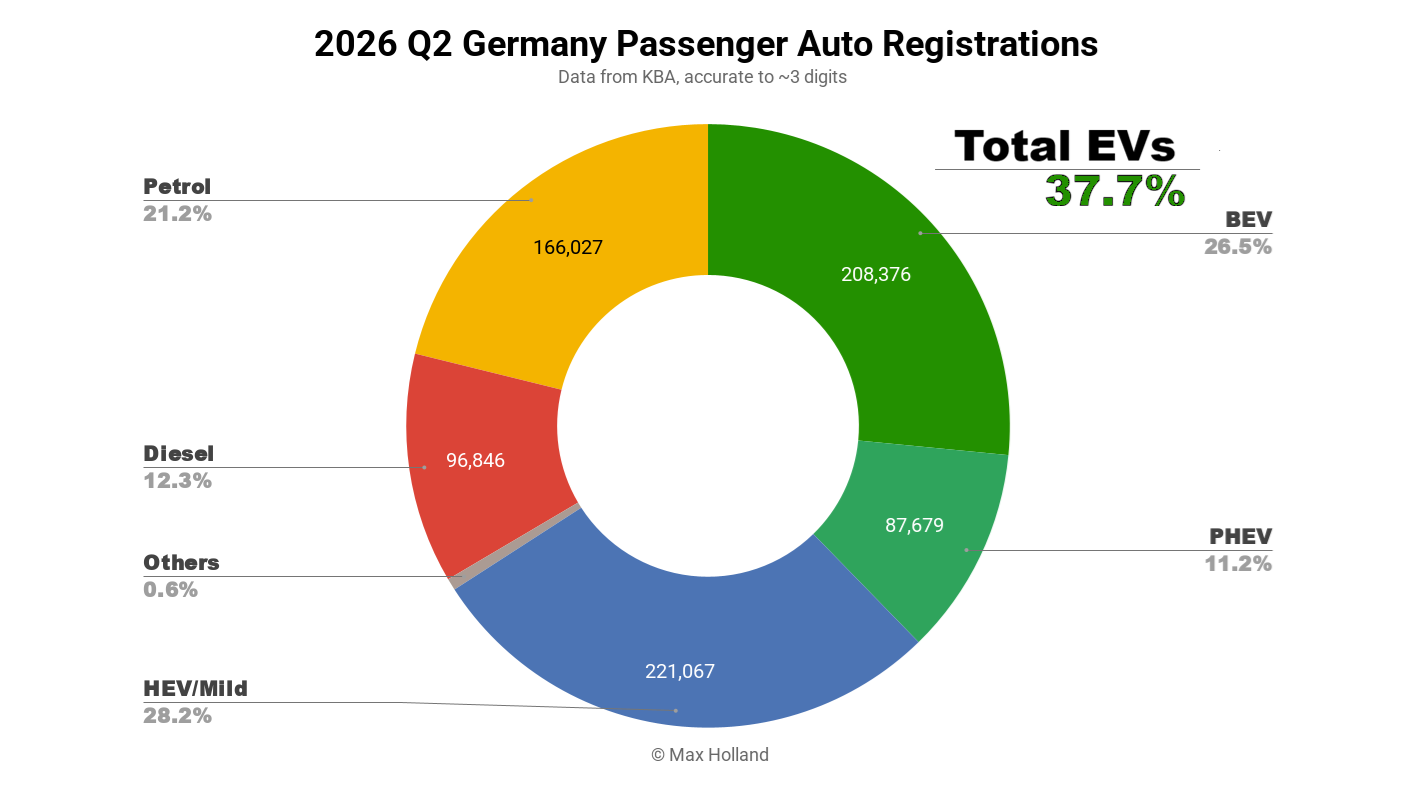
In the second quarter of 2026, plugin electric vehicles — both fully electric and plug-in hybrids — made up 37.7% of all new car sales in Germany, according to sales data reported by CleanTechnica. That's up from 28.6% just one year earlier. The jump is even sharper when looking only at fully electric cars, called BEVs: they grabbed 26.5% of the market, up from 18.4% the year before.
That shift represents more than a trend — it reflects a genuine surge in buying. BEV sales volumes jumped 53% compared to the same quarter last year, adding tens of thousands of new electric cars to German roads.
Several things are driving the change. Oil prices have climbed steeply, making gasoline and diesel more expensive at the pump. At the same time, Germany brought back purchase incentives for electric cars, giving buyers a financial boost. Experts say these factors are likely to keep pushing buyers toward electric throughout the rest of the year.
When it came to which electric models Germans bought most, one name climbed back to the top: the Tesla Model Y. German car buyers registered 10,401 Model Y vehicles in the quarter, making it the best-selling fully electric car in the country. The last time Tesla held that top spot was in early 2024, so this marks a notable comeback. Close behind were the Volkswagen ID.3 in second place with 10,082 units, and the Skoda Elroq in third with 9,739 units.
Other models showed striking growth too. The BMW iX1 hit record quarterly numbers — roughly 50% higher than its usual sales pace. The new BMW iX3 nearly tripled its volume from the previous quarter. The Mercedes EQB, facing major discounts as a new version approaches, sold 3,376 units, about double its recent average.
Meanwhile, traditional fuel cars continued their steady decline. Petrol (gasoline) dropped from 28.2% of the market to 21.2% year over year. Diesel fell from 14.7% to 12.3%. Analysts expect combustion-only cars to make up only about a quarter of sales by the end of 2026, while electric vehicles together could approach half the market.
The shift matters beyond just car shops. Germany's auto industry is the heart of its economy, and major manufacturers like Volkswagen are restructuring, with some production moving to countries with lower energy costs like Spain. But for now, the country's drivers are clearly steering in a new direction — toward electric.