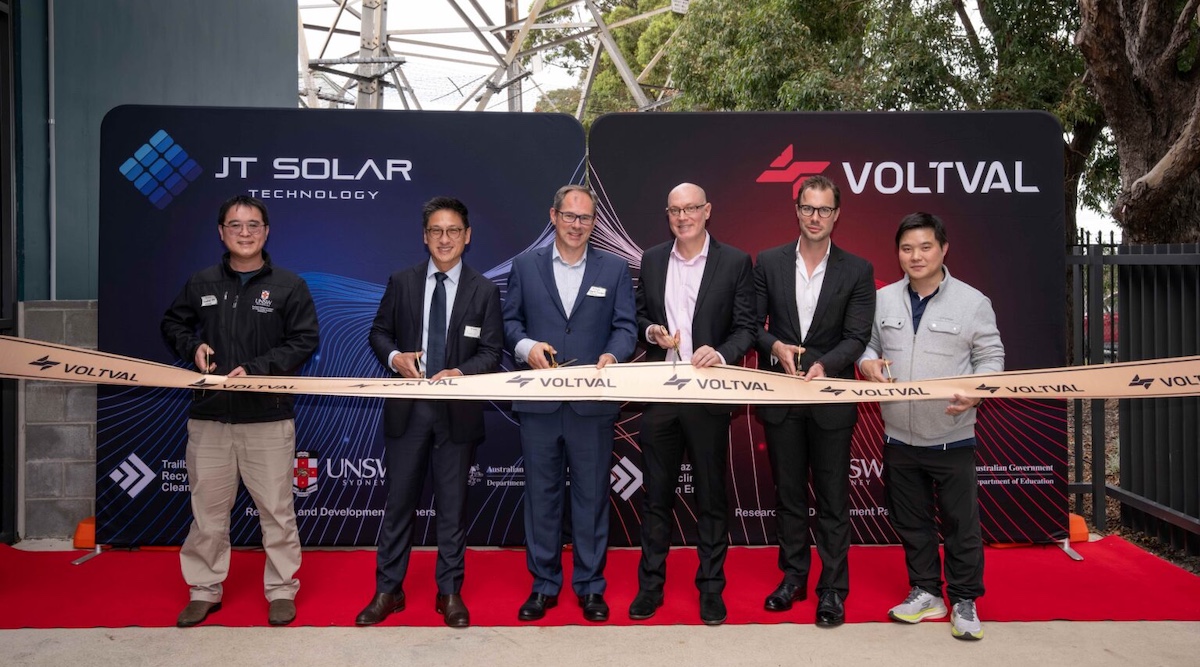
When Jason Jiangang Xiao looks at an apartment building in Sydney, he sees something different than most people do. He sees a place where thousands of families could benefit from clean, cheap solar power — if only they had a way to get it.
That's the challenge his company, JT Solar Technology, is trying to solve. Together with researchers from the University of New South Wales Canberra and a tech company called Voltval, they're testing a new artificial intelligence (AI) system that could bring solar panels and batteries to people who rent apartments and can't install them on their own roofs.
The project is a pilot study, which means they're trying it out in real buildings to see if it works. Here's the idea: instead of each apartment relying on the grid like they do now, the AI system would connect apartments together into a shared network. It would predict when each apartment needs power, when solar panels are generating electricity, and then automatically balance the energy flow between units. Think of it like a traffic controller for electricity — making sure the right amount of power reaches the right place at the right time.
The need is enormous. Across Australia, 2.5 million people live in apartments. In New South Wales alone, one out of every three residents lives in an apartment building. Yet only 3.5% of those apartment dwellers currently have access to rooftop solar panels. Why? Because rooftops are shared spaces owned by building managers, not individual tenants. Plus, regulations in NSW actually make it illegal to install plug-in solar systems on balconies. That leaves millions of people stuck paying high electricity bills with no easy way to go green.
This pilot aims to change that. The AI platform, called a Modular Power Portal System (MPPS), was developed by Voltval and JT Solar Technology with a AUD 1.2 million grant (about $830,000 in U.S. dollars) from the Australian Department of Education's Trailblazer Recycling & Clean Energy program. Associate Professor Huadong Mo from UNSW Canberra leads the research team. He estimates the system could reduce operating costs for clean energy in apartment buildings by as much as 30% — savings that could be passed along to tenants.
"The next phase of Australia's clean energy transition will depend on ensuring that apartment residents can participate in the benefits of distributed energy resources," Mo said.
Other companies involved in the pilot include Beaumont Strata Management, Ocean Building Management, One Stop Warehouse, Piper Alderman, SAJ Electric, and Squared-X. If the technology proves successful, it could eventually help apartment residents across Australia — and around the world — access affordable solar power without needing to own their homes or install anything on their balconies.