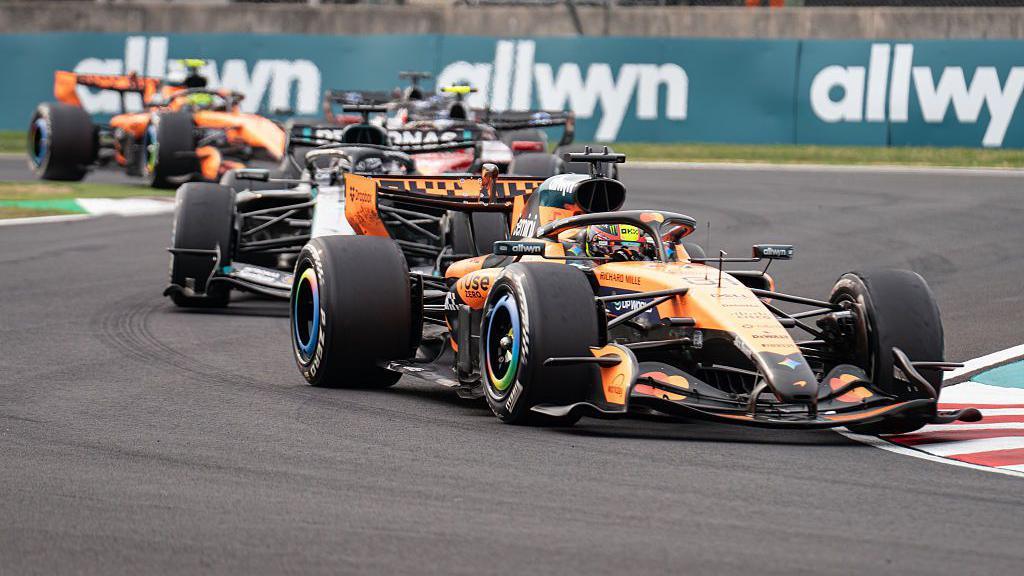
When four-time world champion Max Verstappen publicly questioned whether he wanted to continue in Formula 1, the sport listened. In a striking demonstration of responsiveness, F1, the teams, and governing body the FIA collaborated on a comprehensive package of engine rule changes aimed at restoring the thrilling, wheel-to-wheel racing that drivers and fans both crave.
The new power-units—featuring a near 50-50 split between internal combustion and electrical power—had created unexpected challenges. Drivers reported being forced into "counter-intuitive" practices like lifting off the accelerator mid-qualifying lap to recover energy, dulling the pure driving experience. More dangerously, the massive power differential between a car with full battery deployment and one running flat could reach 470bhp, raising serious safety concerns.
That gap had real consequences. At the Japanese Grand Prix, Haas driver Oliver Bearman suffered a right knee contusion in a high-speed crash that followed a sudden speed differential with Alpine's Franco Colapinto.
The approved changes—awaiting final FIA World Council ratification—address these issues through targeted modifications. In qualifying, the total permitted energy recharge has been reduced from 8MJ to 7MJ, meaning less time spent managing systems and more time pushing to the limit. The so-called "super-clipping" threshold has been raised from 250kW to 350kW, allowing drivers to spend just two to four seconds in that mode rather than losing precious tenths harvesting energy.
On race day, boost mode will be capped at 150kW or the car's existing deployment level—whichever is higher—dramatically reducing the dangerous closing speeds that endangered Bearman at Suzuka. Meanwhile, electrical deployment will be capped at 250kW outside acceleration zones, though drivers can still unleash the full 350kW when exiting corners.
Mercedes F1 boss Toto Wolff, who described the approach as "acting with a scalpel and not with a baseball bat," emphasized the shared commitment to improving the product while prioritizing safety. "It's how can we improve the product, make it out-and-out racing, and look at what can improve in terms of safety," he said.
Most changes will debut at the Miami Grand Prix on May 1-3, when F1 returns from its five-week break. Additional measures include adjusted tyre blanket temperatures for better wet-weather grip, reduced torque for improved control in rain, and simplified rear lights for clearer visibility—responses to direct driver feedback.
The speed with which these adjustments came together—following weeks of discussions between technical chiefs, drivers, F1, and the FIA—underscores a sport willing to course-correct when the core experience is at stake. For fans, the result should be more flat-out racing, fewer artificial complications, and a safer championship. For Verstappen and his peers, it may just restore the spark that brought them here in the first place.