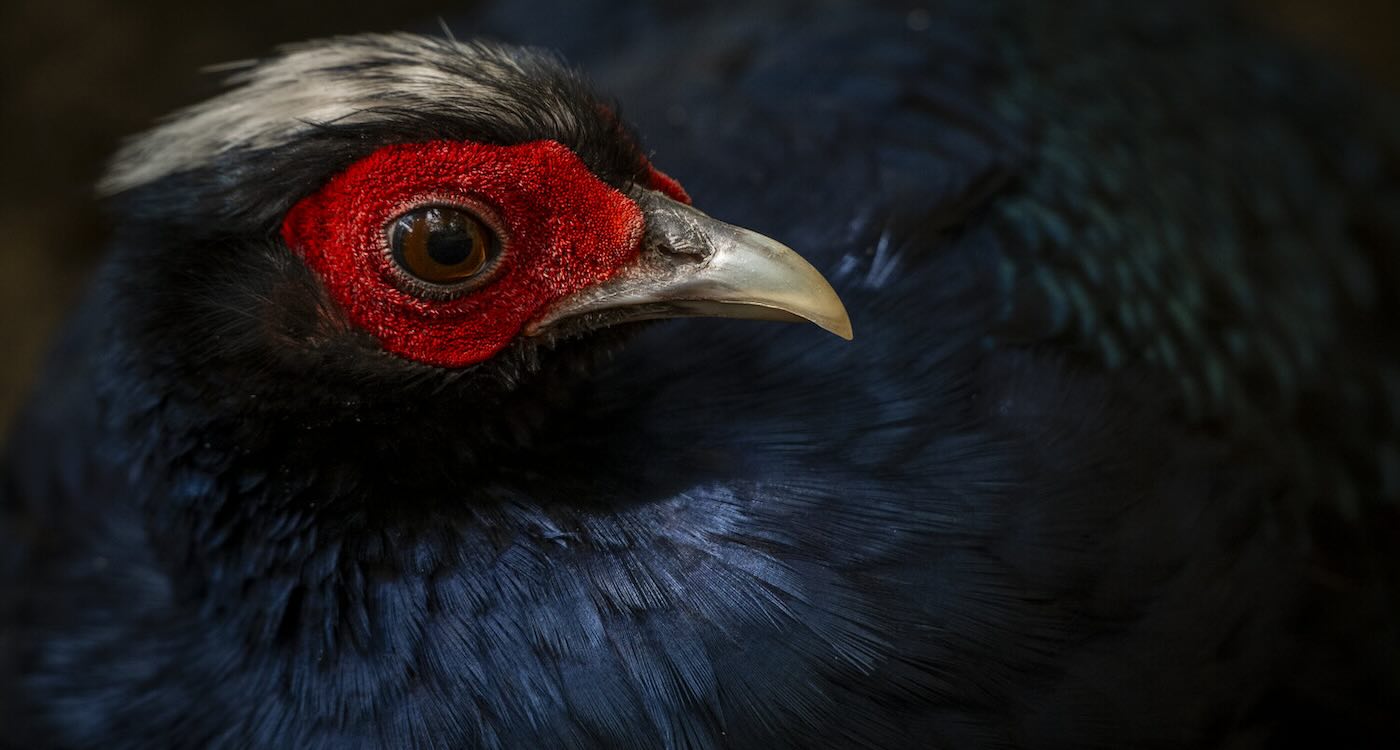
Deep in the forests of central Vietnam, a remarkable bird with iridescent blue plumage and vivid red facial skin has been absent for over two decades—but not for much longer. An international coalition of zoos, conservation organizations, and Vietnamese partners is preparing to bring the Vietnam pheasant home, launching one of the world's most ambitious efforts to restore a species that has likely vanished from the wild entirely.
The Vietnam pheasant once thrived in the dense, humid forests of central Vietnam, distinguished by the male's striking deep blue plumage with subtle metallic sheen. But decades of habitat loss, agricultural expansion, illegal hunting, and the ecological devastation wrought by the Vietnam War have erased the species from its native range. No reliable wild sightings have been recorded in 20 years—yet the species survives, thanks to an extraordinary act of foresight more than a century ago. In the early 20th century, a small number of birds were brought from Vietnam to Europe. That tiny founder population became the basis for a carefully managed breeding program across zoological institutions and private breeders, maintained across generations through meticulous genetic planning by the European Ex-situ Program (EEP), which manages conservation breeding for 500 animal species worldwide.
Now, for the first time, that painstakingly preserved population is being used to support a return to the wild. In mid-May, twenty pheasants selected from European breeding programs will be transported from Berlin to Vietnam via cargo aircraft in specially designed crates, accompanied by expert handlers who will monitor their wellbeing continuously throughout the journey. Each bird has been chosen with precision—based on genetic diversity, health, and behavioral characteristics—to ensure the foundation of the reborn wild population is as strong as possible.
Upon arrival in Vietnam, the pheasants will not immediately be released. Instead, they will enter a period of careful acclimatization and observation under professional care, allowing them to adjust to local climate, form breeding pairs, and establish new generations of parent-reared chicks. Only once this foundation is secure will further steps toward release be considered. "The recovery of the Vietnam Pheasant is more than the return of a single species," said Pham Tuan Anh, director of Viet Nature Conservation Center, which operates the Rare Pheasants Breeding Centre. "It represents our pride and responsibility in protecting our natural heritage. This project shows how conservation practitioners, scientists, local communities, and authorities can come together to rebuild what has been lost."
In parallel, conservation teams are preparing the ground in central Vietnam itself. Within the historical range of the species, protected forest areas are being developed as potential future release sites. Teams are working to safeguard these habitats, monitor biodiversity, and reduce ongoing threats such as illegal hunting. The effort reflects a hard-won lesson: reintroducing an extinct species requires far more than simply returning animals to their former home. It demands functioning ecosystems, long-term protection, and genuine partnership with local communities.
Veronika Zahradníčková, EEP Coordinator at Prague Zoo, emphasized the significance of the moment: "Through careful breeding and long-term genetic planning, we have been able to maintain a healthy and viable population. Contributing individuals to this reintroduction is a significant milestone and an important step towards restoring the species in its natural habitat." The Vietnam pheasant, once nearly lost to history, now represents something far more hopeful: proof that when institutions and nations commit to shared purpose, even the most fragile species can be given a second chance at life in the wild.