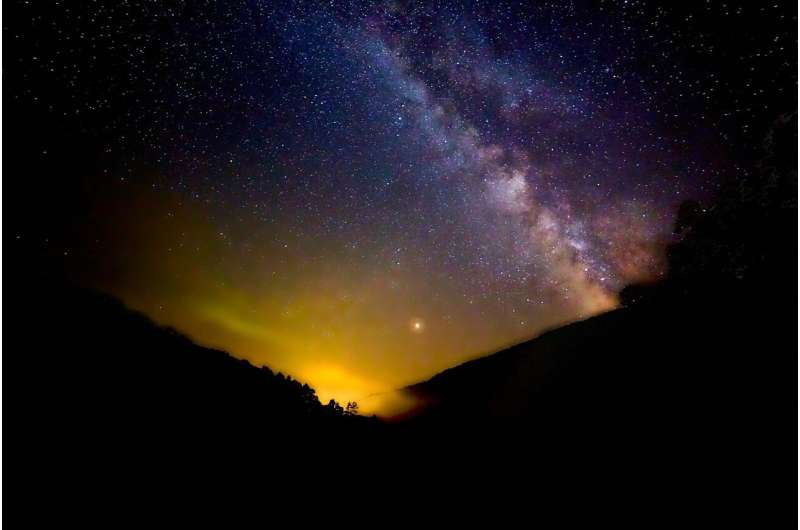
On farmyards across North York Moors National Park, an unusual transformation is unfolding after dark. Security floodlights are being swapped for thoughtfully angled fixtures, harsh halogen beams dimmed to warmer tones, and motion sensors installed to keep the night genuinely dark. What began as a conservation experiment has revealed something farmers didn't expect: this care for nocturnal wildlife might actually help their crops.
For generations, rural communities lived by the sun's rhythm. But as security concerns grew, so did the lights—powerful beams designed to ward off equipment theft and livestock loss. These harsh nighttime illuminations, it turns out, have been disrupting far more than just the view of the stars.
The North York Moors, designated as an international dark sky reserve, has been leading the charge. Since 2021, the national park authority has partnered with more than 20 farms in key dark sky locations, with many more projects now in development. The approach is elegantly simple: lighting used in the right place, at the right time, with the appropriate intensity. It might mean installing downward-facing fixtures instead of omnidirectional floods, adding shielding to reduce glare, or switching to warmer-colored LEDs that are less disruptive to wildlife. Some farms are experimenting with motion-activated systems that illuminate only when needed.
The science behind this shift is sobering. Artificial light pollution disrupts regional ecosystems by extending daylight artificially and altering the behavior of animals that depend on natural darkness. Researchers have found that this disruption damages the critical role light plays in biological timing systems—everything from when insects emerge to when plants grow. The damage cascades through the food chain: pressures from habitat loss, pesticides, invasive species, and light pollution together could trigger a devastating decline in insect populations, with consequences that ripple upward through ecosystems.
But here's where the story takes an unexpected turn. The very creatures harmed by nighttime lighting—moths and bats—are agricultural allies. Moths are vital nocturnal pollinators, and bats help farmers control insect pests naturally. Light pollution shrinks their feeding grounds and disrupts their activity. By dimming and redirecting farm lights, landowners are restoring habitat for the insects and animals that actually work on their behalf. There's also growing evidence that artificial light affects plant cycles directly, meaning more thoughtful lighting could benefit crop growth itself.
The benefits extend beyond the soil. Farms embracing wildlife-friendly lighting can join accreditation schemes that appeal to tourists—particularly those operating as bed-and-breakfasts keen to market themselves as part of a dark sky community. It becomes a selling point: visitors seeking genuine night skies, clear starlight, and authentic countryside experience.
The lesson from North Yorkshire isn't that farms should abandon security altogether. It's that lighting can be responsible, strategic, and protective of both property and the natural world. While national park authorities in the UK have powers to enforce lighting standards within their boundaries, the wider countryside remains largely unregulated. That makes initiatives like this one—where farmers voluntarily reimagine how they illuminate the night—all the more significant. Small changes in how we light our land can yield profound environmental improvements, and sometimes those improvements come with benefits farmers never anticipated.