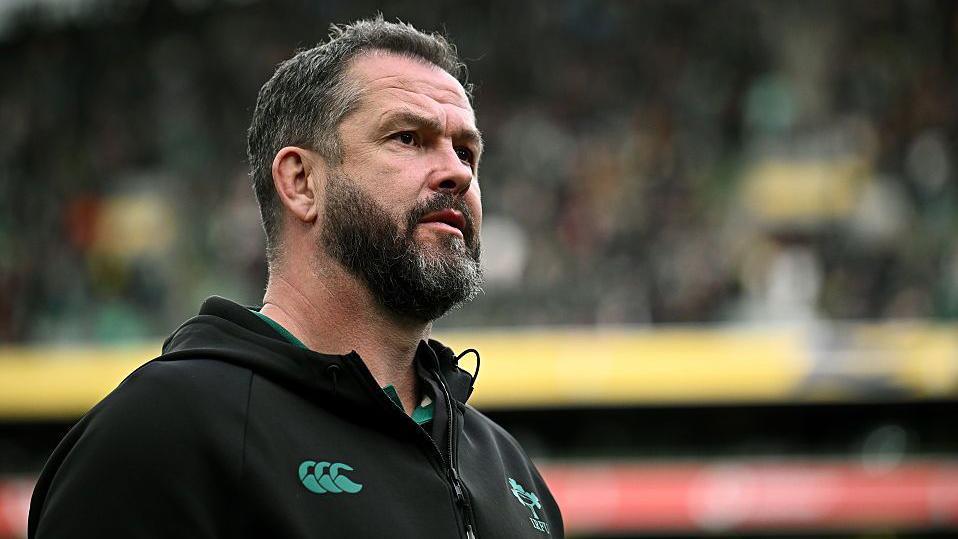
Andy Farrell has just secured one of rugby's most prestigious long-term roles, extending his contract with the Irish Rugby Football Union through 2031—a deal that cements his leadership over Irish rugby for the next seven years and two World Cups. The 50-year-old English coach, who took the helm in 2019 following Joe Schmidt's tenure, has become the architect of a remarkable Irish resurgence, and now he'll shepherd the team all the way to the 2031 World Cup in the USA.
The extension matters because it provides rare continuity at the helm of a national rugby program during one of the sport's most pivotal eras. Stability in coaching is a luxury few nations enjoy, and Ireland's investment signals deep confidence in Farrell's vision and track record. His achievements speak clearly: two Six Nations championships including the Grand Slam in 2023, plus a Lions series victory in Australia in 2025 when he served as British and Irish Lions head coach. These are not incremental wins—they're the kind of silverware that reshapes how a rugby nation sees itself.
What makes this extension particularly significant is Farrell's explicit focus on sustainable development rather than short-term glory. In his statement, he highlighted "the increasing strength and investment in pathways and the quality of talent coming through," suggesting he's thinking beyond the immediate squad and into the future architecture of Irish rugby. He spoke of confidence "built across the provinces and age-grade programmes," the grassroots infrastructure that separates flash-in-the-pan success from generational dominance. This isn't the language of a coach managing decline or merely hoping for the best—it's the outlook of someone building something that will outlast his tenure.
The practical timeline deserves attention too. Farrell's original contract was set to expire after the 2027 Rugby World Cup. By extending to 2031, the IRFU is essentially saying they want him leading Ireland not just through the next World Cup in the USA, but through the entire cycle that follows it. That's a statement of extraordinary faith in one person's vision.
Farrell himself framed the extension with genuine warmth, emphasizing the privilege of working with "such a talented group of players and staff" and the unwavering support of Irish supporters. For a coach who grew up in England and played for his country, the weight of representing Irish rugby at this level clearly resonates. His language about the team being driven forward by supporter passion isn't boilerplate—it speaks to someone who understands that rugby at this level is a shared endeavor between coach, players, staff, and the wider community that funds and sustains it.
The road ahead includes navigating the 2027 World Cup in Australia first, a tournament that will test whether the foundations he's laid actually hold. But if his recent track record is any guide—Lions series win, Grand Slam, back-to-back Six Nations—Ireland's supporters have good reason to believe the best may indeed be yet to come. Seven more years with Farrell in charge means Ireland's rugby story is far from finished.