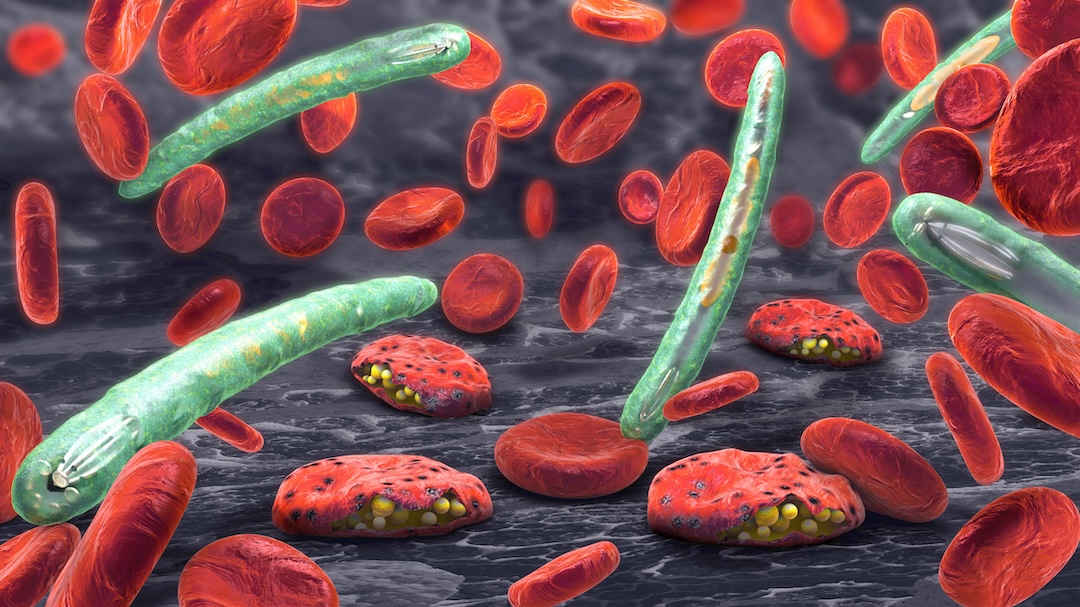
In just 4.3 hours, a new antimalarial drug called MMV367 eliminated half of the malaria parasites circulating in human blood—a breakthrough that could reshape how doctors treat one of the world's most persistent killers as drug resistance spreads relentlessly across Africa and Asia.
The promise lies in urgency. Malaria killed an estimated 610,000 people and infected 282 million more in 2024 alone, and the crisis is deepening. The parasites that cause the most severe form of the disease, Plasmodium falciparum, have been quietly developing resistance to artemisinin-based drugs—the current frontline treatment that has saved millions of lives. These drugs work fast, knocking down malaria parasites within hours, but as resistance takes hold in Southeast Asia and increasingly in East Africa, that speed advantage is fading. The global health community needs new tools, and fast.
Enter MMV367, an oral drug candidate developed by Medicines for Malaria Venture, a nonprofit organization founded in 1999 that has delivered 19 approved antimalarial medicines to date. The drug belongs to an entirely novel class called pyrrolidinamides, which attack malaria parasites in a fundamentally different way than artemisinin drugs do. Rather than targeting a single pathway, MMV367 interferes with two essential enzymes that malaria parasites need to synthesize long-chain fatty acids—essentially cutting off a biological requirement the parasite cannot live without.
The clinical trial, published in Science Translational Medicine and led by Stephan Chalon, MD, PhD, vice president of experimental medicine and clinical pharmacology at Medicines for Malaria Venture, involved 12 healthy volunteers who were deliberately infected with P. falciparum parasites and then treated eight days later with doses of MMV367. The results were striking. Doses of 20 milligrams or above rapidly killed the parasites, with half eliminated in 4.3 hours—a speed comparable to artemisinin drugs. Importantly, the drug proved safe across all participants, causing only mild side effects in some. And critically, researchers found no evidence of emerging resistance to this novel drug class during the study period.
What makes this moment significant is both the speed and the novelty. As artemisinin resistance spreads—a process that has taken years to document but poses an existential threat to malaria treatment—having a fast-acting alternative from a completely different pharmacological family is not merely an incremental improvement. It is a hedge against the loss of one of medicine's most powerful weapons. The pyrrolidinamide class works so differently that resistance mechanisms to artemisinins should not automatically confer resistance to MMV367.
Yet this is only the beginning. The trial was intentionally small and short, designed to test safety and tolerability in healthy people, not to prove the drug works in actual malaria patients or prevent drug resistance from emerging with long-term use or in larger populations. Researchers themselves note that larger patient trials with longer follow-up periods will be essential before MMV367 can reach people living with malaria, many of them children and pregnant women in sub-Saharan Africa and Southeast Asia. Medicines for Malaria Venture, as a product development partnership working with pharmaceutical companies and academic institutions, is positioned to shepherd the drug through those phases with a focus on making it accessible and affordable.
The clock is running. As resistance spreads, the window for deploying new tools narrows. But results like these offer something rare in global health right now: genuine hope grounded in hard science.