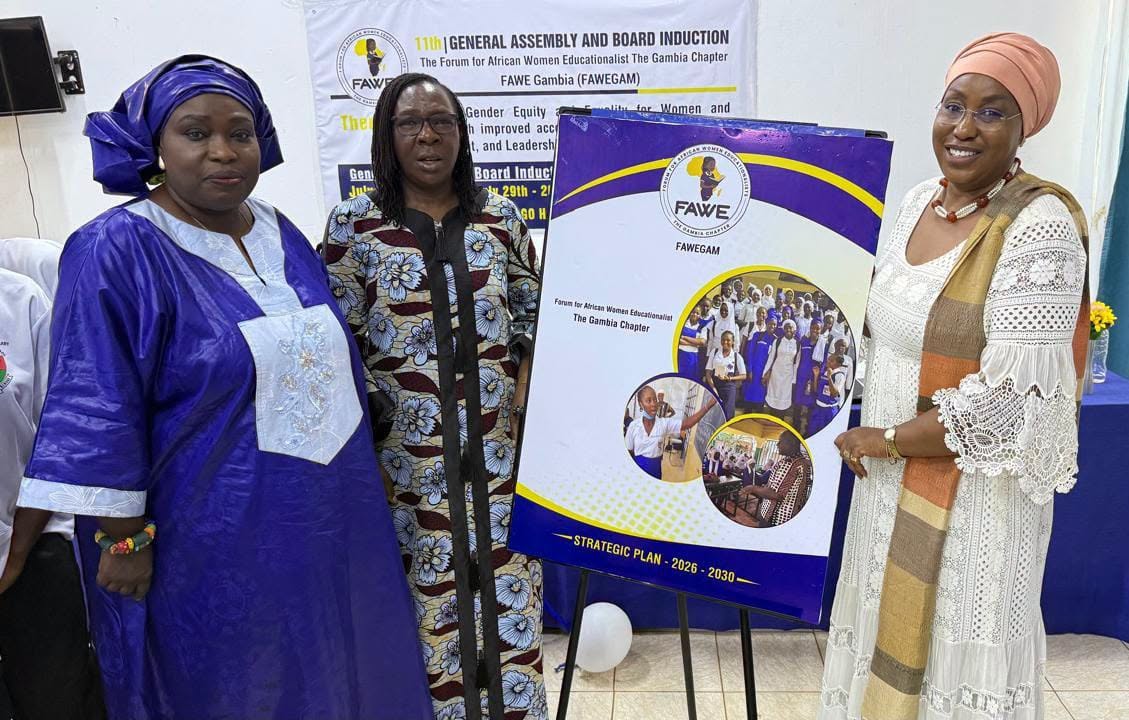
On a humid July morning in Banjul, the capital of The Gambia, something important happened for the country's girls. More than a hundred people gathered to talk about getting more girls into school and keeping them there. It was the 11th General Assembly of FAWE Gambia — short for Forum for African Women Educationalists — and it marked a turning point for the organization and for girls' education across the nation.
The event, held on July 28, 2026, brought together teachers, activists, government officials, and international partners under one roof. Dr. Habibatou Drammeh, the country's Minister of Basic and Secondary Education, opened the assembly, praising FAWE Gambia as a vital partner in the fight for equal education. "The Government of The Gambia stands firmly with FAWE in ensuring that no girl is left behind," she declared, promising to work together on teaching methods that work better for girls, stopping violence in schools, and helping girls stay in school longer.
One of the day's biggest moments was the launch of FAWE Gambia's new five-year plan, covering 2026 to 2030. The plan maps out how the group will push for better education for girls and women, build stronger organizations, and team up with more partners. Ms. Oley Dibba Wadda, a board member of FAWE Africa, and Dr. Martha Muhwezi, who leads FAWE Africa, presented the roadmap to the assembly.
The assembly also elected new leadership. Ms. Isatou Ndow, a lecturer who studies gender issues at the University of Education in The Gambia, was chosen as the new Board Chair. She already holds a Master's degree in Education and is working toward a PhD in how to design better instruction. In her first speech as chair, she made a promise: every Gambian girl deserves the chance to learn and succeed.
But the assembly wasn't just about speeches. On the sidelines, FAWE leaders held closed-door meetings that could shape years of work ahead. They sat down with Amb. Jainaba Jagne, the African Union's special envoy for children caught up in armed conflict, to discuss how to help girls living through wars and forced displacement. They talked about a program called TUSEME — a Swahili word meaning "let us speak out" — which gives girls emotional support and a safe space to share their experiences. Both sides agreed in principle to sign a formal agreement to work together on this.
Another meeting focused on helping young people find jobs after school. FAWE leaders met with Dr. Jorjoh Ndure-Tambedou, who runs the Tertiary and Higher Education Trust Fund, a group that supports technical and vocational training. They agreed to explore ways to make job training more friendly and useful for girls and women.
Together, these meetings point to something bigger: FAWE Gambia is no longer working alone. It is building a network of allies — in government, across Africa, and in education funds — all focused on the same goal. With a new strategic plan, new leadership, and new partners by its side, the organization seems ready to push harder than ever for the girls who need it most.