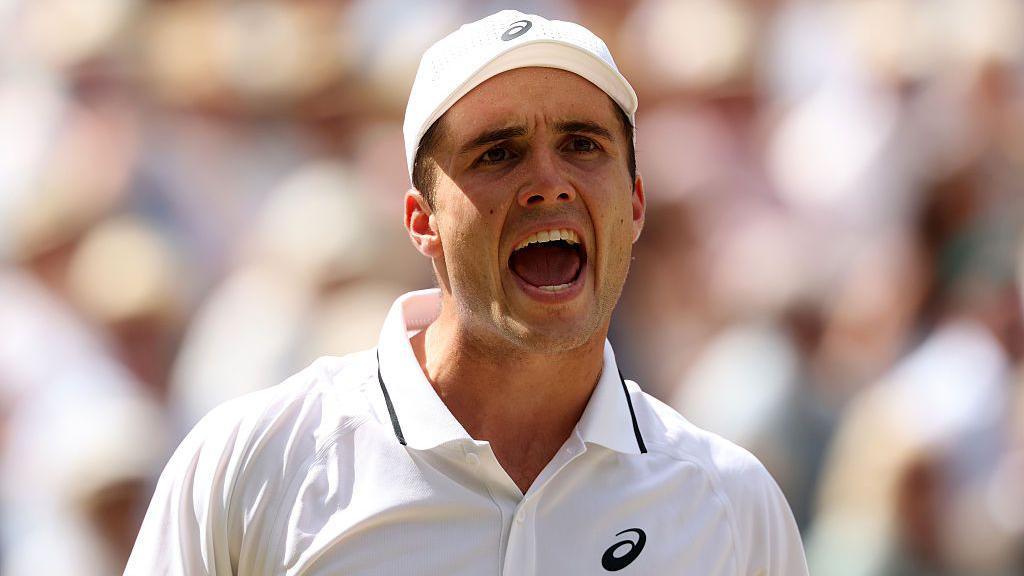
Arthur Fery arrived at Wimbledon ranked 114th in the world, with career earnings smaller than most professional athletes make in a single tournament. Two weeks later, he will leave as Britain's new number one tennis player.
The 23-year-old's remarkable run came to an end on Friday when he faced Alexander Zverev at Centre Court, tennis's most famous arena, just a short walk from where Fery grew up in London. Zverev, the tournament's second seed and freshly crowned French Open champion, proved too strong and won 7-6, 6-2, 6-4. But the scoreboard tells only part of the story.
From the moment Fery stepped onto the Wimbledon grass, he refused to play by expectations. He rallied from a set down in each of his first three matches. He stunned former world number three Grigor Dimitrov in a grueling five-set Centre Court thriller. Then, in the quarter-finals, he dismantled Flavio Cobolli — the French Open runner-up and ninth seed — in straight sets. By then, an entire nation had taken notice.
Fery, who turns 24 on Sunday, will rocket from 114th to 36th in the world rankings when they update on Monday. The leap of 78 ranking places is almost unheard of at the sport's highest level. Even more remarkably, the £900,000 he earned from reaching the semi-finals is more than double the £660,000 he had collected across his entire professional career before Wimbledon.
"This is just the beginning of his career," Zverev said after their match, wrapping an arm around Fery as the Centre Court crowd rose to deliver a standing ovation. "I really think he is going to do amazing things in this sport."
Those words carry weight from a player who finally captured his first Grand Slam title last month at the French Open after years of near misses. Zverev also predicted Fery would remain on tour for "15-plus years" — a nod to his belief that the young Briton is built for longevity.
British tennis had endured a bleak opening to the tournament, with 15 of Fery's compatriots eliminated in the first round. Into that void rode Fery, a French-born player who represents Britain, carrying the hopes of a nation with a fighting spirit that left spectators breathless. He argued with umpires, gestured passionately toward his team, and most importantly, refused to surrender even when outmatched.
For millions watching, the real victory was not the result but the reminder — that a player ranked outside the top 100 can still climb to the sport's grandest stages, one impossibly determined match at a time.