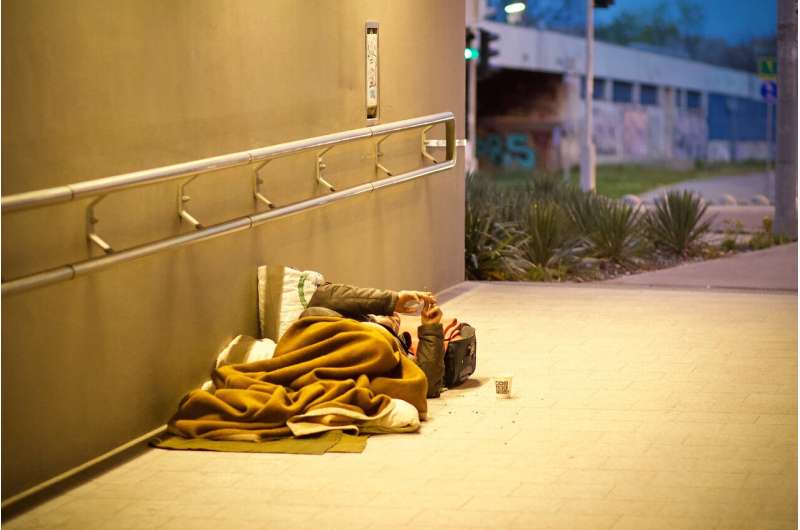
When Dr. Sae Takada and her team first encountered the patients who would become part of their study, their average systolic blood pressure measured a concerning 146 mmHg — well into hypertensive territory. Eight months later, after receiving care through the UCLA Homeless Healthcare Collaborative, that number had dropped to 141 mmHg. It's a modest-seeming shift, but in the world of medicine it represents something significant: proof that reaching people where they are can work.
The UCLA research, published in the Journal of General Internal Medicine, examined electronic health records for 893 people experiencing homelessness who received care from the HHC team between January 2022 and November 2025. Unlike traditional clinic-based care, the collaborative brings primary and urgent care, mental health services, and housing and social services referrals directly to street encampments and other locations where homeless populations congregate. It's a model that has been gaining traction across the country, but until now, questions lingered about whether it could meaningfully improve management of chronic diseases like hypertension.
The results suggest it can. At the start of the study period, 35 percent of patients had their blood pressure under control. By the end, that number had risen to 45 percent — nearly 100 additional people achieving a clinically meaningful improvement. Diastolic pressure also declined, dropping from an average of 87 mmHg to 85 mmHg. The researchers identified hypertensive patients using a combination of diagnoses, medication prescriptions, and readings of 140/90 mmHg or higher on multiple outpatient visits.
"Prior to this study, we did not know whether homeless health care programs could improve management of chronic diseases," said Dr. Takada, assistant professor of medicine in the division of general internal medicine and health services research at the David Geffen School of Medicine at UCLA. "Our findings show that field-based homeless health care can improve management of high blood pressure, which is a major cause of death and disability among this population."
The study has limitations — researchers lacked data from other health systems and did not have a comparison group to rule out all confounding factors. But the trajectory is clear, and the next steps are already taking shape. Dr. Takada's team plans to compare HHC patients with similar populations who did not receive the intervention, and to examine the program's impact on other chronic conditions like diabetes. The hope is that the evidence will encourage more health systems to invest in field-based approaches.
"Health systems across the US are investing in such programs with the goal to improve the health of their communities," Dr. Takada noted. For the nearly 900 people in this study, that investment is already showing up in lower blood pressure readings — and perhaps, a reduced risk of the heart attack, stroke, and kidney failure that unchecked hypertension can bring.